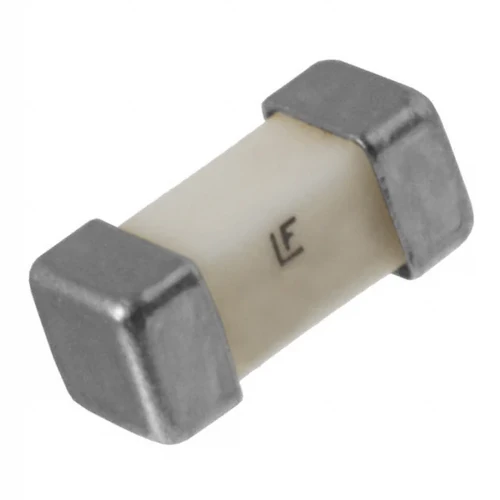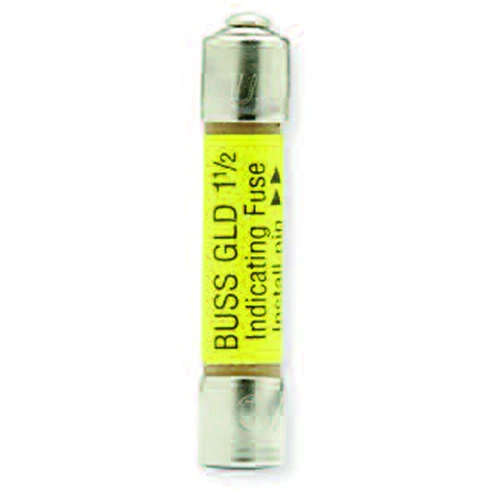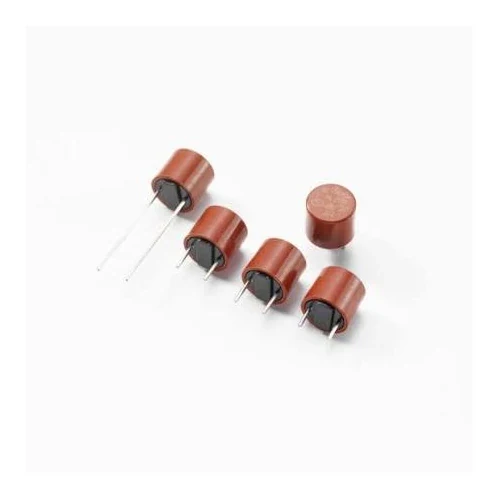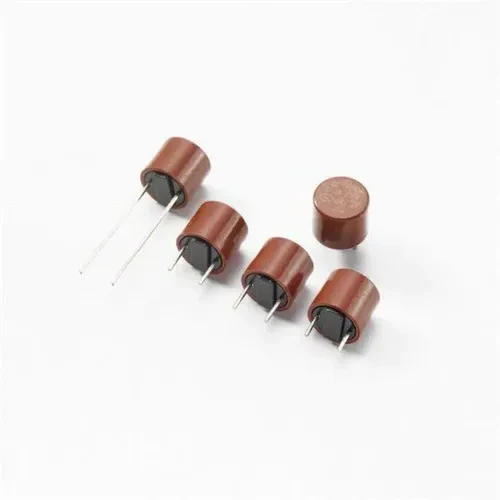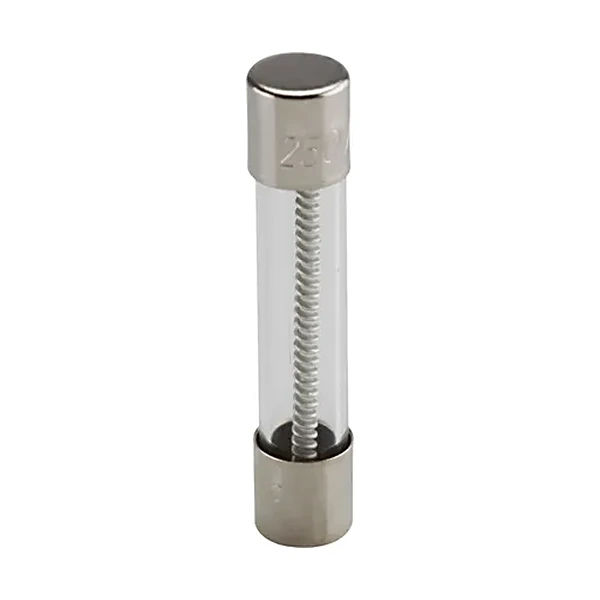
10 A 32 Vac Time-Delay Glass Fuse - Eaton MDL-10-R
- Product Details
- Download
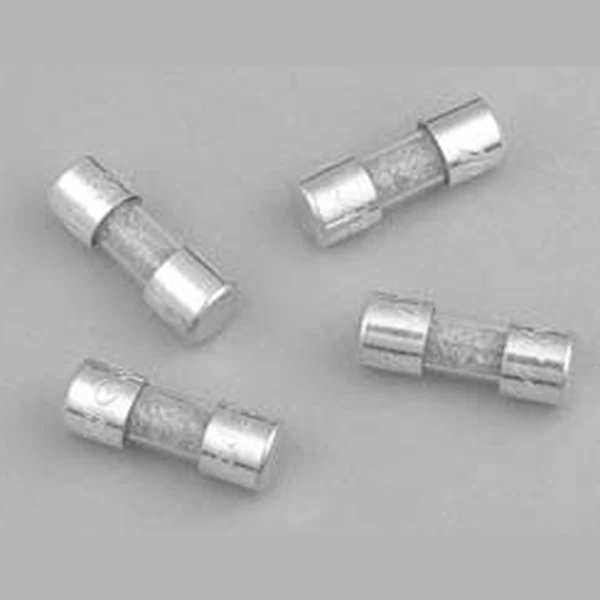
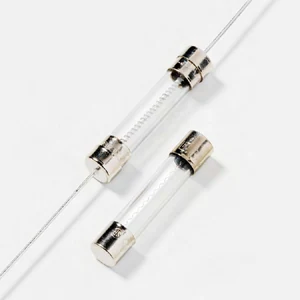
Eaton MDL-10-R 10 A 32 Vac Time-delay Glass Tube Fuse
Key Parameters
| Part number | MDL-10-R |
| Body | Glass tube, 1/4 x 1-1/4 in (6.4 x 31.7 mm) |
| Typical voltage drop | 0.114 V |
| Typical melting I2t | 64.4 A²s |
| AC interrupting rating | 1,000 A at 32 Vac |
| Design standard | UL 248-14 |
| Typical DC cold resistance | 0.01 Ω |
| Voltage rating | 32 Vac |
| Element | single element |
| End caps | nickel-plated brass |
| Breaking capacity | 35 A at 250 Vac, 10,000 A at 125 Vac, 1,000 A at 32 Vac |
| Rated current | 10 A |
Decoding the Order Code
MDL is the family and 10 is the ampere rating, 10 A. The trailing -R marks the RoHS version; a packaging prefix such as BK- or BK1- may be added in front, which alters the quantity per box only.
What the Curve Does
In a panel full of motor starters, the delay fuse is what stops the maintenance team from uprating fuses to stop them blowing. The rating stays at the conductor size and the curve absorbs the start.
This Rating in Context
Above roughly ten amps the fuse is protecting wiring and busbars rather than a component. The relevant question stops being "will it open" and becomes "what does it let through while it opens", which is what the I2t figure describes.
The step below is MDL-9-R at 9 A, the step above is MDL-15-R at 15 A. Between the three the body, the end caps and the breaking capacity are identical; only the element changes, so the choice is the load current and nothing else.
The Three Figures That Matter
The secondary columns are where the engineering hides. The typical cold resistance is 0.01 Ω, which is what the circuit sees before the element warms. Melting takes 64.4 A²s, so a fault has to deliver that much energy before the element even starts to go. At rated current the drop across it is 0.114 V. The current and voltage ratings only say when they matter.
Approvals
UL Listed 1/16-8 A (Guide JDYX, File E19180); UL Recognized 9-30 A (JDYX2); CSA 1/16-8 A (1422-01), 9-30 A (1422-30); CE.
Where the equipment ships into several markets, check each approval separately - the European and North American marks on this family do not always cover the same current range, and the gap is usually at the top of the range.
Before You Order
MDL and AGC share the same 1/4 x 1-1/4 in body and the same end caps. The only difference is the element, so a fast-acting part will physically drop into a socket that expects a time-delay one. Check the letter code on the cap, not the size of the fuse.
For a like-for-like replacement, match three things: 10 A, time-delay speed, and a voltage rating at least as high as the circuit can apply. Everything else about the part - the cap plating, the marking, the packaging prefix - is a purchasing detail rather than an electrical one.
FAQ
Can I replace a glass fuse with a ceramic one of the same rating?
Yes, and it is usually an upgrade - the ceramic body interrupts a larger fault. Going the other way is what needs checking, because the glass part may not be rated for the fault level the ceramic one was handling.
What happens if I fit a lower rating?
It will open on normal load, usually at the least convenient moment. A fuse is not a safety margin to be tightened - it is sized to the cable and the load, and reducing it does not add protection, it adds failures.
Why does the table list several breaking capacities?
Because the fuse is asked to interrupt different currents at different voltages. The 250 Vac figure is usually the smallest and the 32 V figure the largest, since a low voltage is much easier to break than a high one.
Design note: the ratings above are Technical Data 2004. Verify the exact rating, the voltage at which the breaking capacity applies, and the certificate for this current before release.
Shenzhen Gaorunxin Technology Co., Ltd
Online message
Shenzhen Gaorunxin Technology Co., Ltd