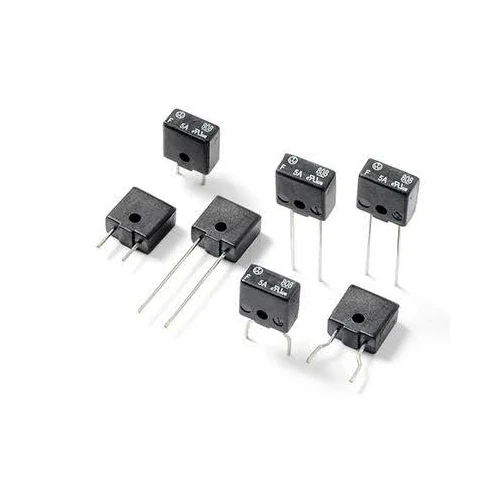


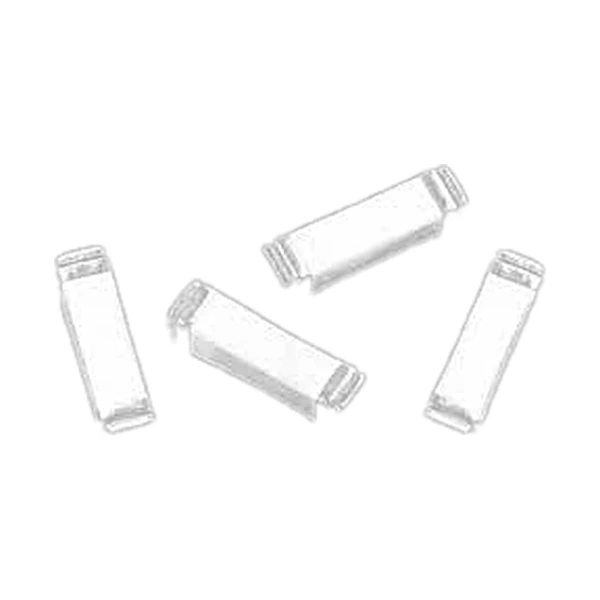
5 A 250 Vac Slow-Blow Ceramic Fuse - Eaton 1025TD5-R
- Product Details
- Download
5 A 250 Vac Slow-Blow Ceramic Fuse - Eaton 1025TD5-R
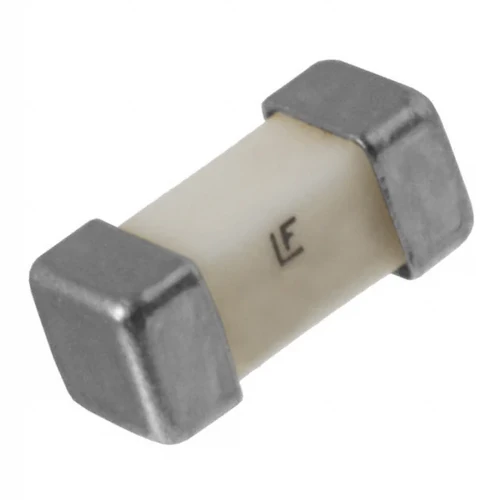
Supplied as TR2/1025TD5-R - 2,500 pieces on 24 mm tape-and-reel, one 13 inch (330 mm) reel.
Electrical Specifications
| Part number | 1025TD5-R |
| Ordering code | TR2/1025TD5-R |
| Packaging | 2,500 pcs on 24 mm tape-and-reel, 13 in (330 mm) reel, EIA-481 |
| Typical cold resistance | 0.016 Ω |
| Agency approval | UL Recognition, Guide JDYX2, File E19180 (250 mA - 5 A); CSA component acceptance |
| Typical voltage drop | 145 mV |
| Interrupting rating | 50 A AC; 50 A 125 Vdc |
| Typical melting I2t | 88.38 A²s |
| Voltage rating | 250 Vac |
| Voltage rating, DC | 125 Vdc |
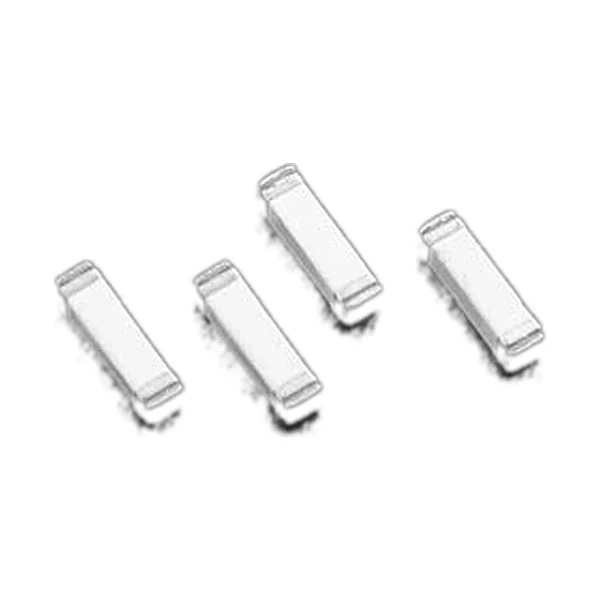
| Package | 10.29 x 2.77 mm (4010 imperial / 1025 metric) |
| Terminations | silver-plated end terminations, solder immersion compatible |
| Design standard | EIA/IS-722 |
| Rated current | 5 A |
What the Code Tells You
1025TD is the family, 5 is the current rating - 5 A, written without a decimal point - and -R is the RoHS suffix.
A packaging prefix such as TR2- goes in front of the whole code and changes only the reel quantity.
The Element and the Curve
Surface-mount delay fuses are common on adapter inputs and small motor drives, where the inrush is several times the running current for a few milliseconds. The element absorbs that pulse and still opens on a locked rotor.
What the Figures Mean
The table describes one operating point. The cold resistance is 0.016 Ω, which is what the circuit sees before the element warms. Melting takes 88.38 A²s, so a fault has to deliver that much energy before the element even starts to go. At rated current the drop is 145 mV. Everything else on this page is context for them.
Position in the Range
At this rating the element is carrying real current and the cold resistance is in the tens of milliohms. The fuse no longer affects the circuit in normal operation, but the energy it has to clear on a fault is larger - which is where the interrupting rating starts to matter.
1025TD4-R at 4 A is the step below. Above 5 A the package stops being the limit and the fault level takes over.
Agency Information
UL Recognition, Guide JDYX2, File E19180 (250 mA - 5 A); CSA component acceptance.
The approval covers a current range rather than the whole family, so a certificate that lists one rating does not automatically cover the next. For a submittal, quote the file number against the exact rating on the order line.
Fitting and Replacement Notes
1025FA and 1025TD share the same body and the same land pattern; only the element differs. A fast-acting part will drop straight into a socket that expects time-delay, which is how a motor circuit ends up opening on every start.
Because the part is not serviceable in the field, the choice is effectively made once. Confirm what the branch actually draws, including the inrush, before the first build - not after the first failure.
Questions We Get Asked
Does the land pattern affect the rating?
Yes. Heat leaves through the terminations, so a part on a narrow trace runs hotter than the same part on a copper pour. Eaton specifies the rating at 25 °C on a reference land; a tight layout derates it.
Why does the table list a typical voltage drop?
Because the fuse is in series with the load and its resistance is not zero. On a low voltage rail a few hundred millivolts of drop is a real fraction of the headroom, especially at the higher current ratings.
Why is the interrupting rating so much lower than a glass tube fuse?
The body is small and the element has almost no thermal mass, so it cannot quench a large arc. A chip fuse is designed to open before the fault current reaches its peak, not to interrupt a sustained high-current fault.
Design note: the figures above are Technical Data 4344, measured at 25 °C on the reference land pattern. Check the rating against the actual copper area and the ambient inside the enclosure before release.
Mechanical Dimensions

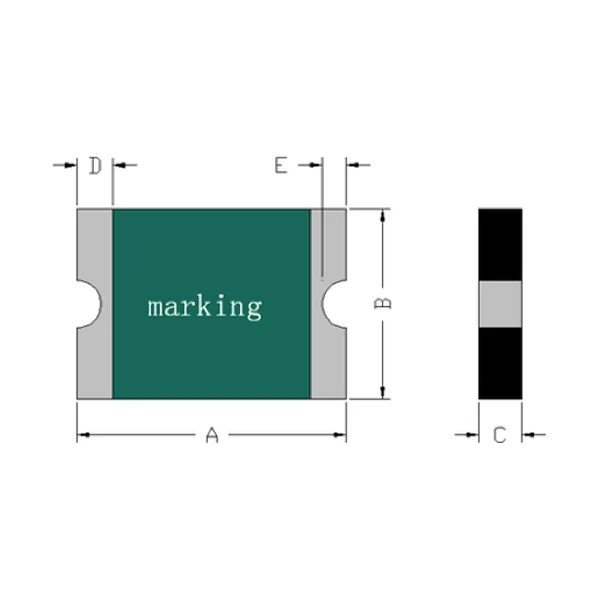
Dimensional drawing and recommended PCB pad layout from the Eaton data sheet. Tolerances and pad dimensions are as printed on the drawing; check the outline against your layout before release.
Shenzhen Gaorunxin Technology Co., Ltd
Online message
Shenzhen Gaorunxin Technology Co., Ltd