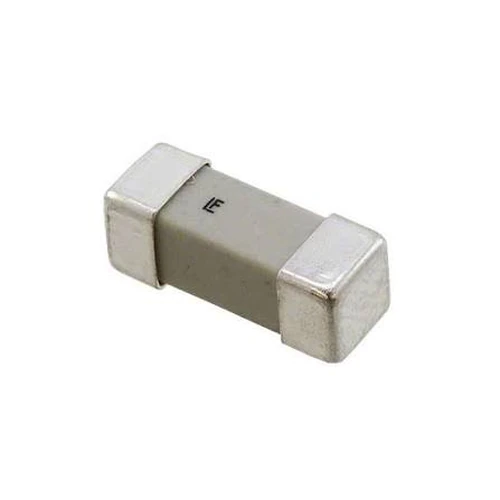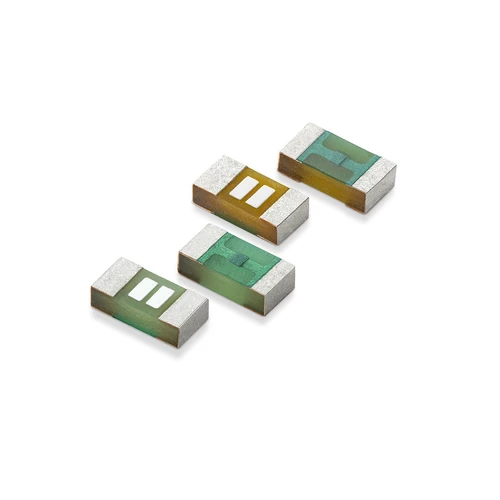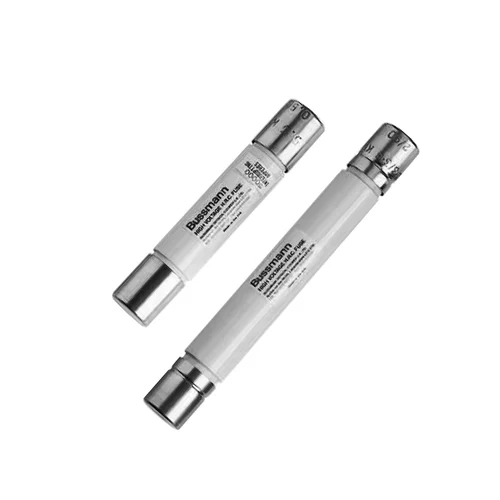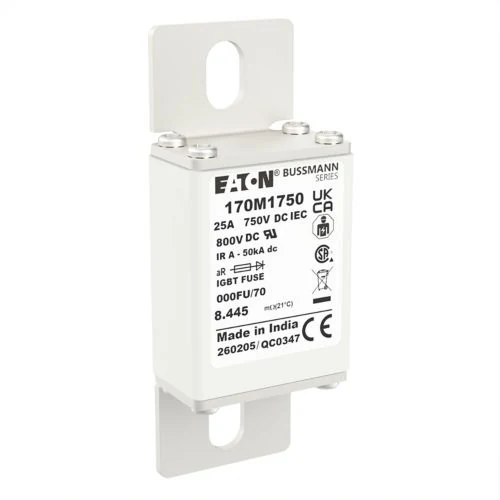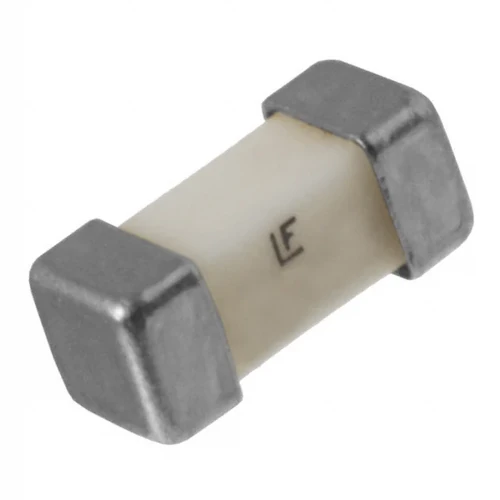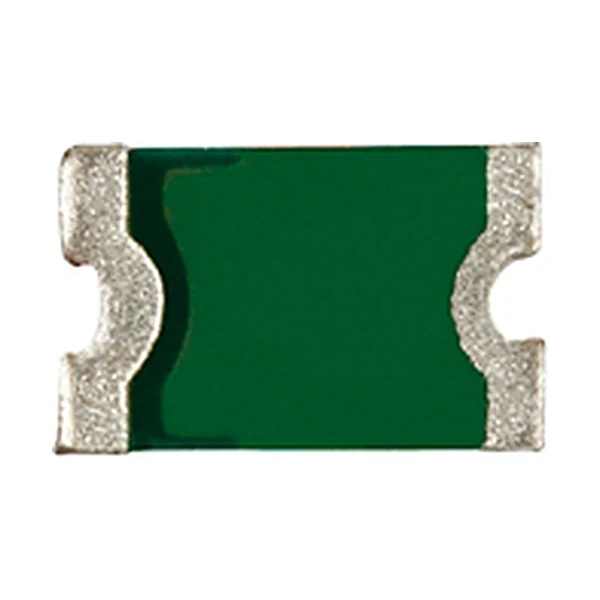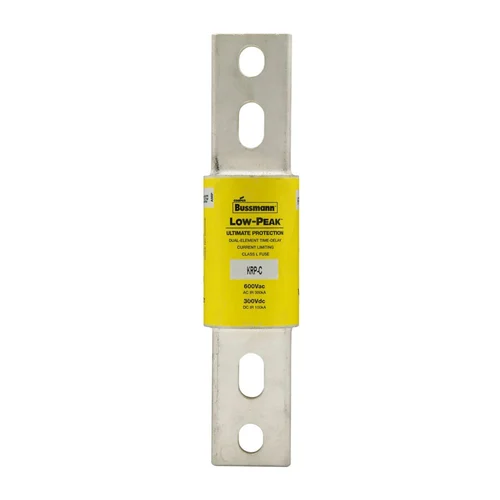


500 mA 250 Vac Fast-Blow Ceramic Fuse - Eaton S501-500-R
- Product Details
- Download
Eaton S501-500-R 500 mA 250 Vac Fast-acting, high breaking capacity Ceramic Tube Fuse
Ratings
| Part number | S501-500-R |
| Voltage rating | 250 Vac |
| Breaking capacity | 1,500 A at 250 Vac across the whole range |
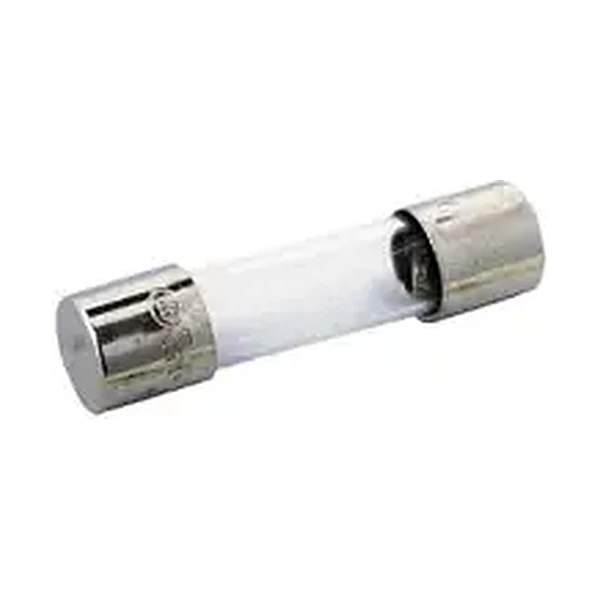
| Body | Ceramic tube, 5 x 20 mm |
| Typical DC cold resistance | 0.46 Ω |
| Rated current | 500 mA (1/2 A) |
| Typical melting I2t | 0.038 A²s |
| Maximum voltage drop | 1,050 mV |
| End caps | silver-plated 50-400 mA, nickel-plated 500 mA-10 A |
| Design standard | IEC 60127-2 |
| AC interrupting rating | 1,500 A at 250 Vac |
| Element | single element |
Interpreting the Data
The numbers in the table describe one operating point. The typical cold resistance is 0.46 Ω, which is what the circuit sees before the element warms. Melting takes 0.038 A²s, so a fault has to deliver that much energy before the element even starts to go. At rated current the drop across it is 1,050 mV. Everything else on the page is context for them.
Part Number Breakdown
The code breaks into three parts. S501 is the family, 500 is the ampere rating written in milliamps - which is 500 mA, not 500 amps - and -R is the RoHS suffix. Reading the middle group as amps is the single most common ordering error on this series.
Behaviour Under Load
The element in a fast-acting tube is a straight wire, sometimes with a small forming to tune the curve. Its job is to open before the downstream part is damaged, which on a resistive load is a simple race between the fuse and the semiconductor - and the fuse wins because it has far less thermal mass.
Sizing Context
This is the rating most often found in a drawer of spares, which is a mixed blessing: it is easy to obtain and easy to fit in the wrong place. Confirm the family letter as well as the current before substituting.
The step below is S501-400-R at 400 mA, the step above is S501-630-R at 630 mA. Between the three the body, the end caps and the breaking capacity are identical; only the element changes, so the choice is the load current and nothing else.
Replacement Notes
S501 is the high-breaking-capacity member of the 5 x 20 mm family: ceramic body, 1,500 A at 250 Vac, IEC 60127-2. If a design currently uses a glass 5 x 20 mm fuse on a mains input, this is the drop-in upgrade when the fault level is above what glass can clear.
Fitting a 500 mA part where the previous one was a different rating is the error to avoid. The fuse is there to protect the cable and the load behind it, so the rating follows from the circuit, not from what happens to be in the stores.
What Is Certified
cURus (File E19180, JDYX2/JDYX8), SEMKO (413779), VDE (40015517), IMQ (EB405), CCC (2005010207155691), BSI (KM55676), CSA (53787).
Where the equipment ships into several markets, check each approval separately - the European and North American marks on this family do not always cover the same current range, and the gap is usually at the top of the range.
Practical Questions
Can I use a fast-acting fuse where a time-delay one was fitted?
Physically yes, and that is exactly the problem. It will nuisance-trip on the first motor start, and the usual fix - fitting a larger rating - leaves the circuit protected at the wrong current.
Is the ampere rating a continuous rating?
It is the current the fuse will carry indefinitely at 25 °C without opening. In a hot enclosure the usable current is lower, which is why fuses are normally derated to about 75 % of the rating in a sealed box.
What is the difference between 3AG and 3AB?
Both are 1/4 x 1-1/4 in. 3AG is the glass body, 3AB is the ceramic one. The footprint is identical; the breaking capacity is not.
Design note: the ratings above are Technical Data 2051. Verify the exact rating, the voltage at which the breaking capacity applies, and the certificate for this current before release.
Mechanical Dimensions

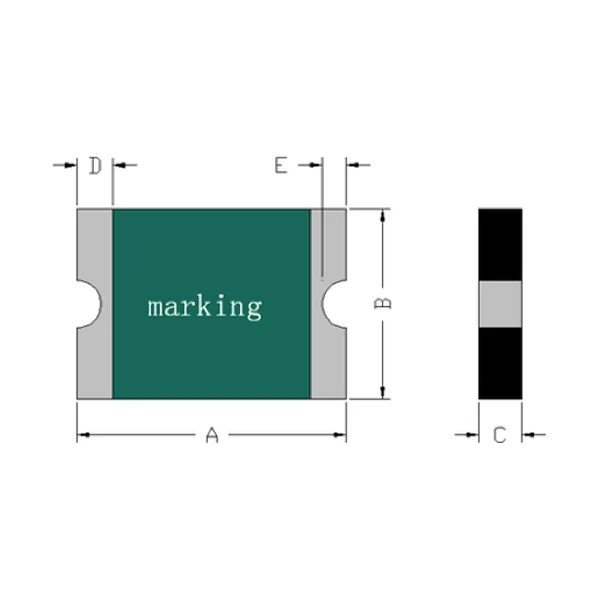
Dimensional drawing and recommended PCB pad layout from the Eaton data sheet. Tolerances and pad dimensions are as printed on the drawing; check the outline against your layout before release.
Shenzhen Gaorunxin Technology Co., Ltd
Online message
Shenzhen Gaorunxin Technology Co., Ltd