6 A 250 Vac Fast-Blow Ceramic Fuse - Eaton ABC-6-R
- Product Details
- Download
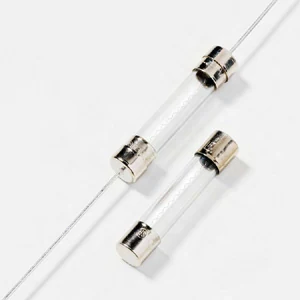
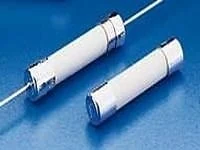
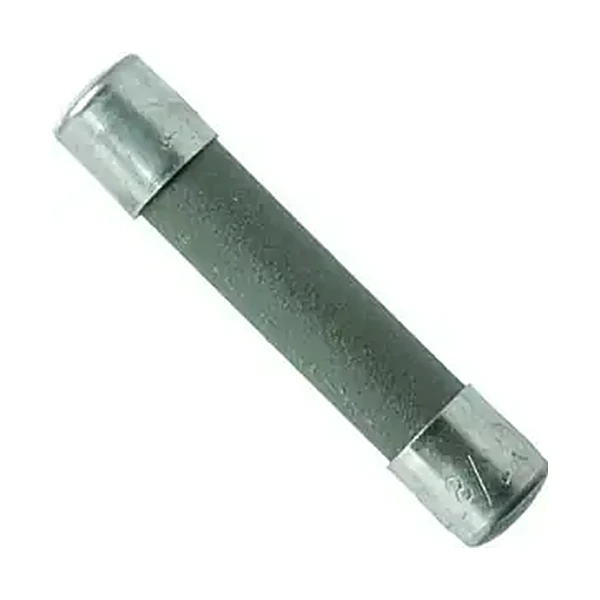
Eaton ABC-6-R 6 A 250 Vac Fast-acting Ceramic Tube Fuse
Specifications
| Part number | ABC-6-R |
| Voltage rating, DC | 125 Vdc |
| Voltage rating | 250 Vac |
| End caps | nickel-plated brass |
| Design standard | UL 248-14 |
| Typical DC cold resistance | 0.021 Ω |
| Rated current | 6 A |
| Typical voltage drop | 0.19 V |
| Body | Ceramic tube, 1/4 x 1-1/4 in (6.4 x 31.7 mm) |
| AC interrupting rating | 200 A at 250 Vac; 10,000 A at 125 Vac; 10,000 A at 125 Vdc |
| Typical melting I2t | 58 A²s |
| Element | single element |
What the Figures Mean
The numbers in the table describe one operating point. The typical cold resistance is 0.021 Ω, which is what the circuit sees before the element warms. Melting takes 58 A²s, so a fault has to deliver that much energy before the element even starts to go. At rated current the drop across it is 0.19 V. Everything else on the page is context for them.
How This Fuse Behaves
The failure mode of a fast fuse on the wrong load is a callout, not a fire. It opens on a start current that was always going to happen, the equipment goes dead at the worst moment, and the replacement does the same thing a week later.
Reading the Part Number
ABC is the family and 6 is the ampere rating, 6 A. The trailing -R marks the RoHS version; a packaging prefix such as BK- or BK1- may be added in front, which alters the quantity per box only.
Where This Rating Sits
These are the high-current members of the family. The element is heavy ribbon rather than wire, the cold resistance is a few milliohms, and the I2t is large enough that the part will ride a substantial inrush before it opens.
The step below is ABC-5-R at 5 A, the step above is ABC-7-R at 7 A. Between the three the body, the end caps and the breaking capacity are identical; only the element changes, so the choice is the load current and nothing else.
Standards and Approvals
UL Listed (Guide JDYX, File E19180); UL Recognition (JDYX2); CSA.
For a submittal pack, match the certificate to the rating on the order line. Eaton publishes the recognised range alongside each standard, and the boundary between Listed and Recognised often falls inside the family rather than at its end.
Selecting and Replacing
ABC is the fast-acting ceramic 3AB. Its whole reason to exist over AGC is the breaking capacity - 10,000 A at 125 Vac against 1,000 A. On a 250 Vac rail the two are much closer, so check the actual fault level before paying for ceramic.
Fitting a 6 A part where the previous one was a different rating is the error to avoid. The fuse is there to protect the cable and the load behind it, so the rating follows from the circuit, not from what happens to be in the stores.
Common Questions
Can I replace a glass fuse with a ceramic one of the same rating?
Yes, and it is usually an upgrade - the ceramic body interrupts a larger fault. Going the other way is what needs checking, because the glass part may not be rated for the fault level the ceramic one was handling.
What is the difference between 3AG and 3AB?
Both are 1/4 x 1-1/4 in. 3AG is the glass body, 3AB is the ceramic one. The footprint is identical; the breaking capacity is not.
What happens if I fit a lower rating?
It will open on normal load, usually at the least convenient moment. A fuse is not a safety margin to be tightened - it is sized to the cable and the load, and reducing it does not add protection, it adds failures.
Design note: the ratings above are Technical Data 2000. Verify the exact rating, the voltage at which the breaking capacity applies, and the certificate for this current before release.
Shenzhen Gaorunxin Technology Co., Ltd
Online message
Shenzhen Gaorunxin Technology Co., Ltd