6125FA7A Eaton 7 A Quick-Blow Ceramic Fuse 125 Vac
- Product Details
- Download
6125FA7A Eaton 7 A Quick-Blow Ceramic Fuse 125 Vac
The reel part is TR2/6125FA7A: 5,000 pieces on 12 mm tape-and-reel, one 13 inch (330 mm) reel.
Ratings
| Part number | 6125FA7A |
| Ordering code | TR2/6125FA7A |
| Packaging | 5,000 pcs on 12 mm tape-and-reel, 13 in (330 mm) reel, EIA-481 |
| Rated current | 7 A |
| Typical melting I2t | 19 A²s |
| Interrupting rating | 50 A at 125 Vac; 300 A at 125 Vdc; 10,000 A at 86 Vdc |
| Typical cold resistance | 0.011 Ω |
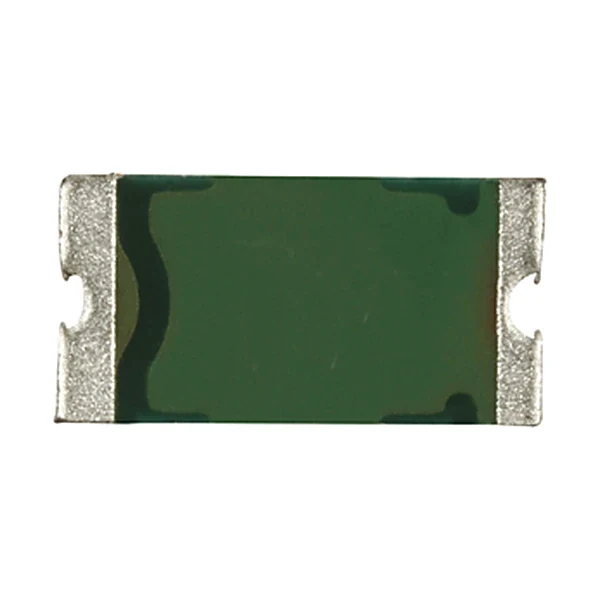
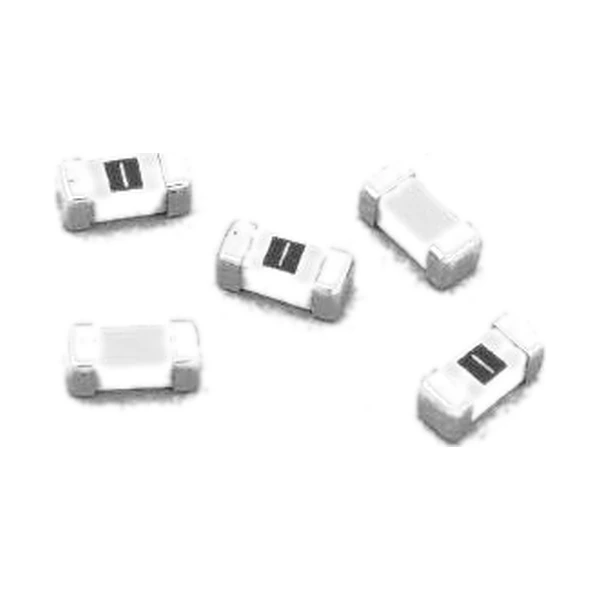
| Package | 6.3 x 2.5 mm (2410 imperial / 6125 metric) |
| Terminations | nickel/silver plated end terminations, solder immersion compatible |
| Agency approval | CSA component acceptance 053787 C 000, Class 1422-30; UL Recognition Guide JDYX2, File E19180 |
| Typical voltage drop | 0.114 V |
| Voltage rating | 125 Vac / 125 Vdc / 86 Vdc |
| Design standard | EIA/IS-722 |
Interpreting the Data
Read the row from the right. The cold resistance is 0.011 Ω, which is what the circuit sees before the element warms. Melting takes 19 A²s, so a fault has to deliver that much energy before the element even starts to go. At rated current the drop is 0.114 V. The ratings on the left only say when those figures apply.
Part Number Breakdown
6125FA is the family, 7A is the current rating - 7 A, written without a decimal point - and -R is the RoHS suffix.
What the Curve Does
Heat leaves a chip fuse through the end terminations and into the copper, so the land pattern is part of the thermal design. A part on a narrow trace runs hotter than the same part on a pour, and opens earlier than the data sheet suggests.
Sizing Context
At this rating the element is carrying real current and the cold resistance is in the tens of milliohms. The fuse no longer affects the circuit in normal operation, but the energy it has to clear on a fault is larger - which is where the interrupting rating starts to matter.
The step below is 6125FA6.3A at 6.3 A, the step above is 6125FA10A at 10 A. The package and the land pattern are identical across the three; only the element changes.
Replacement Notes
This family quotes three voltage/current pairs, not one. The 125 V AC and 125 V DC ratings give 50 A and 300 A of interrupting capacity, while the 86 V DC rating gives 10,000 A. Pick the row that matches the voltage the circuit can actually apply, not the biggest number in the table.
Match three things: the rating, the speed, and a voltage rating at least as high as the circuit can apply. The land pattern, the plating and the packaging prefix are purchasing details rather than electrical ones.
What Is Certified
CSA component acceptance 053787 C 000, Class 1422-30; UL Recognition Guide JDYX2, File E19180.
Note that Recognition and Listing are different claims: Recognition covers a component for use inside another device, Listing covers a complete product. A bill of materials that mixes the two is a common audit finding.
CSA component acceptance 053787 C 000, Class 1422-30; UL Recognition Guide JDYX2, File E19180.
For equipment exported to several markets, check each mark separately. The European and North American approvals on this family do not always cover the same current band.
Practical Questions
How is the part marked?
With a short code that identifies the rating, not the full part number. On a small body that code is a single letter or digit, which is why a mismatched reel is hard to spot once the parts are out of their packaging.
Does the land pattern affect the rating?
Yes. Heat leaves through the terminations, so a part on a narrow trace runs hotter than the same part on a copper pour. Eaton specifies the rating at 25 °C on a reference land; a tight layout derates it.
Can a chip fuse be replaced in the field?
Not practically. It is soldered, and removing it usually lifts a pad. Treat it as a component that protects the board once - the board is designed around the fault being cleared, not around the fuse being changed.
Design note: the figures above are Technical Data 2531, measured at 25 °C on the reference land pattern. Check the rating against the actual copper area and the ambient inside the enclosure before release.
Shenzhen Gaorunxin Technology Co., Ltd
Online message
Shenzhen Gaorunxin Technology Co., Ltd