8 A 125 Vac Medium Time-Delay Glass Fuse - Eaton GMC-8-R
- Product Details
- Download
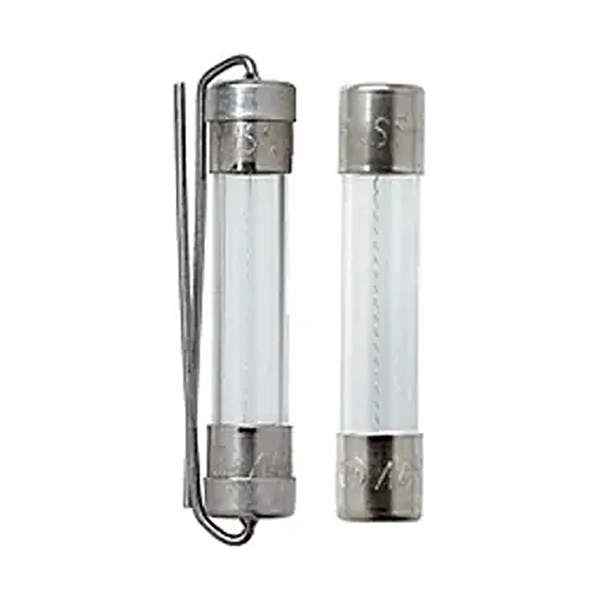
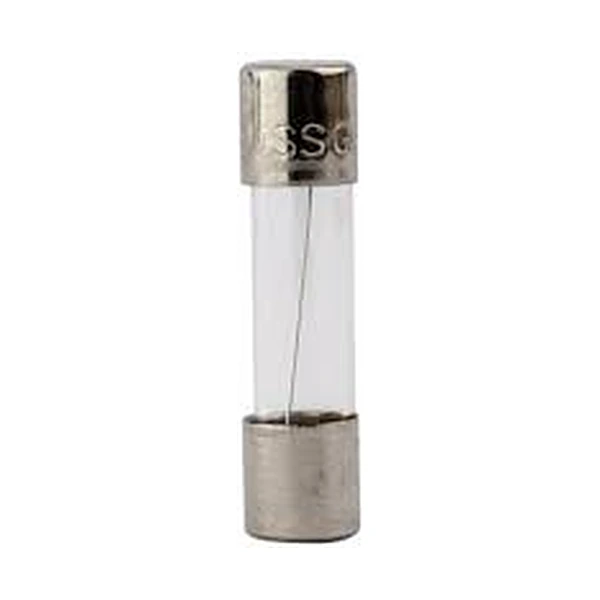
Eaton GMC-8-R 8 A 125 Vac Medium time-delay Glass Tube Fuse
Ratings
| Part number | GMC-8-R |
| Typical DC cold resistance | 0.009 Ω |
| Body | Glass tube, 5 x 20 mm |
| Rated current | 8 A |
| Breaking capacity | 35 A at 250 Vac up to 3 A, 100 A above |
| Design standard | UL/CSA 248-14 |
| Typical melting I2t | 200 A²s |
| Element | single element |
| End caps | nickel-plated brass |
| AC interrupting rating | 200 A at 125 Vac |
| Maximum voltage drop | 110 mV |
| Voltage rating | 125 Vac |
Interpreting the Data
The typical cold resistance is 0.009 Ω, which is what the circuit sees before the element warms. Melting takes 200 A²s, so a fault has to deliver that much energy before the element even starts to go. At rated current the drop across it is 110 mV. Those are the figures that decide whether this part fits a circuit, and none of them appears on the label.
Part Number Breakdown
GMC is the family and 8 is the ampere rating, 8 A. The trailing -R marks the RoHS version; a packaging prefix such as BK- or BK1- may be added in front, which alters the quantity per box only.
Behaviour Under Load
Replacing a blown delay fuse with a fast one is a common field error because the two look identical and often share a holder. The equipment then fails at the next start, and the fuse is blamed for being faulty rather than wrong.
Sizing Context
Above roughly ten amps the fuse is protecting wiring and busbars rather than a component. The relevant question stops being "will it open" and becomes "what does it let through while it opens", which is what the I2t figure describes.
The step below is GMC-7-R at 7 A, the step above is GMC-10-R at 10 A. Between the three the body, the end caps and the breaking capacity are identical; only the element changes, so the choice is the load current and nothing else.
Replacement Notes
Medium time-delay sits between fast-acting and time-delay on purpose. It rides a modest surge and still opens quickly on a hard fault, which is why it is common in small adapters. It is not a substitute for GMD where the surge is a genuine motor start.
This rating is normally held against a specific circuit rather than as a general spare. If it is being replaced outside a planned maintenance, confirm what the circuit actually draws before fitting another 8 A part.
What Is Certified
UL Listed 63 mA-6.3 A (Guide JDYX, File E19180); UL Recognized 7-10 A (JDYX2); CSA; VDE; SEMKO; PSE.
Where the equipment ships into several markets, check each approval separately - the European and North American marks on this family do not always cover the same current range, and the gap is usually at the top of the range.
Practical Questions
Can these be soldered directly to a board?
Only the axial-lead versions, and only with a heat sink on the lead. The body is glass or ceramic and will crack if the lead is heated enough to run solder into the cap. Use a holder where one is available.
Do I need to derate for temperature?
In a sealed enclosure, yes - about 75 % of the rating is the usual working figure. The rating assumes still air at 25 °C, and a fuse that sits at 60 °C will open earlier than the label suggests.
What does the voltage drop figure mean in practice?
It is the voltage lost across the fuse at rated current, which is the same as saying it is the power the fuse dissipates divided by the current. On a low-voltage rail a large drop steals headroom from the load.
Design note: the ratings above are Technical Data 4395. Verify the exact rating, the voltage at which the breaking capacity applies, and the certificate for this current before release.
Mechanical Dimensions

Dimensional drawing and recommended PCB pad layout from the Eaton data sheet. Tolerances and pad dimensions are as printed on the drawing; check the outline against your layout before release.
Shenzhen Gaorunxin Technology Co., Ltd
Online message
Shenzhen Gaorunxin Technology Co., Ltd