Eaton 0402ESDA-AEC ESD Suppressor
- Product Details
- Download
Eaton 0402ESDA-AEC ESD Suppressor
Specification Table
| Parameter | Value |
|---|---|
| Orderable part number | 0402ESDA-AEC |
| Rated voltage, maximum | 30 Vdc |
| Clamping voltage, typical | 35 V |
| Trigger voltage, typical | 300 V |
| Capacitance at 1 MHz, typical | 0.05 pF |
| Capacitance at 1 MHz, maximum | 0.15 pF |
| Attenuation change, 0-6 GHz | -0.2 dB typical |
| Leakage current at 12 Vdc | max. 0.1 nA |
| ESD capability, IEC 61000-4-2 | 12 kV contact / 25 kV air |
| ESD capability, ISO 10605 | 8 kV |
| ESD pulse withstand | >1000 pulses |
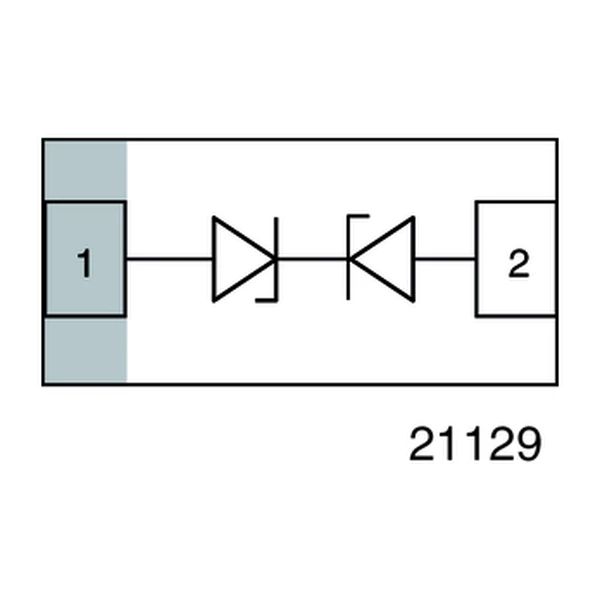
| Channels | 1 |
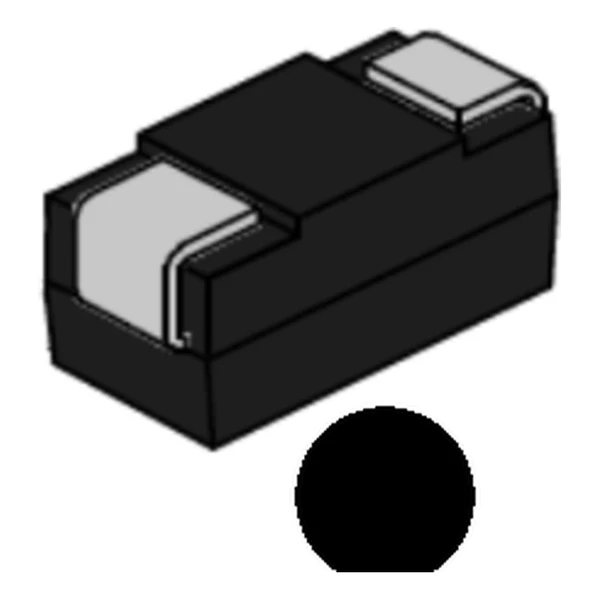
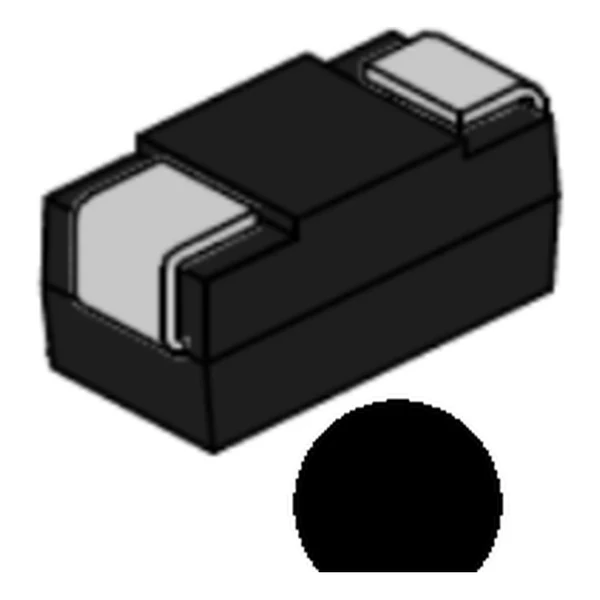
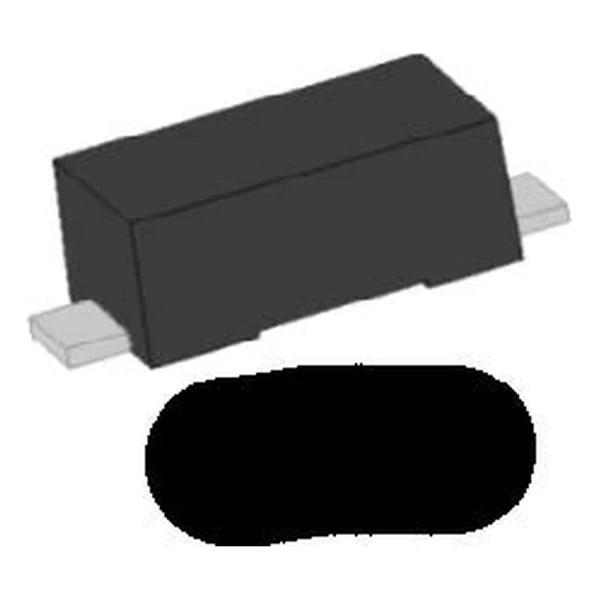
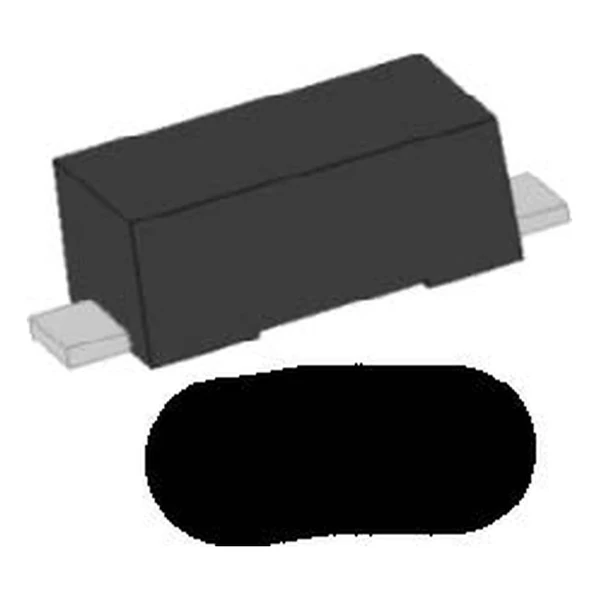
| Package | 0402 (1005 metric) |
| Mounting | Surface mount |
| Operating temperature | -40 °C to +85 °C |
| Qualification | AEC-Q200 |
| RoHS | Compliant, halogen free |
| Data sheet | Eaton Technical Data 10763 |
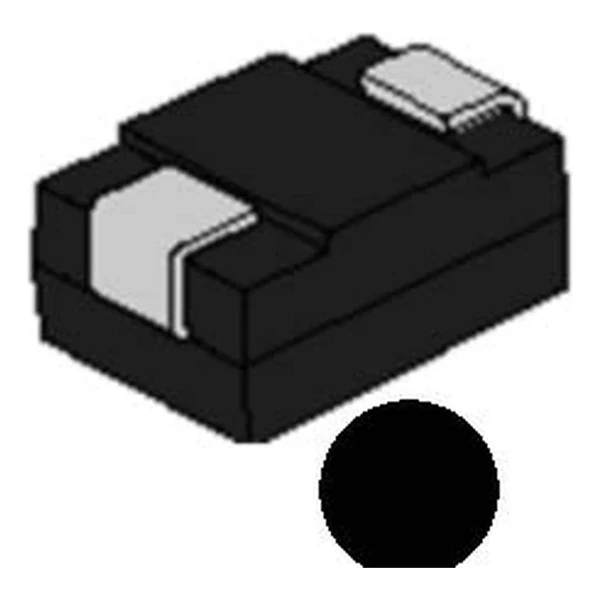
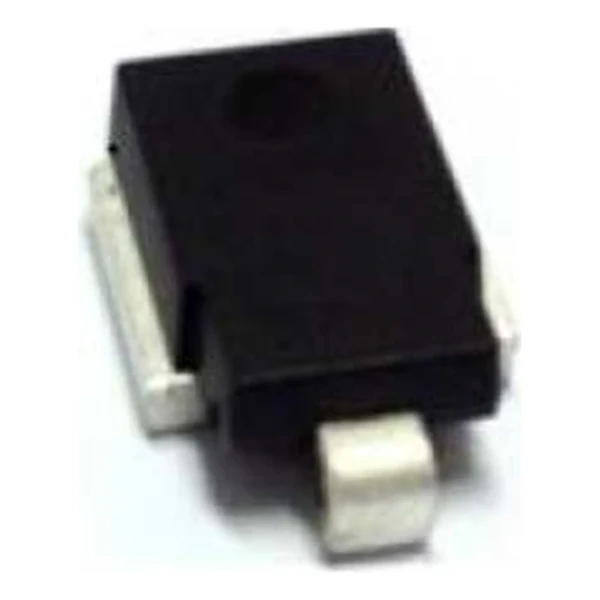
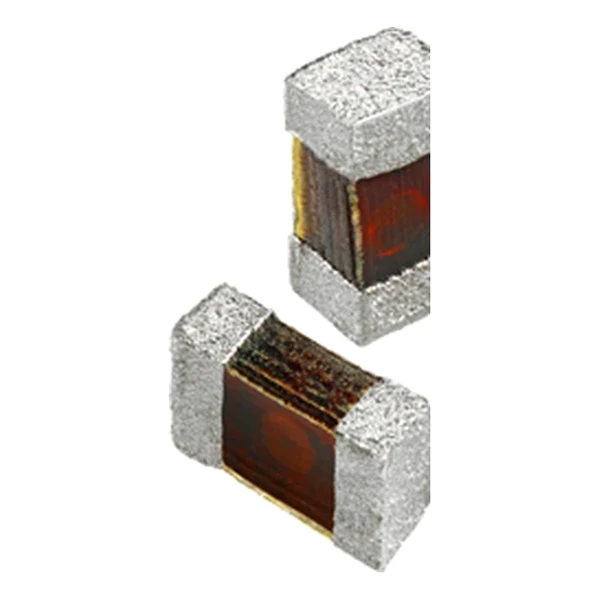
Outline drawing, pad or lead geometry and the pulse derating curves are
on the pages of Eaton Technical Data 10763; the package line above is the
body the part is built in.
How to Read These Ratings
The capacitance column is the one that limits where these parts can go. A tenth of a picofarad is invisible on a 5 Gbit pair; a few picofarads is not, which is why the same family is offered in several capacitance grades.
At 0.05 pF the part is effectively invisible to a multi-gigabit pair: the reactance at 1 GHz is still in the hundreds of ohms, far above the differential impedance.
Within the 0402ESDA family this is item 1 of 2 in the Eaton catalogue.
Series Positioning
Place the suppressor directly at the connector, before any series component. Its job is to take the discharge before it enters the board, and a few millimetres of trace is enough to let the pulse past it.
- The ESD rating assumes the part is the first thing the discharge meets. If the connector shell or a mounting screw provides an easier path, the suppressor never conducts and the protected chip takes the hit.
- Leakage is quoted at the rated voltage and at room temperature. It rises with temperature, which matters on an automotive rail that sits at 85 °C.
Frequently Asked Questions
Will it survive repeated strikes?
The datasheet quotes a pulse count at the qualification level, typically over a thousand at 8 kV contact. That is the number to compare against the events the port is expected to see.
Is the suppressor fast enough for a cable discharge?
The response is in the sub-nanosecond range because the structure is a junction, not a spark gap. What limits the protection is the layout, not the die.
Can it be used on a power rail?
Yes, within the rated voltage, but the energy per event on a power rail is much higher than an ESD strike. For supply transients a TVS with a joule rating is the right part, not an ESD suppressor.
Shenzhen Gaorunxin Technology Co., Ltd
Online message
Shenzhen Gaorunxin Technology Co., Ltd