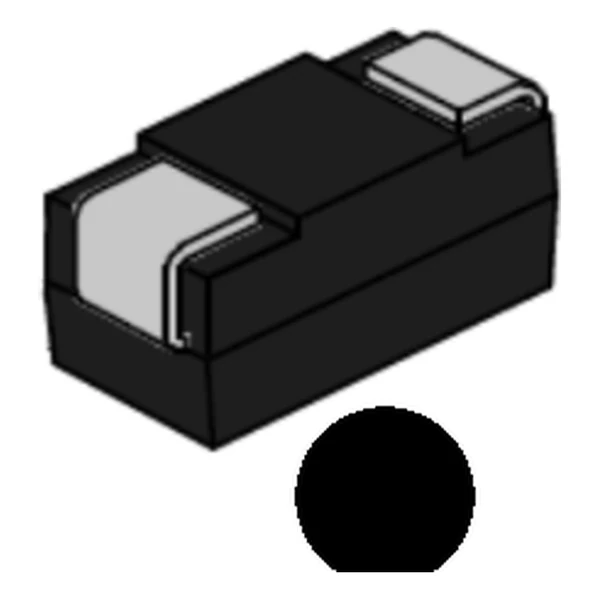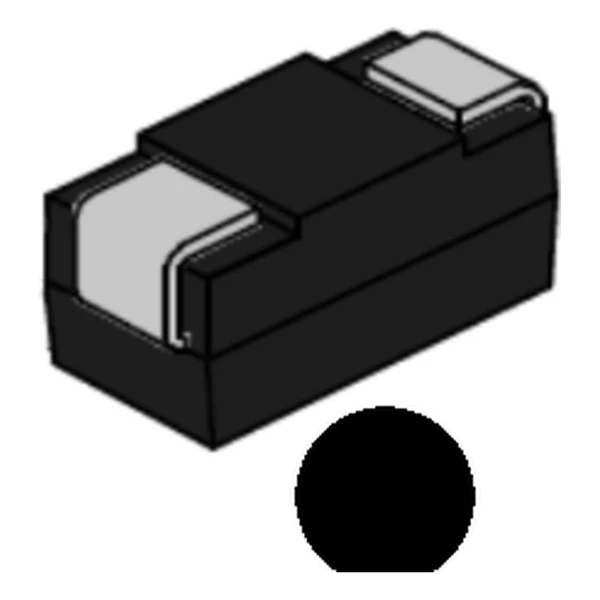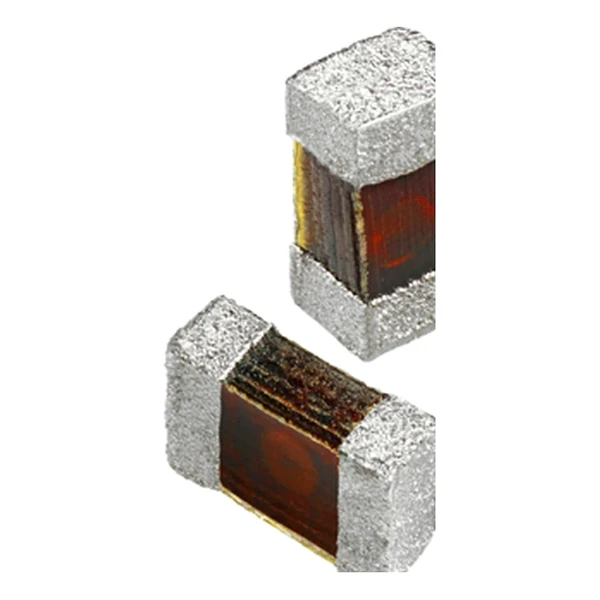
Eaton 0603ESDA-MLP7 ESD Suppressor
- Product Details
- Download
Eaton 0603ESDA-MLP7 ESD Suppressor
Ratings at a Glance
| Parameter | Value |
|---|---|
| Orderable part number | 0603ESDA-MLP7 |
| Rated voltage, maximum | 30 Vdc |
| Clamping voltage, typical | 35 V |
| Trigger voltage, typical | 300 V |
| Capacitance at 1 MHz, typical | 0.05 pF |
| Capacitance at 1 MHz, maximum | 0.15 pF |
| Attenuation change, 0-6 GHz | -0.2 dB typical |
| Leakage current at 12 Vdc | max. 1.0 nA |
| ESD capability, IEC 61000-4-2 | 8 kV contact / 15 kV air |
| ESD pulse withstand | >1000 pulses |
| Channels | 1 |
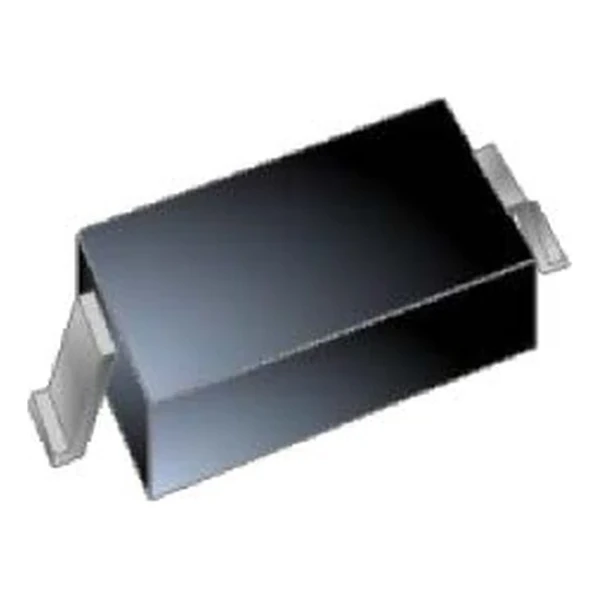
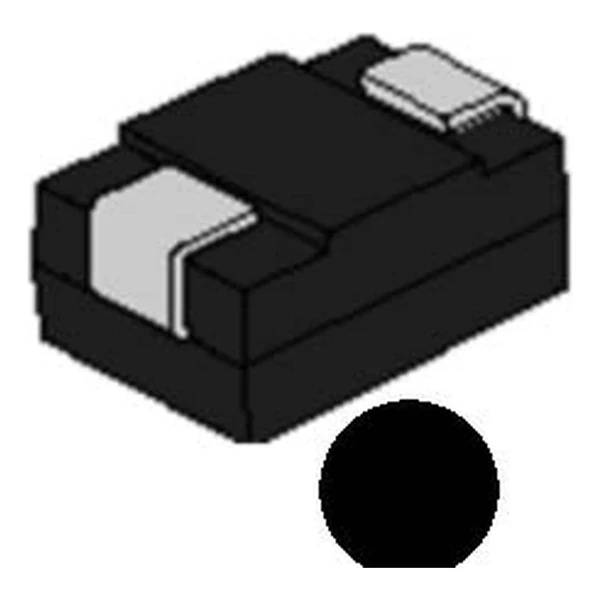
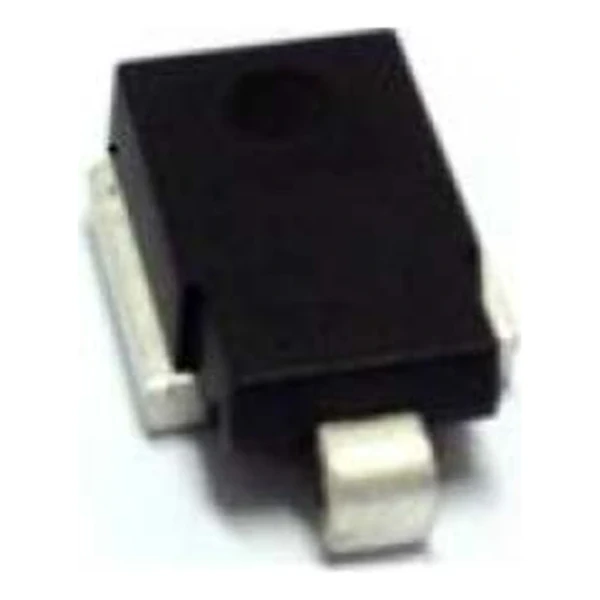
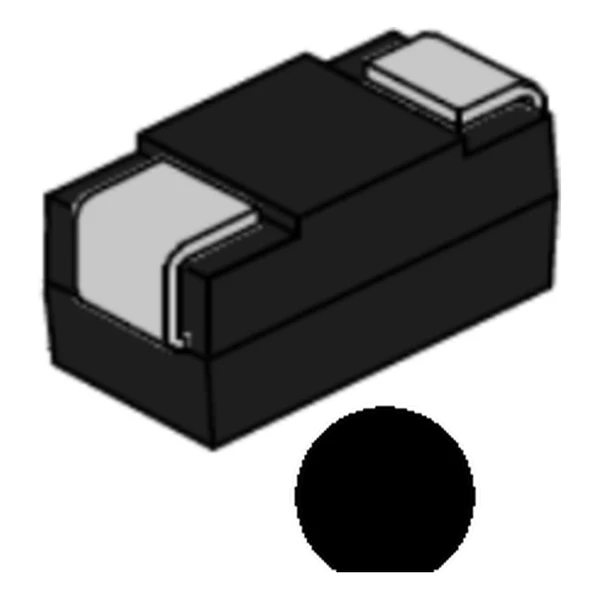
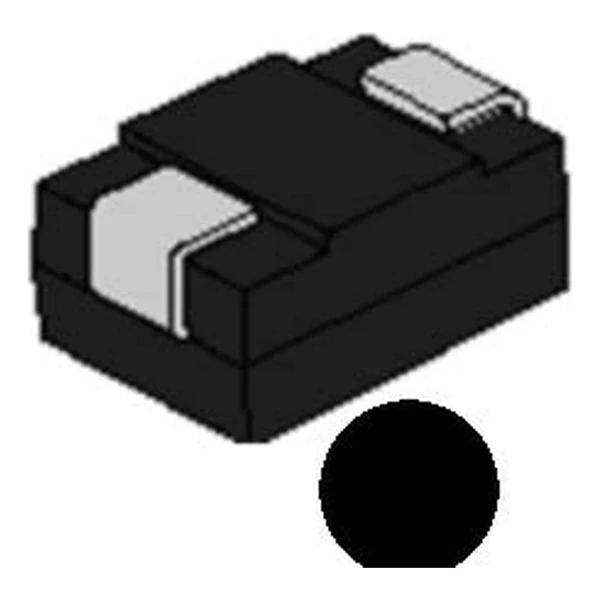
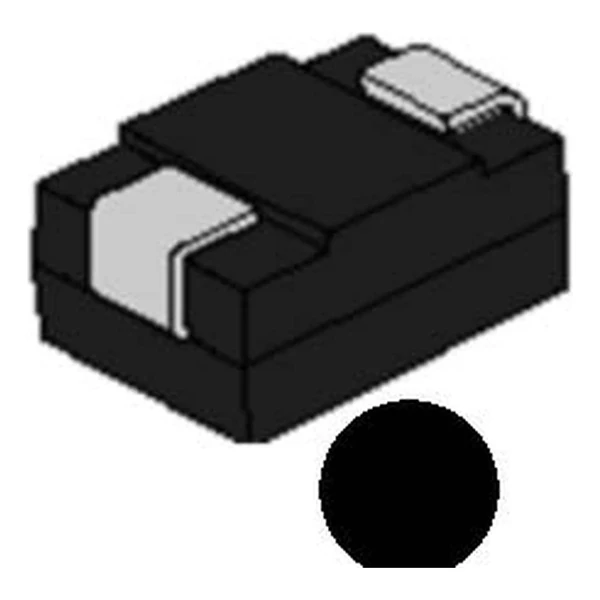
| Package | 0603 (1608 metric) |
| Mounting | Surface mount |
| Operating temperature | -40 °C to +85 °C |
| Qualification | AEC-Q200 |
| RoHS | Compliant, halogen free |
| Data sheet | Eaton Technical Data 10515 |
Outline drawing, pad or lead geometry and the pulse derating curves are
on the pages of Eaton Technical Data 10515; the package line above is the
body the part is built in.
How to Read These Ratings
The trigger voltage is measured with a transmission line pulse, not with a multimeter. It is the point where the structure snaps on, and it sits well above the standoff voltage so that normal signal swing does not trip it.
At 0.05 pF the part is effectively invisible to a multi-gigabit pair: the reactance at 1 GHz is still in the hundreds of ohms, far above the differential impedance.
Within the 0603ESDA family this is item 4 of 4 in the Eaton catalogue.
Series Positioning
Route the protected line through the pad and out the other side where the package allows it. A stub that tees off the line leaves a reflection that shows up as a glitch on a high speed pair.
- Capacitance is not a small effect on a data line. Read the capacitance at the frequency the line actually carries, not the 1 MHz test figure alone.
- Leakage is quoted at the rated voltage and at room temperature. It rises with temperature, which matters on an automotive rail that sits at 85 °C.
Frequently Asked Questions
Can it be used on a power rail?
Yes, within the rated voltage, but the energy per event on a power rail is much higher than an ESD strike. For supply transients a TVS with a joule rating is the right part, not an ESD suppressor.
Does the package matter?
It sets the capacitance and the thermal mass. The same die in a 0201 and a 0603 gives different surge capability, so the package is part of the electrical choice, not just the footprint.
Is the suppressor fast enough for a cable discharge?
The response is in the sub-nanosecond range because the structure is a junction, not a spark gap. What limits the protection is the layout, not the die.
Shenzhen Gaorunxin Technology Co., Ltd
Online message
Shenzhen Gaorunxin Technology Co., Ltd