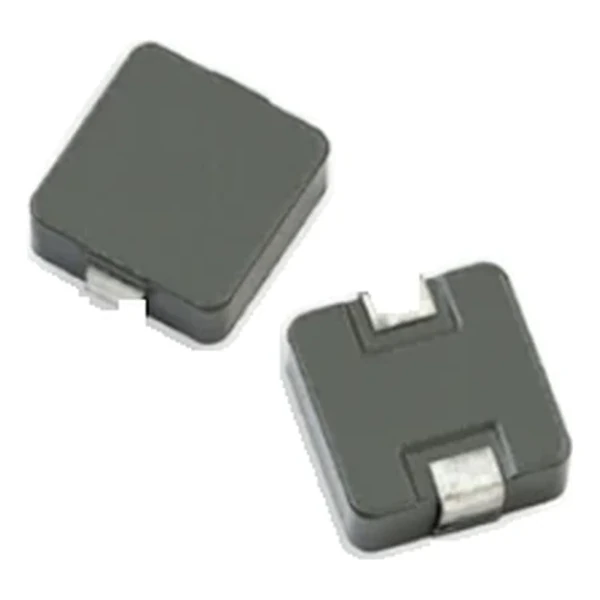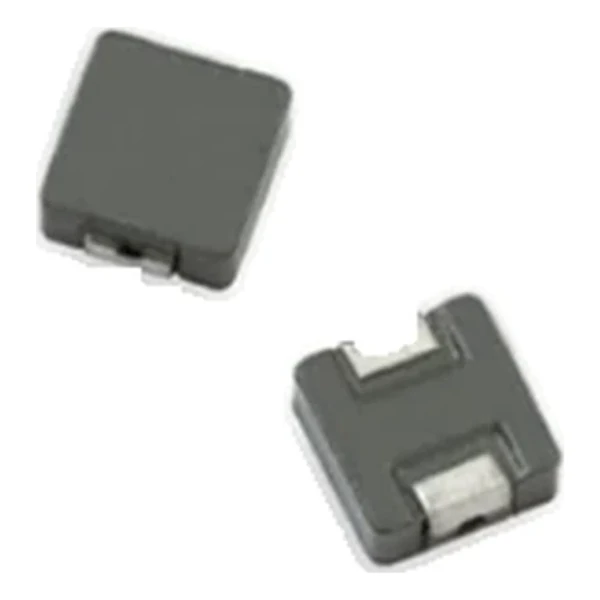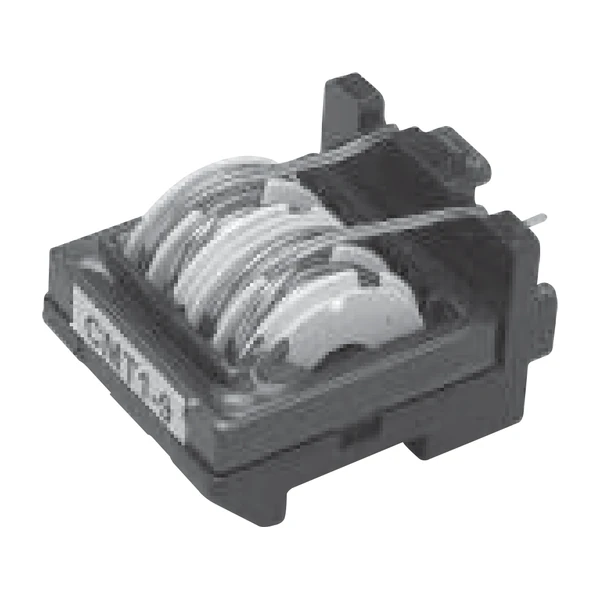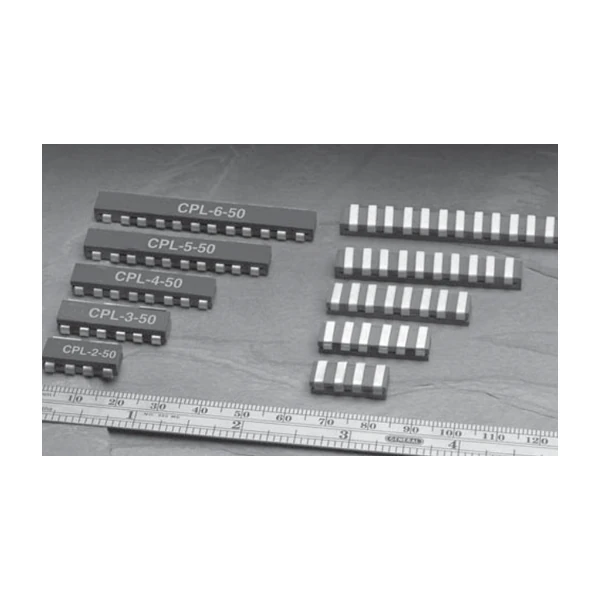
Eaton CPLA-5-50TR-R 5-Phase Coupled Inductor, 50 nH/phase
- Product Details
- Download
Eaton CPLA-5-50TR-R 5-Phase Coupled Inductor, 50 nH/phase
Electrical Specifications
| Parameter | Value |
|---|---|
| Orderable part number | CPLA-5-50TR-R |
| Number of phases | 5 |
| Rated inductance per phase | 50 nH/phase |
| DCR nominal @ 25 °C | 0.5 mOhm |
| DCR maximum @ 25 °C | 0.6 mOhm |
| Rated current per phase | 40 A |
| OCL, per pin pair | 490 nH typical / 365 nH minimum |
| Magnetising inductance @ 5 Adc | 400 nH |
| Frequency range | up to 2 MHz |
| Mounting | Surface mount |
| Operating temperature | -40 °C to +125 °C |
| RoHS | Compliant (-R suffix) |
How to Read These Ratings
Coupling is the whole point of this family. Fifty nanohenries per phase, wound on a shared core, so that the ripple from one phase subtracts from its neighbours instead of adding. The result is a converter that can run at a lower switching frequency for the same output ripple.
Coupled operation is where the part earns its keep: with the right duty cycle the two windings cancel part of the ripple, so the output capacitor sees less AC current and the converter can run at a lower switching frequency for the same ripple.
The per-phase DCR is what sets the conduction loss, and the coupling is what sets the ripple. Neither number alone tells you whether the part will work in a given controller.
Series Positioning
CPLA is the acoustic-noise-damped version of the 50 nH CPL. Same electrical behaviour, different construction, so the magnetostriction that makes a coupled inductor sing at the switching frequency is suppressed.
- Typical applications: Noise-sensitive multiphase VRMs, Vcore rails in equipment with acoustic limits.
- CPLA is not electrically interchangeable with CPL for every controller - the dampening changes the mechanical build; confirm with the reference design.
- Data sheet 4362.
Sizing It Into a Design
50 nH per phase sits at the design point the controller expects of the range, and the trade at that point is explicit: 0.5 mOhm of DCR against - A of saturation headroom.
Efficiency is set by where you sit on the loss curve, and the curve moves with switching frequency. A part that is excellent at 300 kHz can be mediocre at 1 MHz with the same current, because the core loss term takes over.
Frequently Asked Questions
What current does the rating refer to?
Rated current per phase. The total the converter can deliver is that multiplied by the number of phases, subject to the thermal design of the board.
Are CPL, CPLA and CPLE interchangeable?
Electrically similar, mechanically different: CPLA adds acoustic dampening and CPLE uses a core optimised for light-load efficiency. Confirm with the reference design.
What current does the rating refer to?
Rated current per phase. The total the converter can deliver is that multiplied by the number of phases, subject to the thermal design of the board.
Design note: use the per-phase rated inductance, not the OCL, and confirm the controller is the one the family was characterised with.
Mechanical Dimensions

Dimensional drawing and recommended PCB pad layout from the Eaton data sheet. Tolerances and pad dimensions are as printed on the drawing; check the outline against your layout before release.
Shenzhen Gaorunxin Technology Co., Ltd
Online message
Shenzhen Gaorunxin Technology Co., Ltd