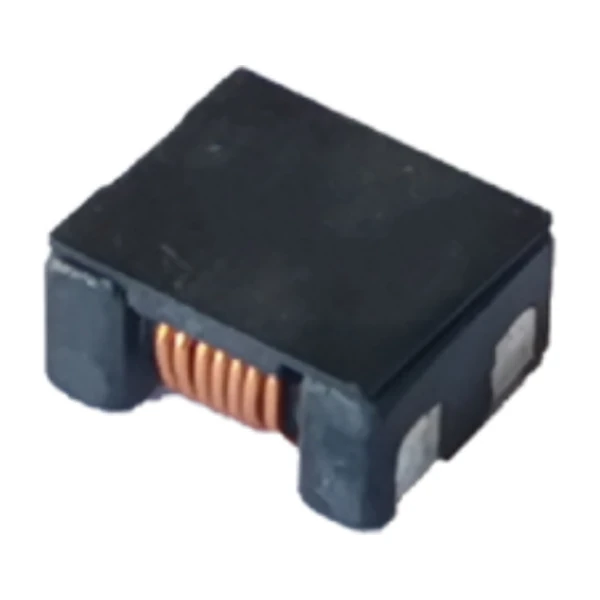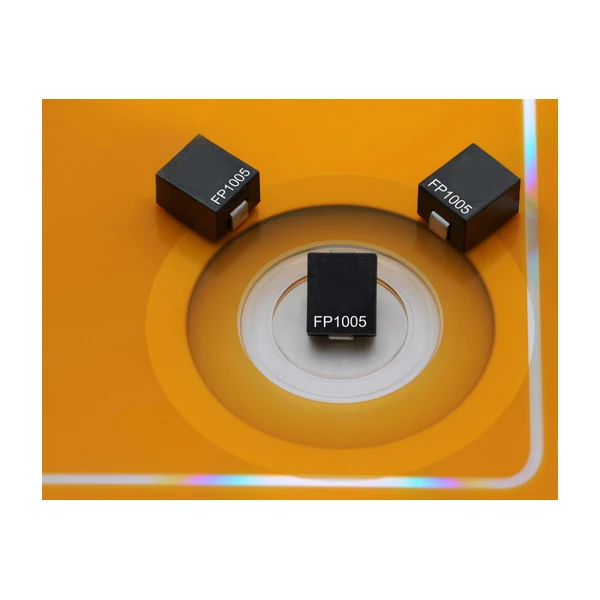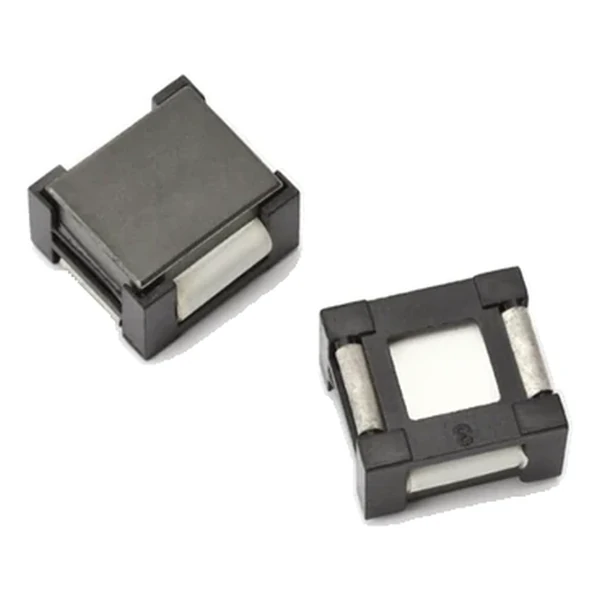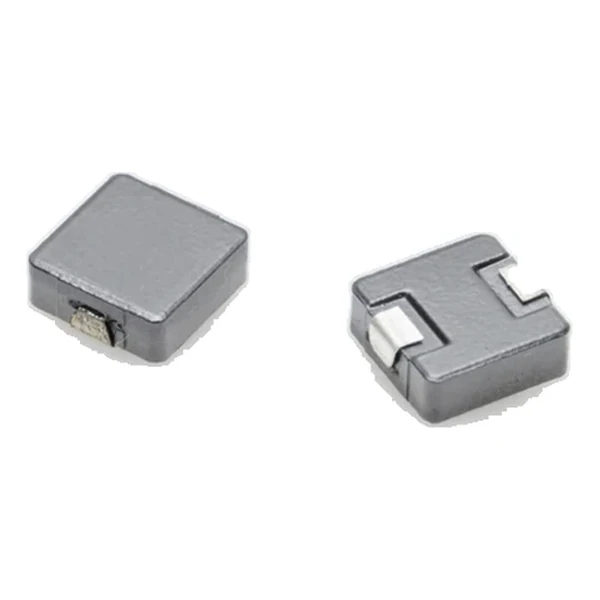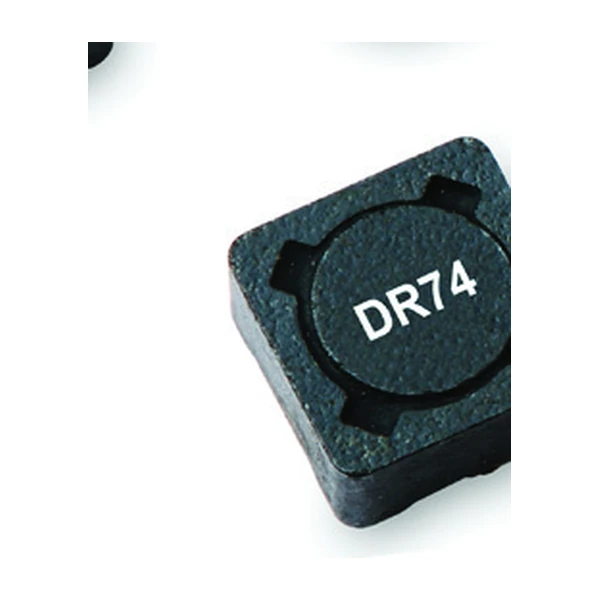
Eaton DRAP124-470-R Automotive Drum Core Inductor 47 uH
- Product Details
- Download
Eaton DRAP124-470-R Automotive Drum Core Inductor 47 uH
Electrical Specifications
| Parameter | Value |
|---|---|
| Orderable part number | DRAP124-470-R |
| Rated inductance | 47 uH ±20% |
| Open circuit inductance (OCL) | 46.3 uH |
| Irms (40 °C rise) | 1.78 A |
| Isat1 (30% rolloff @ +25 °C) | 2.91 A |
| Isat2 (40% rolloff @ +125 °C) | 2.33 A |
| DCR typical @ 20 °C | 134 mOhm |
| DCR maximum @ 20 °C | 160 mOhm |
| K-factor (Bp-p = K x L x dI) | 18.6 |
| Package | 12.5 x 12.5 x 4.6 mm, four-terminal |
| Mounting | Surface mount |
| Operating temperature | -40 °C to +165 °C |
| Qualification | AEC-Q200 |
| RoHS | Compliant (-R suffix) |
What the Numbers Mean
AEC-Q200 is the entry ticket, not the destination. This part is qualified to the automotive standard and rated to 165 °C ambient plus self-heating, in a shielded drum core built to survive shock and vibration rather than a laboratory bench.
Automotive thermal cycles are the hard part: the part may be rated to 165 °C, but every power cycle flexes the solder joint. The four-terminal variants exist precisely because two terminals are not always enough.
Isat1 is the 30% rolloff point at +25 °C, Isat2 the 40% rolloff at +125 °C. In a buck converter the inductor current peaks at the top of the ripple, so the peak - not the average - is the number that has to stay below Isat with margin for the transient.
Where This Series Fits
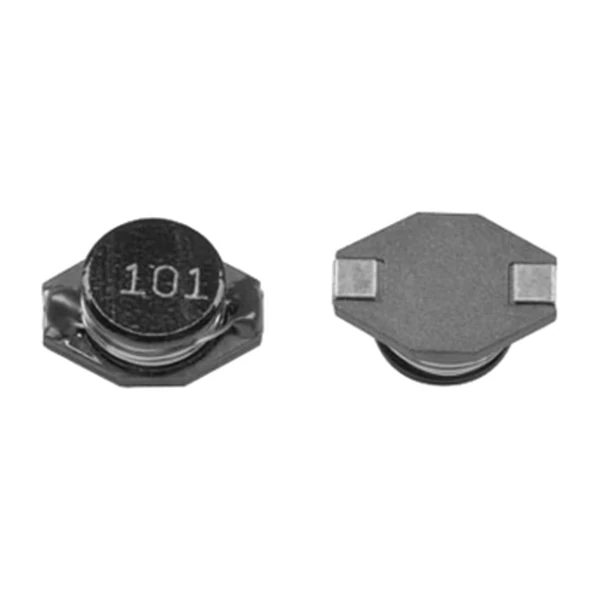
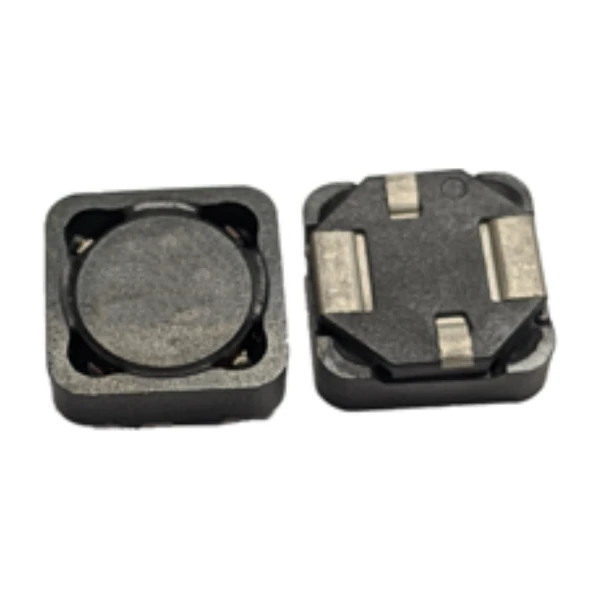
DRAP124 is the four-terminal version of the 12.5 mm automotive drum core. Two extra terminals clamp the body to the board, which is what makes it survive 30 g vibration - a two-terminal part of the same size does not.
- Typical applications: Automotive body electronics, LED lighting, ADAS, HVAC, infotainment, vibration-exposed modules.
- The fourth terminal is mechanical, not electrical - the pad layout has to account for it, and it is not a drop-in replacement for a two-terminal DR part.
- Data sheet 11040.
Sizing It Into a Design
Choose 47 uH when the ripple target is in the middle of the design window: the DCR stays at 134 mOhm and the saturation limit at 2.91 A leaves the transient room it needs.
The loss budget is the whole story with a power inductor: core loss grows with frequency and flux swing, copper loss grows with current, and the two meet at a different point for every inductance in the series.
Frequently Asked Questions
What is the operating temperature?
-40 °C to +165 °C, ambient plus self-temperature rise. That covers under-hood modules with margin for the rise.
Can I use it in a non-automotive design?
Yes, and people do when they need the vibration and temperature headroom. You pay for the qualification you may not need.
Is the part shielded?
Yes, magnetically shielded, which is what keeps the field out of the radios, sensors and ADAS front ends that share the module.
Design note: four terminals carry the vibration load - the mechanical joints need the same solder volume as the electrical ones, and the pad layout is not a two-terminal footprint.
Mechanical Dimensions

Dimensional drawing and recommended PCB pad layout from the Eaton data sheet. Tolerances and pad dimensions are as printed on the drawing; check the outline against your layout before release.
Shenzhen Gaorunxin Technology Co., Ltd
Online message
Shenzhen Gaorunxin Technology Co., Ltd