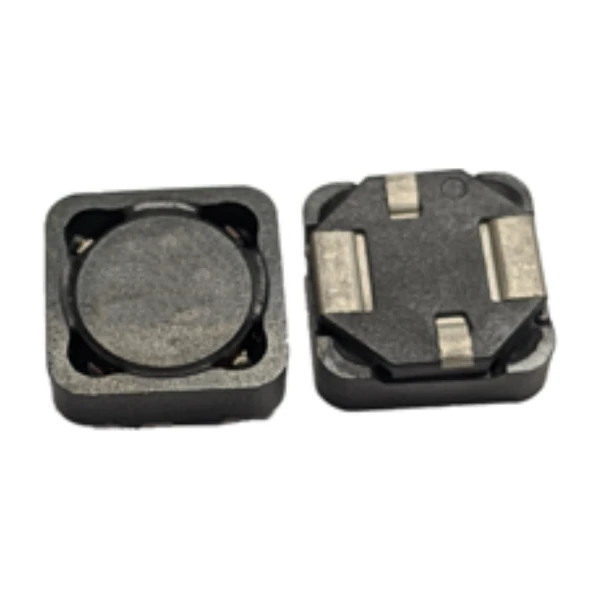
Eaton DRAP124-4R7-R Automotive Shielded Inductor 9.06 A
- Product Details
- Download
Eaton DRAP124-4R7-R Automotive Shielded Inductor 9.06 A
Ratings at a Glance
| Parameter | Value |
|---|---|
| Orderable part number | DRAP124-4R7-R |
| Rated inductance | 4.7 uH ±20% |
| Open circuit inductance (OCL) | 4.74 uH |
| Irms (40 °C rise) | 5.47 A |
| Isat1 (30% rolloff @ +25 °C) | 9.06 A |
| Isat2 (40% rolloff @ +125 °C) | 7.25 A |
| DCR typical @ 20 °C | 14 mOhm |
| DCR maximum @ 20 °C | 17 mOhm |
| K-factor (Bp-p = K x L x dI) | 57.9 |
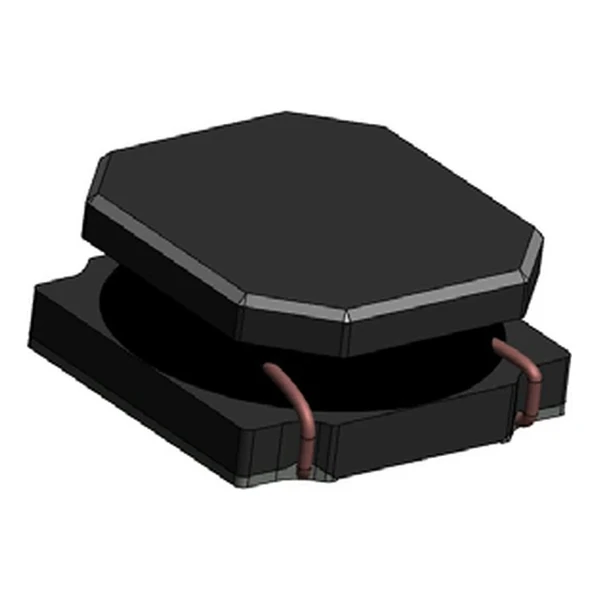
| Package | 12.5 x 12.5 x 4.6 mm, four-terminal |
| Mounting | Surface mount |
| Operating temperature | -40 °C to +165 °C |
| Qualification | AEC-Q200 |
| RoHS | Compliant (-R suffix) |
Reading the Data Sheet
Under-hood and in-module electronics see temperature cycling, vibration and long service life. The DRA/DRAP/DRAQ parts are built for that: AEC-Q200, wider temperature range, and mechanical features that keep the part attached.
At 165 °C the copper resistivity is about 60% higher than at 20 °C, so the DCR in the table is optimistic at the hot corner - budget the loss accordingly.
Isat is a magnetic limit, not a thermal one. Isat1 is the 30% rolloff point at +25 °C, Isat2 the 40% rolloff at +125 °C. Past it the inductance falls and the ripple climbs, and the current keeps flowing - nothing protects the switch except your own design margin.
What This Family Is For
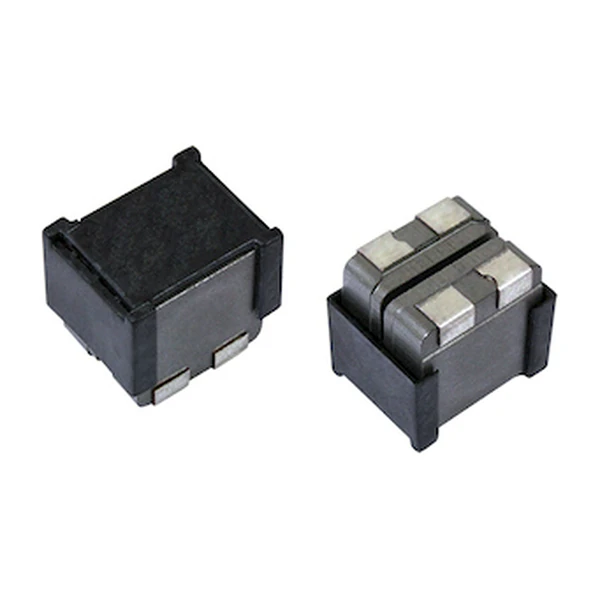
DRAP124 is the four-terminal version of the 12.5 mm automotive drum core. Two extra terminals clamp the body to the board, which is what makes it survive 30 g vibration - a two-terminal part of the same size does not.
- Typical applications: Automotive body electronics, LED lighting, ADAS, HVAC, infotainment, vibration-exposed modules.
- The fourth terminal is mechanical, not electrical - the pad layout has to account for it, and it is not a drop-in replacement for a two-terminal DR part.
- Data sheet 11040.
Putting It to Work
4.7 uH is in the middle of what this series covers. Moving up in inductance costs DCR and saturation current; moving down buys both, at the price of ripple.
Thermal design is not optional here. The rated current assumes a 40 °C rise with the part in free air on a stated pad; inside a closed box, on a thin board, next to a hot IC, that assumption is gone.
Frequently Asked Questions
What is the operating temperature?
-40 °C to +165 °C, ambient plus self-temperature rise. That covers under-hood modules with margin for the rise.
What is the operating temperature?
-40 °C to +165 °C, ambient plus self-temperature rise. That covers under-hood modules with margin for the rise.
Why are there two Isat values?
The first is the 30% roll-off point at +25 °C, the second is the 40% roll-off at +125 °C. Hot ferrite saturates earlier, so the second number is the one to use at temperature.
Design note: four terminals carry the vibration load - the mechanical joints need the same solder volume as the electrical ones, and the pad layout is not a two-terminal footprint.
Mechanical Dimensions

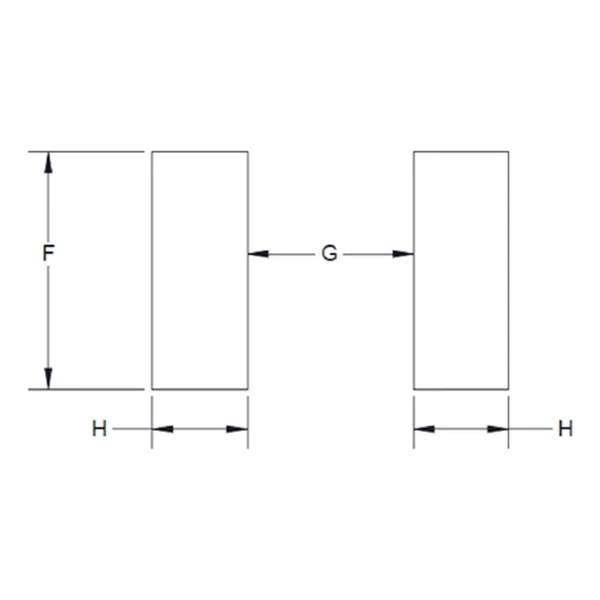
Dimensional drawing and recommended PCB pad layout from the Eaton data sheet. Tolerances and pad dimensions are as printed on the drawing; check the outline against your layout before release.
Shenzhen Gaorunxin Technology Co., Ltd
Online message
Shenzhen Gaorunxin Technology Co., Ltd