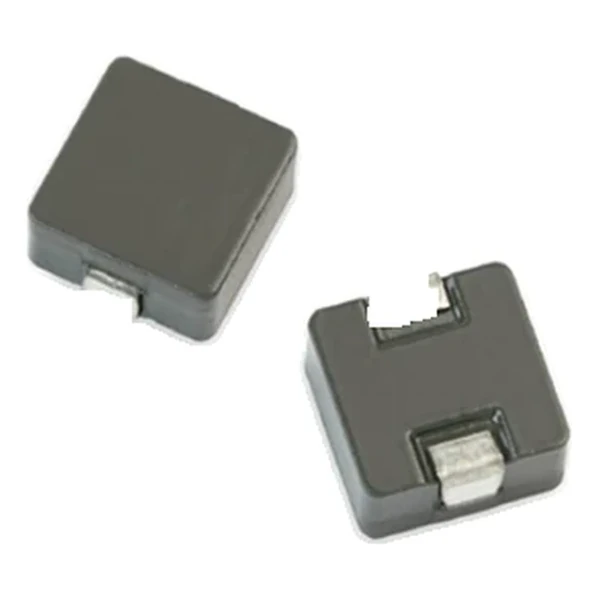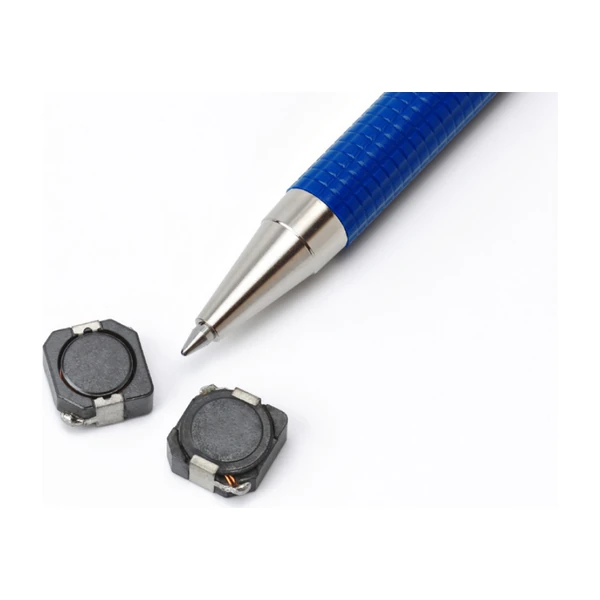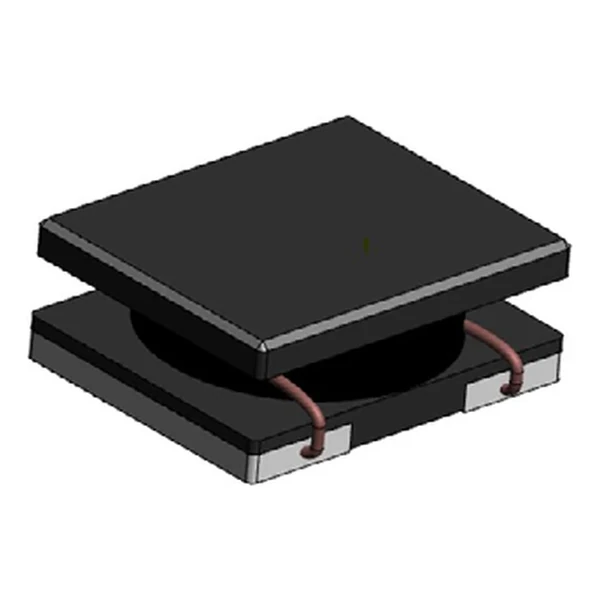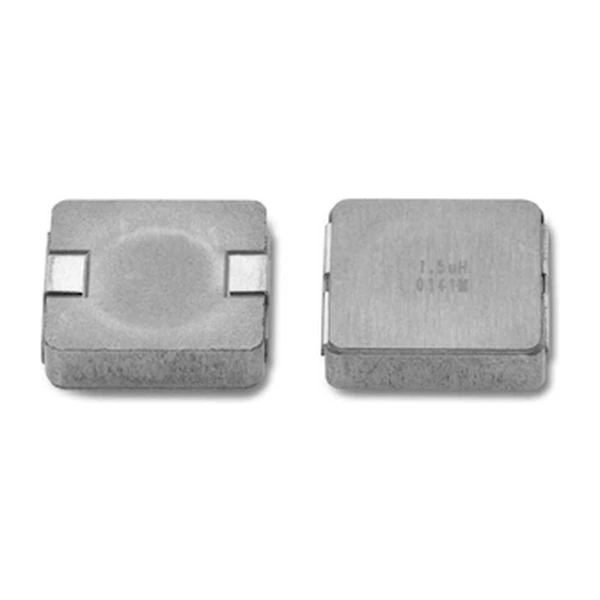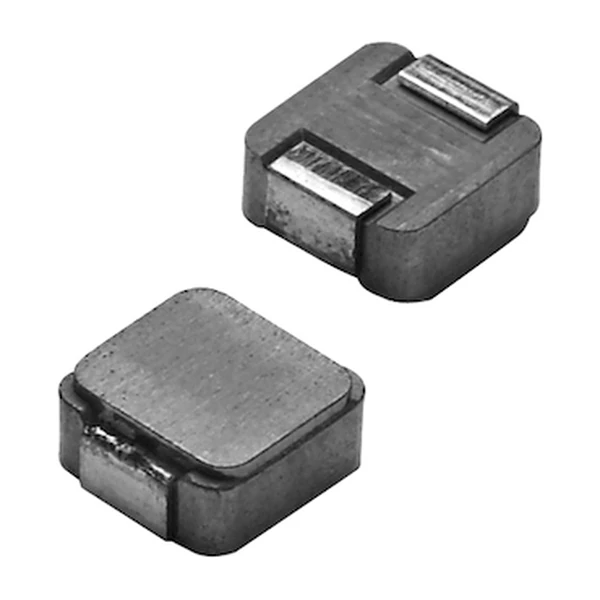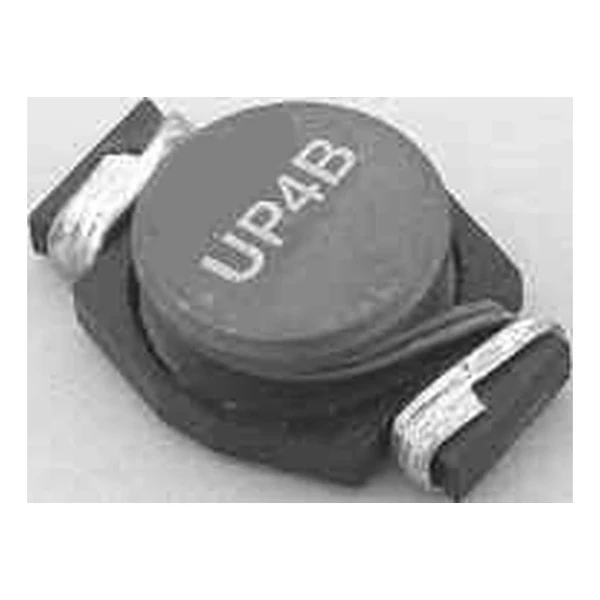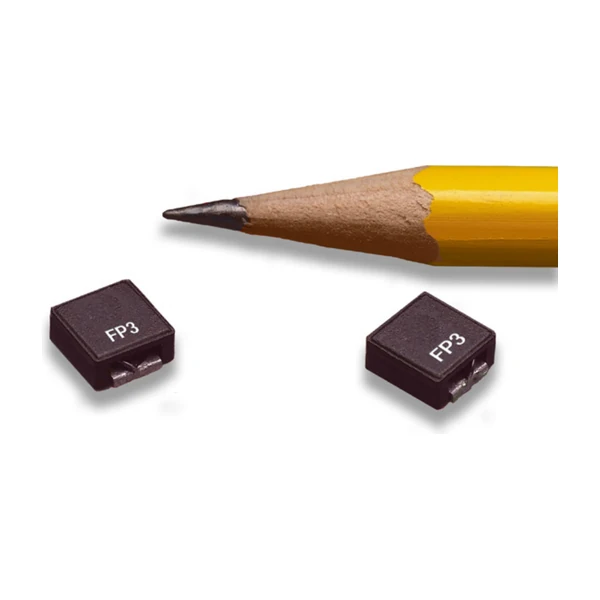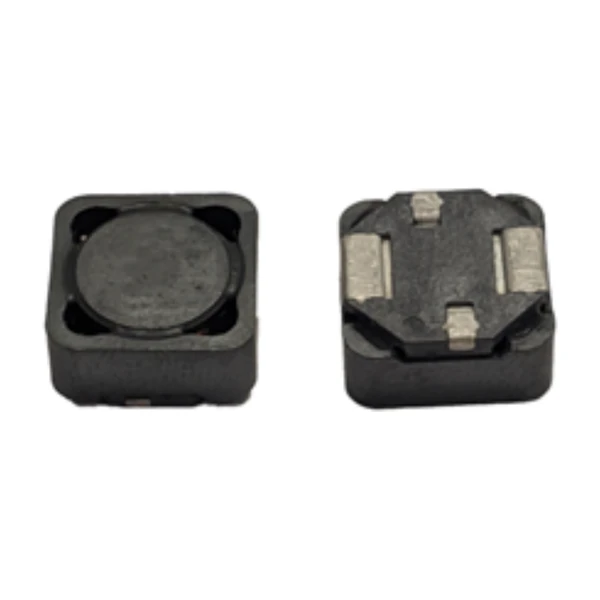
Eaton DRAP125-470-R 47 uH AEC-Q200 Drum Core, 2.59 A
- Product Details
- Download
Eaton DRAP125-470-R 47 uH AEC-Q200 Drum Core, 2.59 A
Key Specifications
| Parameter | Value |
|---|---|
| Orderable part number | DRAP125-470-R |
| Rated inductance | 47 uH ±20% |
| Open circuit inductance (OCL) | 47.8 uH |
| Irms (40 °C rise) | 2.59 A |
| Isat1 (30% rolloff @ +25 °C) | 3.13 A |
| Isat2 (40% rolloff @ +125 °C) | 2.51 A |
| DCR typical @ 20 °C | 81 mOhm |
| DCR maximum @ 20 °C | 97 mOhm |
| K-factor (Bp-p = K x L x dI) | 16.7 |
| Package | 12.5 x 12.5 x 6.1 mm, four-terminal |
| Mounting | Surface mount |
| Operating temperature | -40 °C to +165 °C |
| Qualification | AEC-Q200 |
| RoHS | Compliant (-R suffix) |
Reading the Data Sheet
This is the automotive grade version of the drum core family: AEC-Q200 qualified, shielded, and rated to 165 °C including self-temperature rise. The electrical behaviour is familiar; the qualification and the mechanical build are not.
Automotive thermal cycles are the hard part: the part may be rated to 165 °C, but every power cycle flexes the solder joint. The four-terminal variants exist precisely because two terminals are not always enough.
The saturation current is measured at a defined roll-off, and Eaton states the percentage on the data sheet: Isat1 is the 30% rolloff point at +25 °C, Isat2 the 40% rolloff at +125 °C. Read the number with the percentage in hand, because "saturation" means different things at 25% and at 40%.
Series Positioning
DRAP125 takes the four-terminal construction of DRAP124 and adds height for current. Same 12.5 x 12.5 footprint, 6.1 mm body, AEC-Q200 and 30 g vibration.
- Typical applications: Automotive DC-DC, body control, LED drivers, ADAS modules, seat and door controllers.
- Four-terminal mounting changes the reflow profile slightly - the mechanical joints need the same solder volume as the electrical ones.
- Data sheet 11041.
Design Notes
At 47 uH this part is in the middle of the family. The winding that produces that inductance is also what sets the 81 mOhm DCR - more turns, thinner wire, more resistance.
Efficiency is set by where you sit on the loss curve, and the curve moves with switching frequency. A part that is excellent at 300 kHz can be mediocre at 1 MHz with the same current, because the core loss term takes over.
Frequently Asked Questions
Can I use it in a non-automotive design?
Yes, and people do when they need the vibration and temperature headroom. You pay for the qualification you may not need.
Why are there two Isat values?
The first is the 30% roll-off point at +25 °C, the second is the 40% roll-off at +125 °C. Hot ferrite saturates earlier, so the second number is the one to use at temperature.
Why are there two Isat values?
The first is the 30% roll-off point at +25 °C, the second is the 40% roll-off at +125 °C. Hot ferrite saturates earlier, so the second number is the one to use at temperature.
Design note: four terminals carry the vibration load - the mechanical joints need the same solder volume as the electrical ones, and the pad layout is not a two-terminal footprint.
Mechanical Dimensions

Dimensional drawing and recommended PCB pad layout from the Eaton data sheet. Tolerances and pad dimensions are as printed on the drawing; check the outline against your layout before release.
Shenzhen Gaorunxin Technology Co., Ltd
Online message
Shenzhen Gaorunxin Technology Co., Ltd