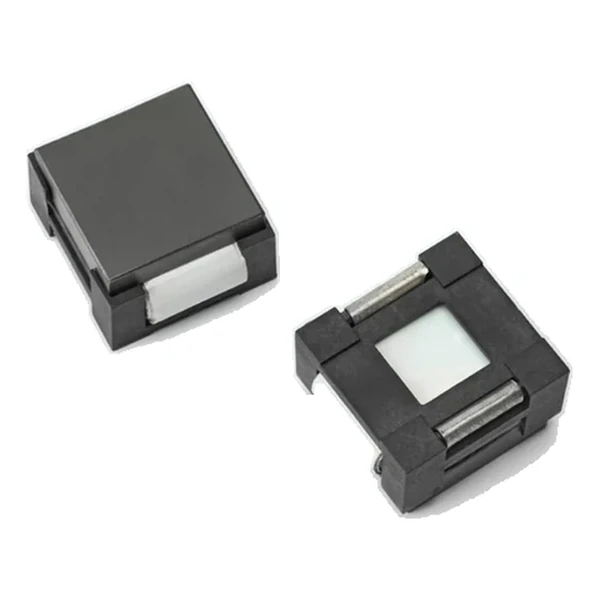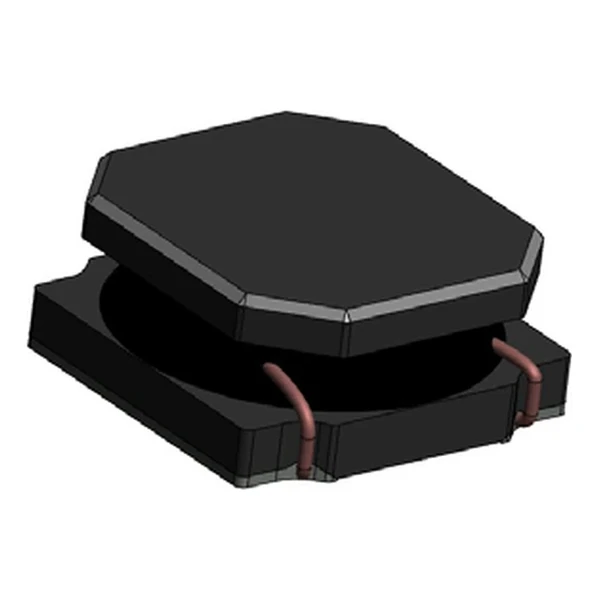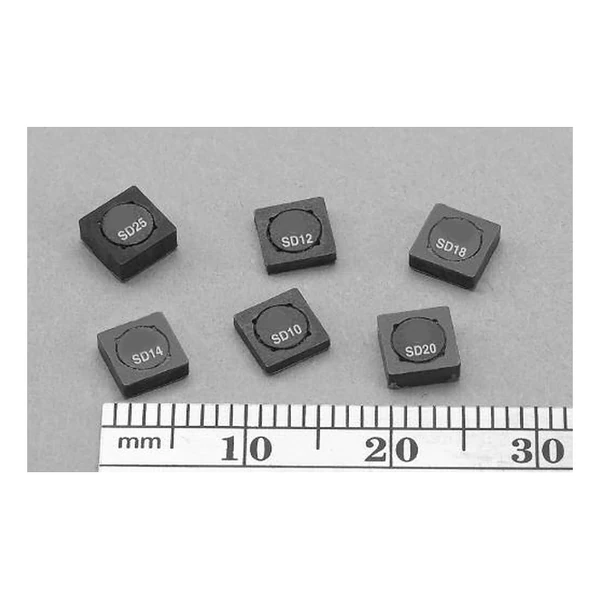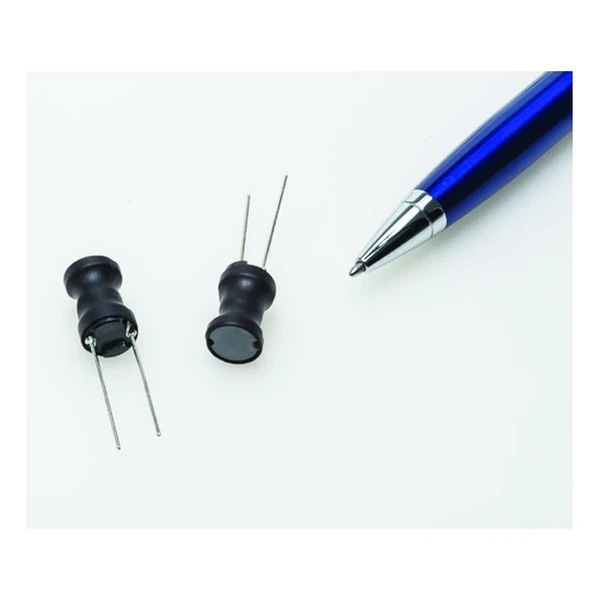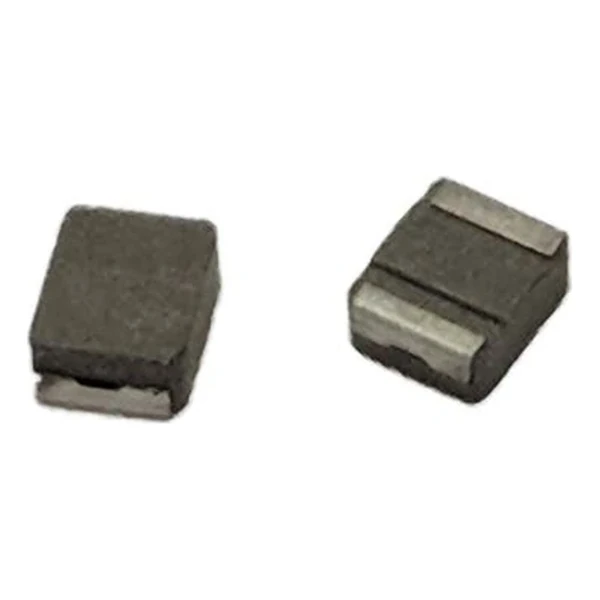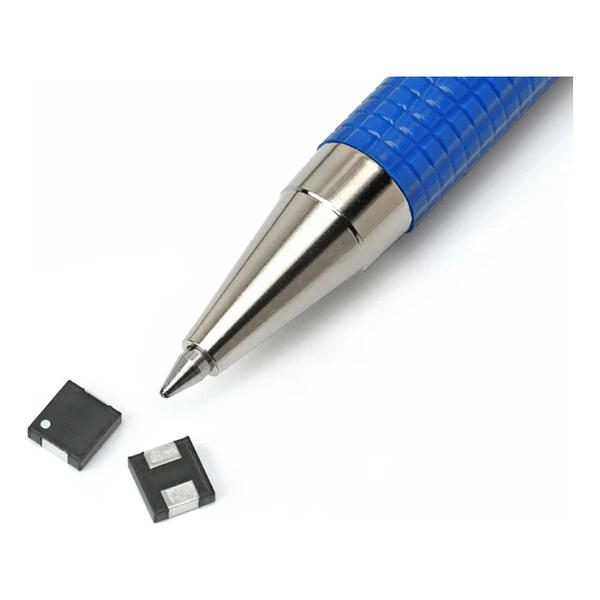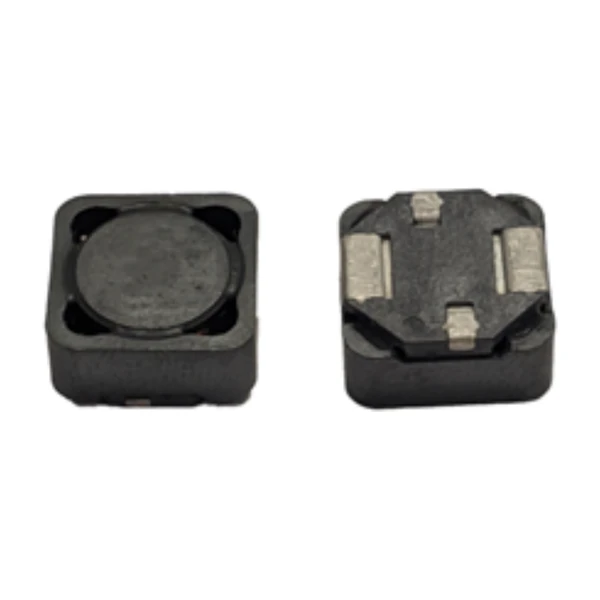
Eaton DRAP125-R47-R Automotive Shielded Inductor 33.2 A
- Product Details
- Download
Eaton DRAP125-R47-R Automotive Shielded Inductor 33.2 A
Key Specifications
| Parameter | Value |
|---|---|
| Orderable part number | DRAP125-R47-R |
| Rated inductance | 0.47 uH ±20% |
| Open circuit inductance (OCL) | 0.45 uH |
| Irms (40 °C rise) | 14.7 A |
| Isat1 (30% rolloff @ +25 °C) | 33.2 A |
| Isat2 (40% rolloff @ +125 °C) | 26.6 A |
| DCR typical @ 20 °C | 2.5 mOhm |
| DCR maximum @ 20 °C | 3 mOhm |
| K-factor (Bp-p = K x L x dI) | 177 |
| Package | 12.5 x 12.5 x 6.1 mm, four-terminal |
| Mounting | Surface mount |
| Operating temperature | -40 °C to +165 °C |
| Qualification | AEC-Q200 |
| RoHS | Compliant (-R suffix) |
What the Numbers Mean
Automotive magnetics are specified differently: the temperature range is wider, the qualification is AEC-Q200, and the construction has to hold together under vibration that would shake a commercial part off its pads. That is what the DRA series is.
Automotive thermal cycles are the hard part: the part may be rated to 165 °C, but every power cycle flexes the solder joint. The four-terminal variants exist precisely because two terminals are not always enough.
Isat1 is the 30% rolloff point at +25 °C, Isat2 the 40% rolloff at +125 °C. In a buck converter the inductor current peaks at the top of the ripple, so the peak - not the average - is the number that has to stay below Isat with margin for the transient.
What This Family Is For
DRAP125 takes the four-terminal construction of DRAP124 and adds height for current. Same 12.5 x 12.5 footprint, 6.1 mm body, AEC-Q200 and 30 g vibration.
- Typical applications: Automotive DC-DC, body control, LED drivers, ADAS modules, seat and door controllers.
- Four-terminal mounting changes the reflow profile slightly - the mechanical joints need the same solder volume as the electrical ones.
- Data sheet 11041.
Design Notes
0.47 uH is at the low end of what this series covers. Moving up in inductance costs DCR and saturation current; moving down buys both, at the price of ripple.
Thermal design is not optional here. The rated current assumes a 40 °C rise with the part in free air on a stated pad; inside a closed box, on a thin board, next to a hot IC, that assumption is gone.
Frequently Asked Questions
What does AEC-Q200 cover?
The qualification of the component itself: thermal shock, vibration, moisture, life and electrical stress. It does not qualify your assembly or your thermal design.
Why are there two Isat values?
The first is the 30% roll-off point at +25 °C, the second is the 40% roll-off at +125 °C. Hot ferrite saturates earlier, so the second number is the one to use at temperature.
Why are there two Isat values?
The first is the 30% roll-off point at +25 °C, the second is the 40% roll-off at +125 °C. Hot ferrite saturates earlier, so the second number is the one to use at temperature.
Design note: four terminals carry the vibration load - the mechanical joints need the same solder volume as the electrical ones, and the pad layout is not a two-terminal footprint.
Mechanical Dimensions

Dimensional drawing and recommended PCB pad layout from the Eaton data sheet. Tolerances and pad dimensions are as printed on the drawing; check the outline against your layout before release.
Shenzhen Gaorunxin Technology Co., Ltd
Online message
Shenzhen Gaorunxin Technology Co., Ltd