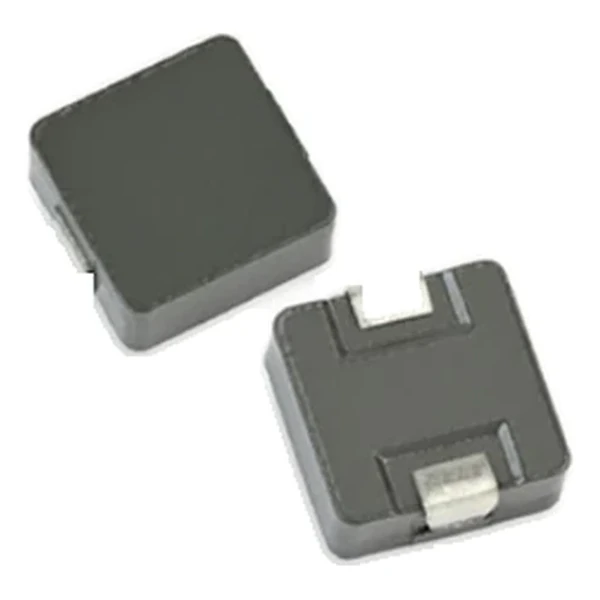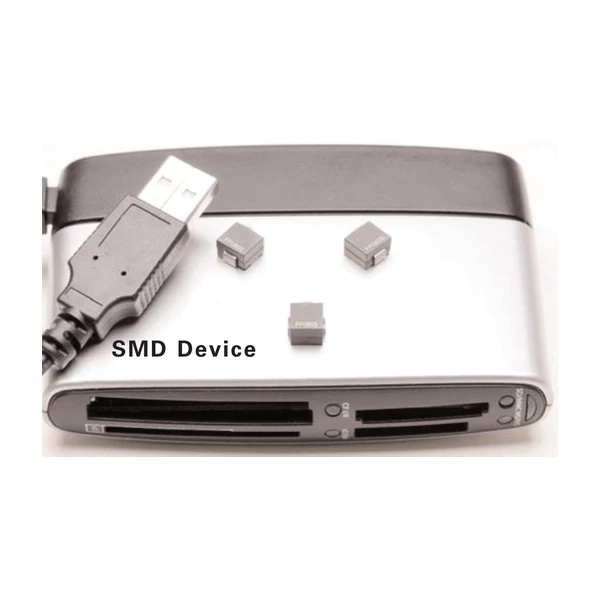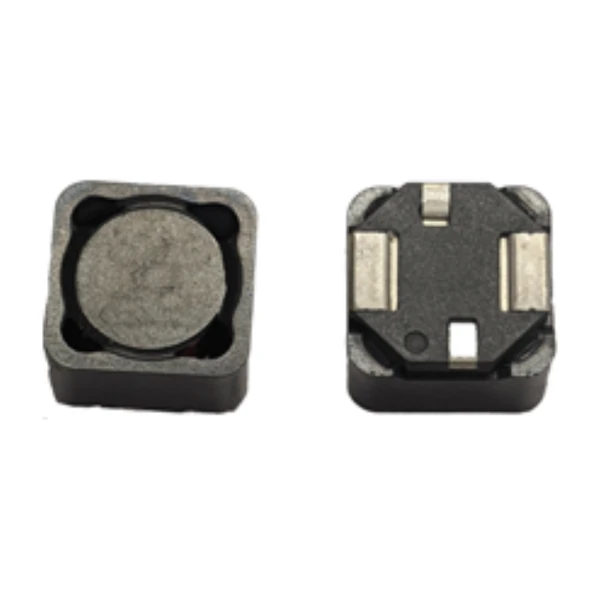
Eaton DRAP127-100-R 10 uH AEC-Q200 Drum Core, 6.02 A
- Product Details
- Download
Eaton DRAP127-100-R 10 uH AEC-Q200 Drum Core, 6.02 A
Electrical Specifications
| Parameter | Value |
|---|---|
| Orderable part number | DRAP127-100-R |
| Rated inductance | 10 uH ±20% |
| Open circuit inductance (OCL) | 9.63 uH |
| Irms (40 °C rise) | 6.02 A |
| Isat1 (30% rolloff @ +25 °C) | 11.2 A |
| Isat2 (40% rolloff @ +125 °C) | 8.96 A |
| DCR typical @ 20 °C | 17 mOhm |
| DCR maximum @ 20 °C | 21 mOhm |
| K-factor (Bp-p = K x L x dI) | 24 |
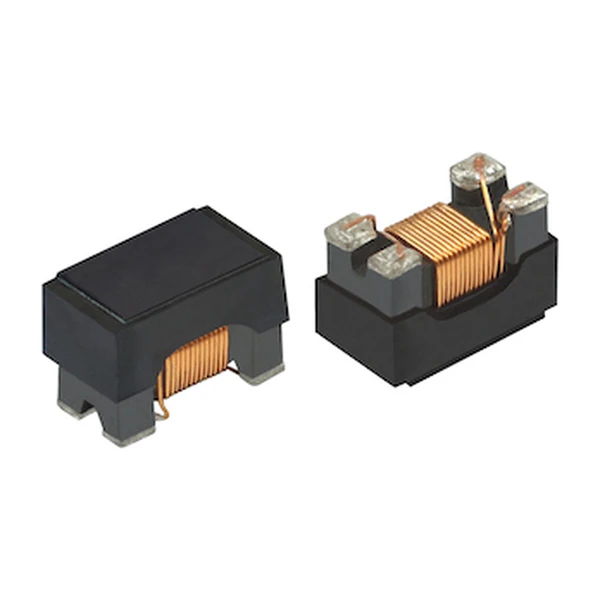
| Package | 12.5 x 12.5 x 8.1 mm, four-terminal |
| Mounting | Surface mount |
| Operating temperature | -40 °C to +165 °C |
| Qualification | AEC-Q200 |
| RoHS | Compliant (-R suffix) |
What the Numbers Mean
AEC-Q200 is the entry ticket, not the destination. This part is qualified to the automotive standard and rated to 165 °C ambient plus self-heating, in a shielded drum core built to survive shock and vibration rather than a laboratory bench.
The 165 °C figure is ambient plus self-temperature rise, which means the part can be genuinely hot in service. Derate the current for the real ambient, not for a 25 °C bench, and check the solder joint as well as the winding.
Isat is a magnetic limit, not a thermal one. Isat1 is the 30% rolloff point at +25 °C, Isat2 the 40% rolloff at +125 °C. Past it the inductance falls and the ripple climbs, and the current keeps flowing - nothing protects the switch except your own design margin.
Positioning in the Range
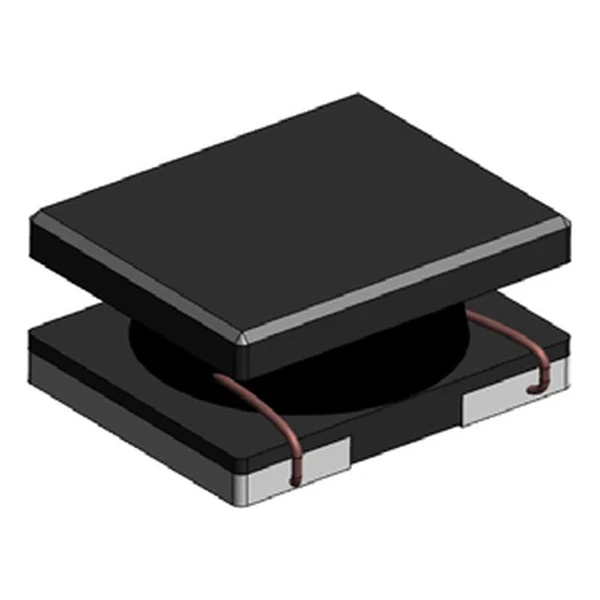
DRAP127 is the highest-current four-terminal automotive drum core at 56 A. The 8.1 mm body carries the copper; the four terminals carry the shock and vibration load.
- Typical applications: Automotive high-current DC-DC, under-hood modules, LED lighting, ADAS power.
- At 8.1 mm this is the tallest part in the family - plan the mechanical clearance and the potting volume before layout.
- Data sheet 11042.
Sizing It Into a Design
At 10 uH this part is in the middle of the family. The winding that produces that inductance is also what sets the 17 mOhm DCR - more turns, thinner wire, more resistance.
Efficiency is set by where you sit on the loss curve, and the curve moves with switching frequency. A part that is excellent at 300 kHz can be mediocre at 1 MHz with the same current, because the core loss term takes over.
Frequently Asked Questions
What is the operating temperature?
-40 °C to +165 °C, ambient plus self-temperature rise. That covers under-hood modules with margin for the rise.
Can I use it in a non-automotive design?
Yes, and people do when they need the vibration and temperature headroom. You pay for the qualification you may not need.
What is the operating temperature?
-40 °C to +165 °C, ambient plus self-temperature rise. That covers under-hood modules with margin for the rise.
Design note: four terminals carry the vibration load - the mechanical joints need the same solder volume as the electrical ones, and the pad layout is not a two-terminal footprint.
Mechanical Dimensions

Dimensional drawing and recommended PCB pad layout from the Eaton data sheet. Tolerances and pad dimensions are as printed on the drawing; check the outline against your layout before release.
Shenzhen Gaorunxin Technology Co., Ltd
Online message
Shenzhen Gaorunxin Technology Co., Ltd