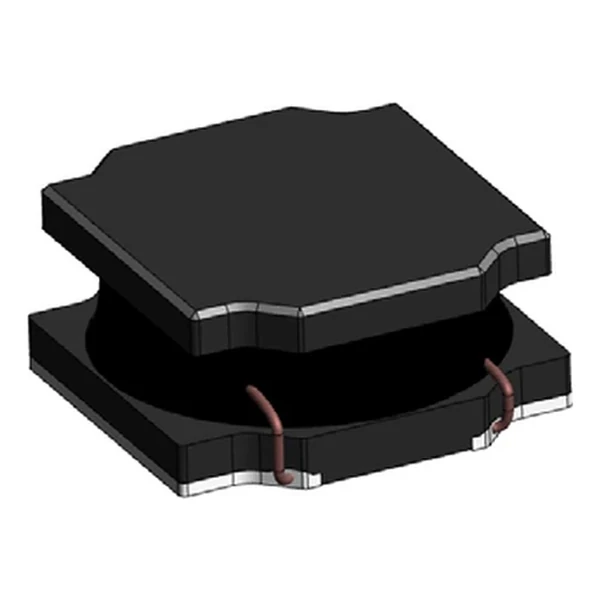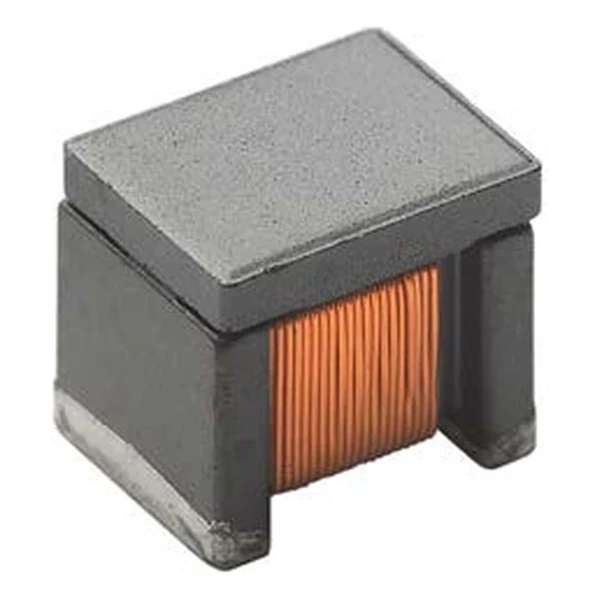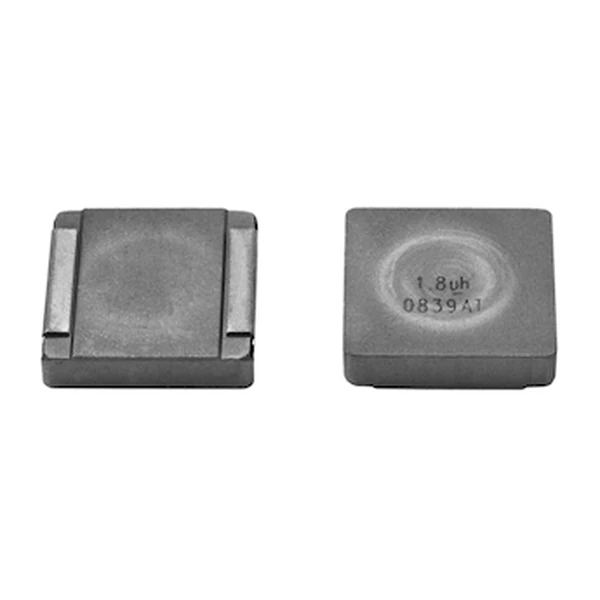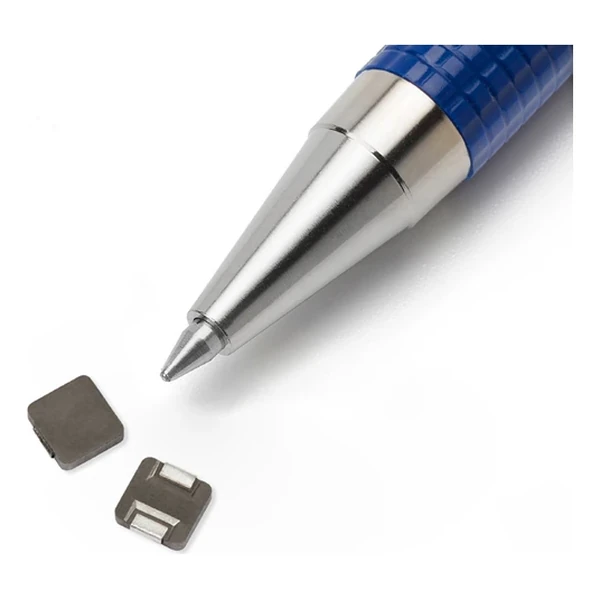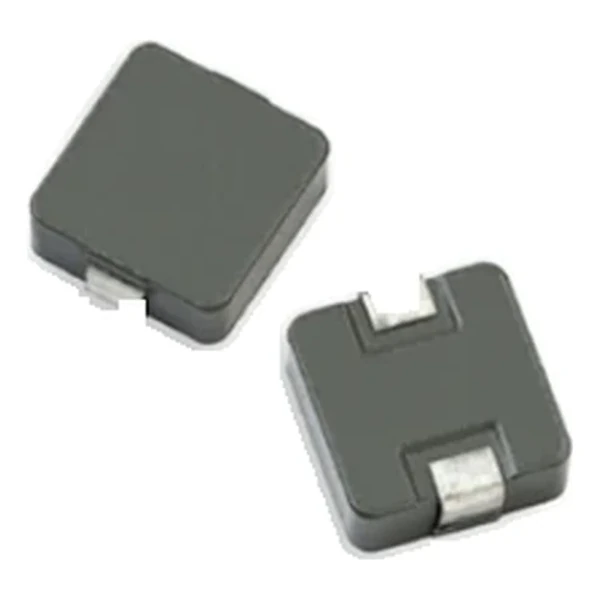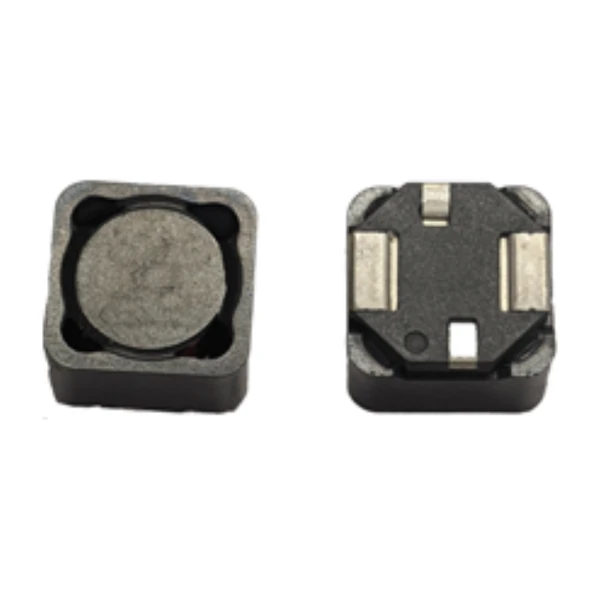
Eaton DRAP127-102-R Automotive Drum Core Inductor 1000 uH
- Product Details
- Download
Eaton DRAP127-102-R Automotive Drum Core Inductor 1000 uH
Specification Table
| Parameter | Value |
|---|---|
| Orderable part number | DRAP127-102-R |
| Rated inductance | 1000 uH ±20% |
| Open circuit inductance (OCL) | 999 uH |
| Irms (40 °C rise) | 0.6 A |
| Isat1 (30% rolloff @ +25 °C) | 1.1 A |
| Isat2 (40% rolloff @ +125 °C) | 0.88 A |
| DCR typical @ 20 °C | 1750 mOhm |
| DCR maximum @ 20 °C | 2100 mOhm |
| K-factor (Bp-p = K x L x dI) | 2.4 |
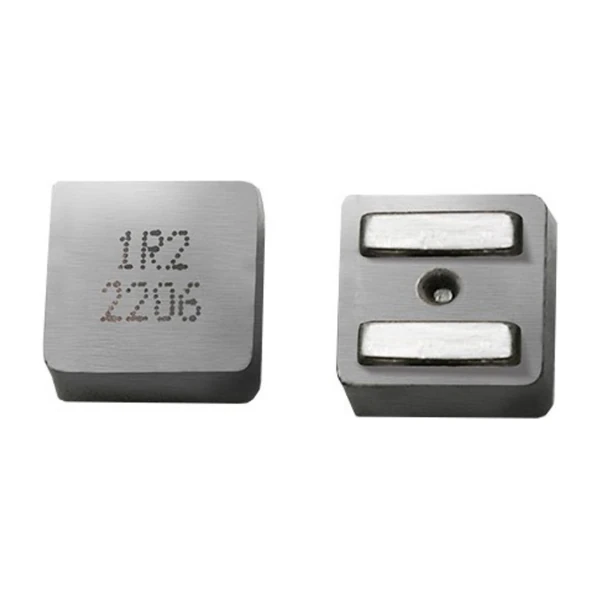
| Package | 12.5 x 12.5 x 8.1 mm, four-terminal |
| Mounting | Surface mount |
| Operating temperature | -40 °C to +165 °C |
| Qualification | AEC-Q200 |
| RoHS | Compliant (-R suffix) |
Reading the Data Sheet
This is the automotive grade version of the drum core family: AEC-Q200 qualified, shielded, and rated to 165 °C including self-temperature rise. The electrical behaviour is familiar; the qualification and the mechanical build are not.
At 165 °C the copper resistivity is about 60% higher than at 20 °C, so the DCR in the table is optimistic at the hot corner - budget the loss accordingly.
Isat1 is the 30% rolloff point at +25 °C, Isat2 the 40% rolloff at +125 °C. In a buck converter the inductor current peaks at the top of the ripple, so the peak - not the average - is the number that has to stay below Isat with margin for the transient.
Series Positioning
DRAP127 is the highest-current four-terminal automotive drum core at 56 A. The 8.1 mm body carries the copper; the four terminals carry the shock and vibration load.
- Typical applications: Automotive high-current DC-DC, under-hood modules, LED lighting, ADAS power.
- At 8.1 mm this is the tallest part in the family - plan the mechanical clearance and the potting volume before layout.
- Data sheet 11042.
Putting It to Work
1000 uH sits at the high end of the range, and the trade at that point is explicit: 1750 mOhm of DCR against 1.1 A of saturation headroom.
The loss budget is the whole story with a power inductor: core loss grows with frequency and flux swing, copper loss grows with current, and the two meet at a different point for every inductance in the series.
Frequently Asked Questions
Can I use it in a non-automotive design?
Yes, and people do when they need the vibration and temperature headroom. You pay for the qualification you may not need.
Can I use it in a non-automotive design?
Yes, and people do when they need the vibration and temperature headroom. You pay for the qualification you may not need.
How does it differ from the commercial DR part of the same size?
The electrical shape is similar, the qualification, the temperature range and often the terminal construction are not. Do not assume drop-in equivalence.
Design note: four terminals carry the vibration load - the mechanical joints need the same solder volume as the electrical ones, and the pad layout is not a two-terminal footprint.
Mechanical Dimensions

Dimensional drawing and recommended PCB pad layout from the Eaton data sheet. Tolerances and pad dimensions are as printed on the drawing; check the outline against your layout before release.
Shenzhen Gaorunxin Technology Co., Ltd
Online message
Shenzhen Gaorunxin Technology Co., Ltd