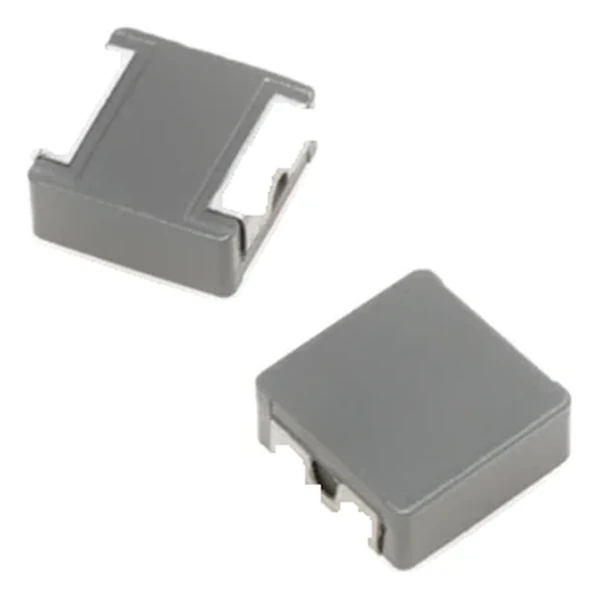
Eaton DRAP127-221-R - 220 uH AEC-Q200 Power Inductor
- Product Details
- Download
Eaton DRAP127-221-R - 220 uH AEC-Q200 Power Inductor
Electrical Specifications
| Parameter | Value |
|---|---|
| Orderable part number | DRAP127-221-R |
| Rated inductance | 220 uH ±20% |
| Open circuit inductance (OCL) | 220 uH |
| Irms (40 °C rise) | 1.25 A |
| Isat1 (30% rolloff @ +25 °C) | 2.35 A |
| Isat2 (40% rolloff @ +125 °C) | 1.88 A |
| DCR typical @ 20 °C | 398 mOhm |
| DCR maximum @ 20 °C | 480 mOhm |
| K-factor (Bp-p = K x L x dI) | 5 |
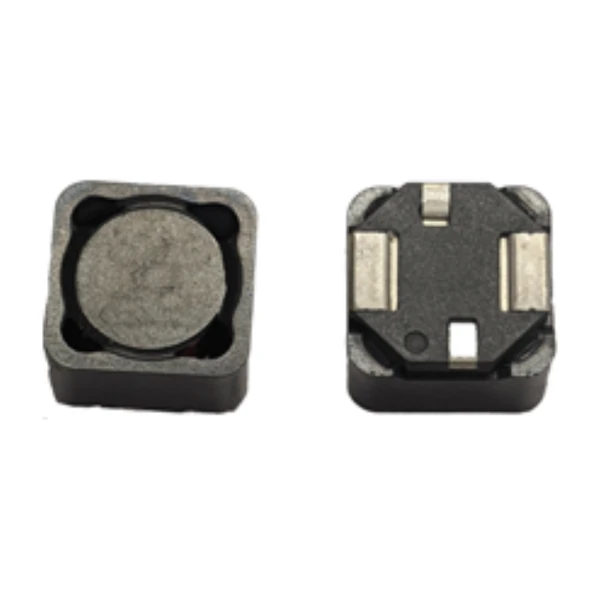
| Package | 12.5 x 12.5 x 8.1 mm, four-terminal |
| Mounting | Surface mount |
| Operating temperature | -40 °C to +165 °C |
| Qualification | AEC-Q200 |
| RoHS | Compliant (-R suffix) |
Reading the Data Sheet
Under-hood and in-module electronics see temperature cycling, vibration and long service life. The DRA/DRAP/DRAQ parts are built for that: AEC-Q200, wider temperature range, and mechanical features that keep the part attached.
At 165 °C the copper resistivity is about 60% higher than at 20 °C, so the DCR in the table is optimistic at the hot corner - budget the loss accordingly.
The saturation current is measured at a defined roll-off, and Eaton states the percentage on the data sheet: Isat1 is the 30% rolloff point at +25 °C, Isat2 the 40% rolloff at +125 °C. Read the number with the percentage in hand, because "saturation" means different things at 25% and at 40%.
Where This Series Fits
DRAP127 is the highest-current four-terminal automotive drum core at 56 A. The 8.1 mm body carries the copper; the four terminals carry the shock and vibration load.
- Typical applications: Automotive high-current DC-DC, under-hood modules, LED lighting, ADAS power.
- At 8.1 mm this is the tallest part in the family - plan the mechanical clearance and the potting volume before layout.
- Data sheet 11042.
Putting It to Work
220 uH sits in the middle of the range, and the trade at that point is explicit: 398 mOhm of DCR against 2.35 A of saturation headroom.
Thermal design is not optional here. The rated current assumes a 40 °C rise with the part in free air on a stated pad; inside a closed box, on a thin board, next to a hot IC, that assumption is gone.
Frequently Asked Questions
Can I use it in a non-automotive design?
Yes, and people do when they need the vibration and temperature headroom. You pay for the qualification you may not need.
What is the operating temperature?
-40 °C to +165 °C, ambient plus self-temperature rise. That covers under-hood modules with margin for the rise.
Is the part shielded?
Yes, magnetically shielded, which is what keeps the field out of the radios, sensors and ADAS front ends that share the module.
Design note: four terminals carry the vibration load - the mechanical joints need the same solder volume as the electrical ones, and the pad layout is not a two-terminal footprint.
Mechanical Dimensions

Dimensional drawing and recommended PCB pad layout from the Eaton data sheet. Tolerances and pad dimensions are as printed on the drawing; check the outline against your layout before release.
Shenzhen Gaorunxin Technology Co., Ltd
Online message
Shenzhen Gaorunxin Technology Co., Ltd