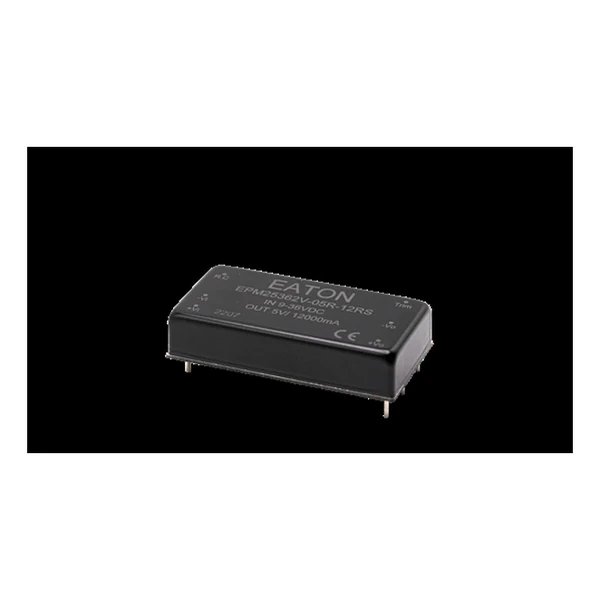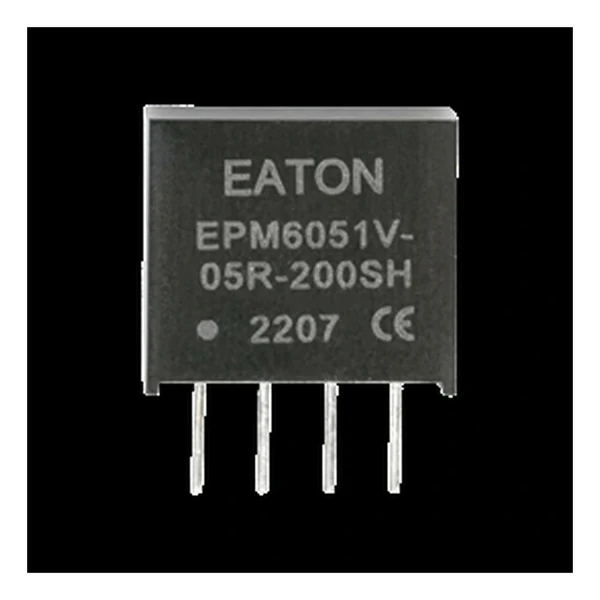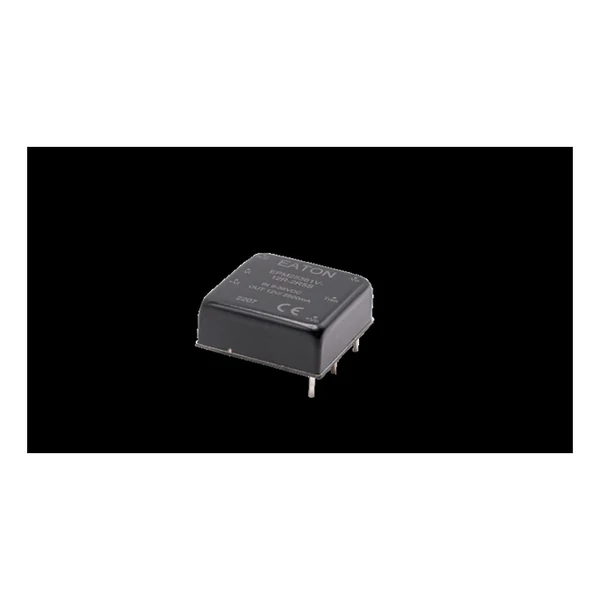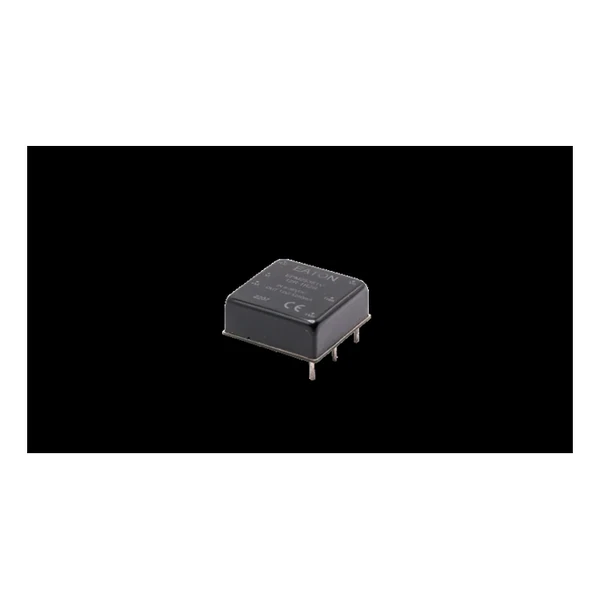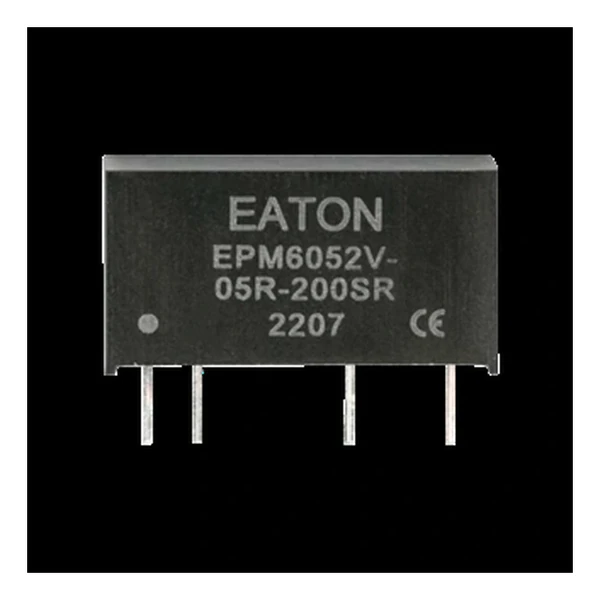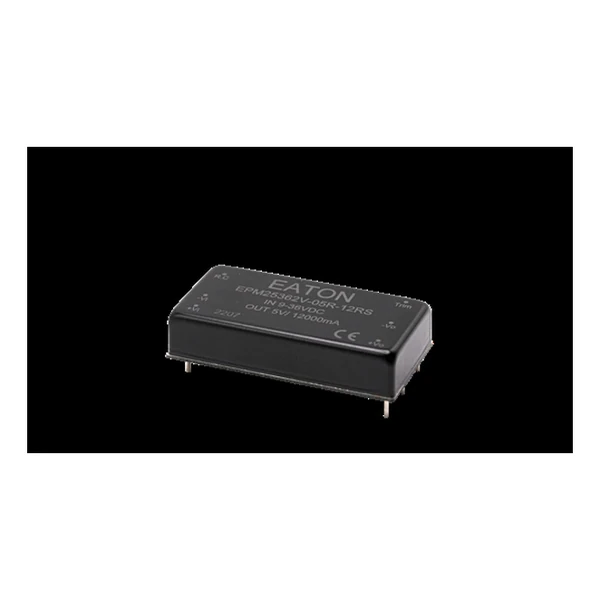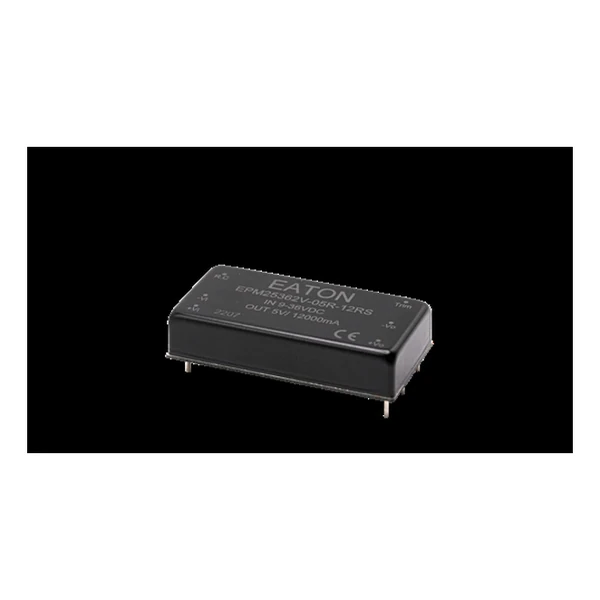
Eaton EPM25362V-3R3-12RS 3.3V 39.6W DC-DC Module
- Product Details
- Download
Eaton EPM25362V-3R3-12RS 3.3V 39.6W DC-DC Module
Electrical Specifications
| Parameter | Value |
|---|---|
| Orderable part number | EPM25362V-3R3-12RS |
| Input voltage range | 9-36 Vdc (nominal 24 V) |
| Output voltage | 3.3 Vdc |
| Output current at full load | 12000 mA |
| Output power | 39.6 W |
| Efficiency, minimum | 88 % |
| Efficiency, typical | 89 % |
| Capacitive load, maximum | 28000 uF |
| Isolation voltage | 1.6 kVdc |
| Package | See dimension drawing |
| Operating temperature | -40 °C to +105 °C |
| Qualification | Industrial |
| RoHS | Compliant |
| Data sheet | Eaton Technical Data ELX1168 |
Mechanical drawing, derating curve and application circuits are on the
following pages of Eaton Technical Data ELX1168.
What the Numbers Mean
This is a regulated isolated converter with a fixed switching frequency around 250 kHz, remote on/off, and no minimum load requirement. The no-minimum-load point matters: many converters of this class need a bleeder resistor to stay in regulation, and this one does not.
At 39.6 W out and 89 % typical efficiency the module dissipates about 4.89 W. That is the number the thermal design has to carry, not the output power.
Series Positioning
The 25 series covers 15, 30, 40 and 60 W in a 2 x 1 inch case, with 9-36 V and 18-75 V input ranges and single or dual outputs.
- At 60 W the case dissipates several watts. Plan the thermal path before choosing the enclosure.
Frequently Asked Questions
What does the wide input range buy me?
A 9-36 V input covers a 24 V bus with transients; 18-75 V covers a 48 V bus. The converter holds regulation across the whole range, so the battery can sag without dropping the rail.
How is the case cooled?
Through the baseplate into the board or a heatsink. At 60 W the efficiency loss is several watts, so the thermal path is part of the design, not an afterthought.
How is the case cooled?
Through the baseplate into the board or a heatsink. At 60 W the efficiency loss is several watts, so the thermal path is part of the design, not an afterthought.
Shenzhen Gaorunxin Technology Co., Ltd
Online message
Shenzhen Gaorunxin Technology Co., Ltd