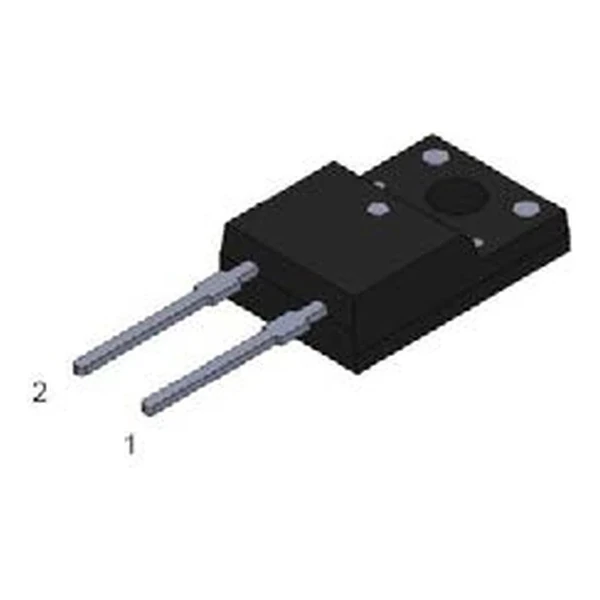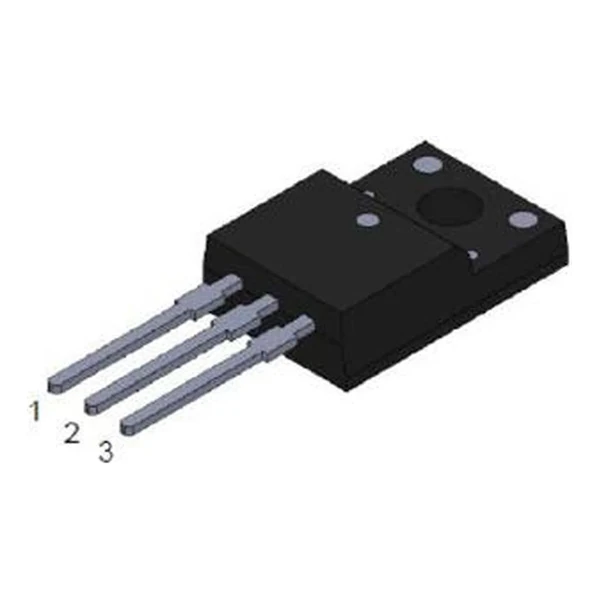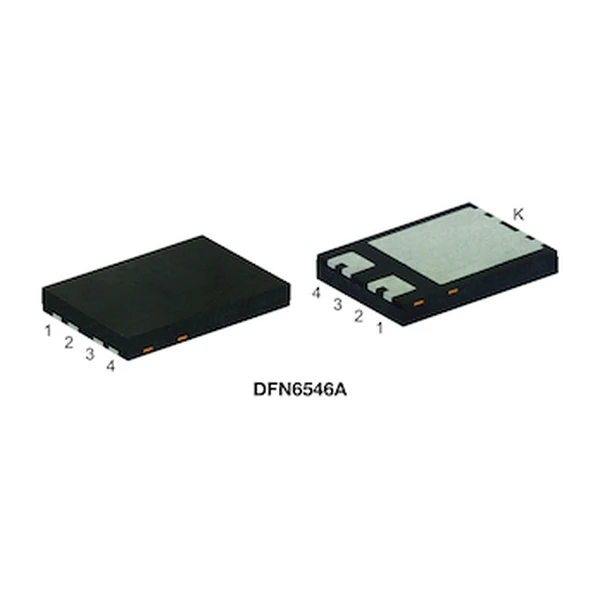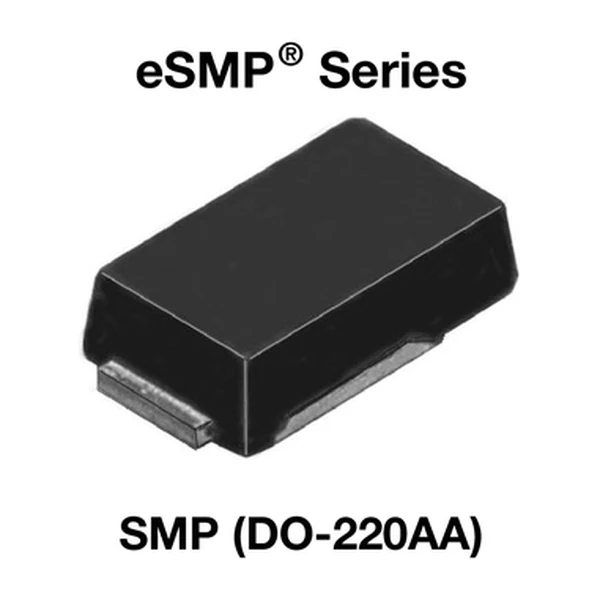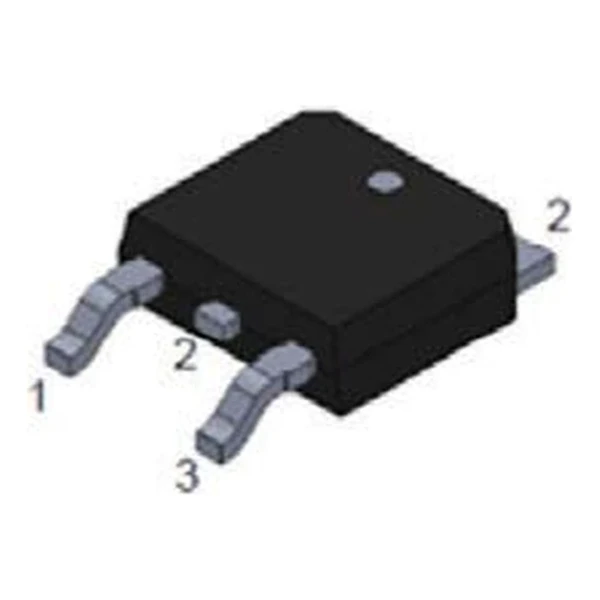
Eaton EREE0804E 400 V 8 A Fast Recovery Diode
- Product Details
- Download
Eaton EREE0804E 400 V 8 A Fast Recovery Diode
Ratings at a Glance
| Parameter | Value |
|---|---|
| Orderable part number | EREE0804E |
| Repetitive peak reverse voltage (VRRM) | 400 V |
| Maximum RMS voltage (VRMS) | 280 V |
| Maximum DC blocking voltage (VDC) | 400 V |
| Average forward current (IF(AV)) | 8 A at Tc = 100 °C |
| Peak forward surge current (IFSM) | 125 A, 8.3 ms half sine |
| Forward voltage (VF) | 1.3 V max, IF=8 A Tj=25 °C |
| Reverse current at VRRM, 25 °C | 5 uA max |
| Reverse recovery time (trr) | 35 ns max |
| Thermal resistance, junction to case | 2.2 °C/W |
| Operating junction and storage temperature | -55 °C to +150 °C |
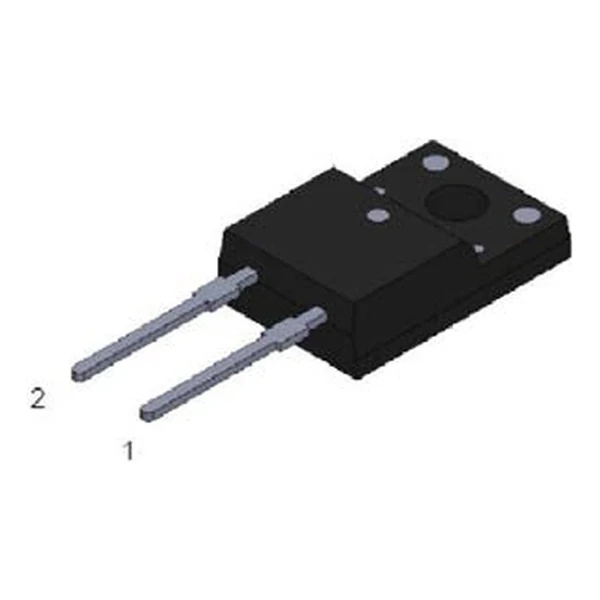
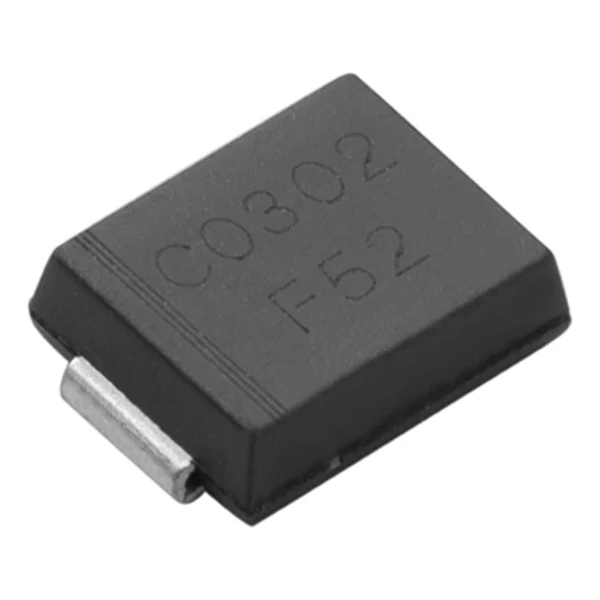
| Package | TO-263-3L |
| Mounting | Surface mount |
| Weight | 1.55 g typical |
| Recovery class | Superfast |
| RoHS | Compliant, halogen free |
| Data sheet | Eaton Technical Data ELX1417 |
Rating conditions (ambient or case temperature, test current, dI/dt) are
as printed in Eaton Technical Data ELX1417; the values above are taken from the
table for this part number, not from a family summary.
Reading the Data Sheet
The recovery waveform matters as much as its duration. Soft recovery means the current falls back to zero without a sharp snap, which keeps the voltage spike across the parasitic inductance of the loop low. A hard recovery of the same trr can ring harder.
8 A through a 1.3 V drop is 10.4 W of conduction loss, and that is the figure the thermal path has to carry. The switch in the same loop dissipates on its own, so the diode is rarely the only heat source on the tab.
Against 2.2 °C/W the same 10.4 W lifts the junction by about 23 °C above the reference point of that figure. With 150 °C allowed, that leaves the margin the ambient or the heatsink has to stay inside.
The 400 V repetitive rating comes with a 280 V RMS figure, which is the 0.707 factor of the same sine. On a 230 V mains input the peak is already 325 V before any surge, so the margin here is what the transient clamp has to respect.
The surge rating is 16 times the average current, but only for one 8.3 ms half sine. Inrush that repeats on every power-up accumulates heat and has to be checked against the transient thermal impedance curve instead.
The reverse leakage is the price of the fast die. It is specified at 25 °C and again at the high temperature, and the second figure is often fifty to a hundred times the first. On a 150 °C design the hot value is the one that matters.
Layout and Placement
Keep the commutating loop small. The reverse recovery current falls out of the diode into the switch that turned it off, and that current times the loop inductance is the voltage overshoot the switch has to survive. A few centimetres of loop is enough to double the spike.
- Average forward current is quoted at a case or ambient temperature. Run the part hotter and the allowable current falls faster than the linear derating curve suggests, because the forward drop rises with temperature as well.
- The forward voltage is specified at a pulse or a defined junction temperature. It has a negative temperature coefficient at low current and a positive one at high current, which is why paralleling needs care.
Frequently Asked Questions
What does soft recovery actually mean?
The reverse current decays without an abrupt snap. That reduces the ringing between the diode capacitance and the loop inductance, which is what produces the voltage spike across the switch. Two parts with the same trr can behave very differently here.
Does a faster recovery always mean less loss?
No. The recovery loss falls, but the forward drop of a faster die is usually higher, and conduction loss scales with current while recovery loss scales with frequency. Below a few tens of kilohertz the forward drop dominates; above a hundred kilohertz the recovery charge does.
What package should a 600 V, 10 A design use?
The choice is thermal, not electrical. A TO-252 carries the current but needs the copper to do it; a TO-220 or TO-247 gives a metal tab and a real thermal path. The same die in the two packages has very different usable current.
Shenzhen Gaorunxin Technology Co., Ltd
Online message
Shenzhen Gaorunxin Technology Co., Ltd