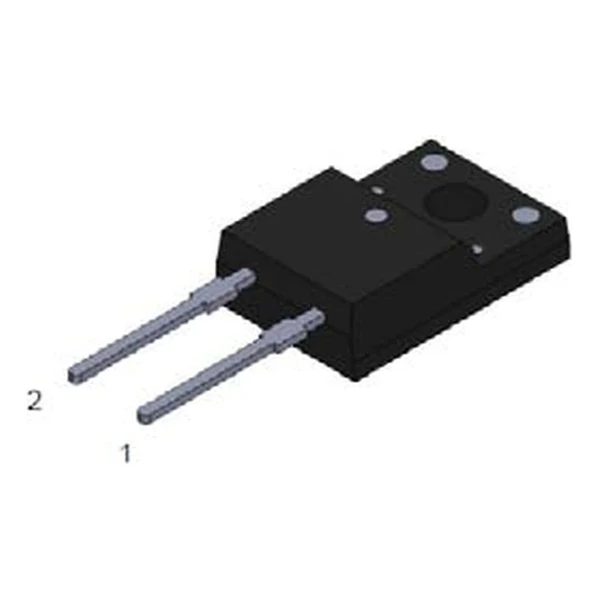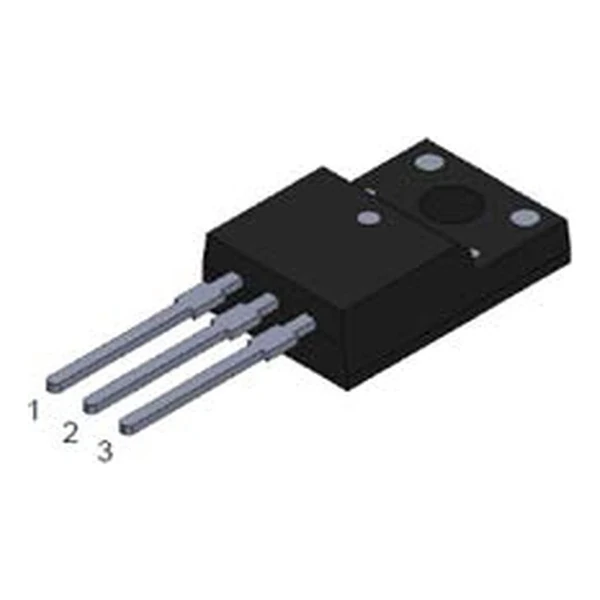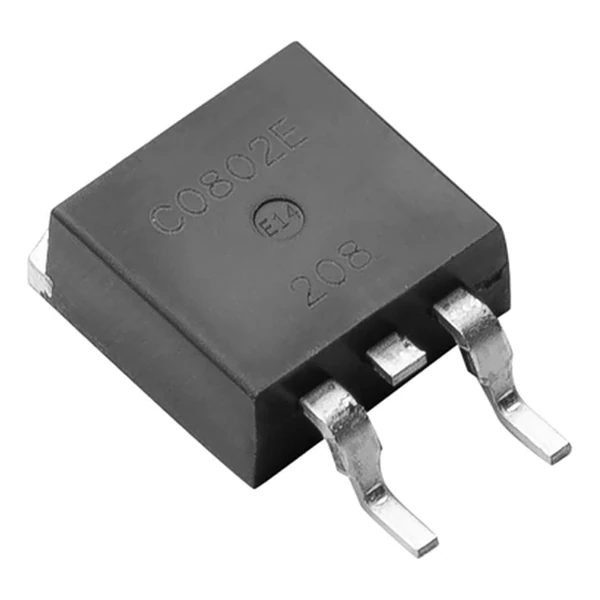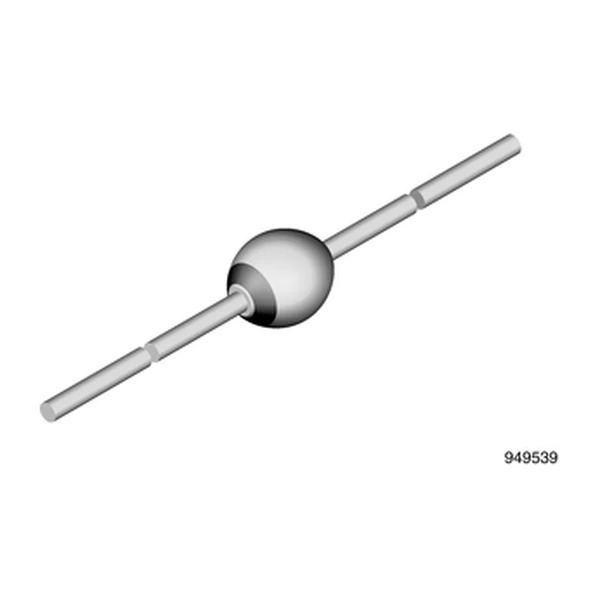
Eaton EREE1506FPL 600 V 15 A Fast Recovery Diode
- Product Details
- Download
Eaton EREE1506FPL 600 V 15 A Fast Recovery Diode
Key Specifications
| Parameter | Value |
|---|---|
| Orderable part number | EREE1506FPL |
| Repetitive peak reverse voltage (VRRM) | 600 V |
| Maximum RMS voltage (VRMS) | 420 V |
| Maximum DC blocking voltage (VDC) | 600 V |
| Average forward current (IF(AV)) | 15 A at TC = 100 °C |
| Peak forward surge current (IFSM) | 200 A, 8.3 ms half sine |
| Forward voltage (VF) | 1.7 V max, IF = 15 A Tj = 25 °C |
| Reverse current at VRRM, 25 °C | 5 uA max |
| Reverse recovery time (trr) | 35 ns max |
| Thermal resistance, junction to case | 4 °C/W |
| Operating junction and storage temperature | -55 °C to +150 °C |
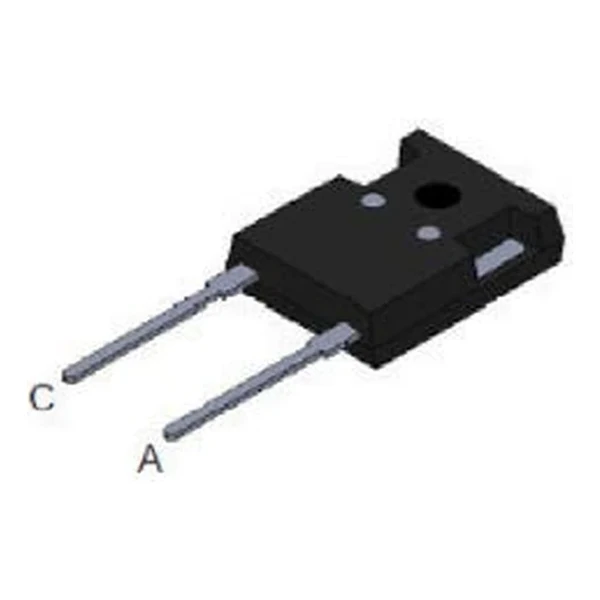
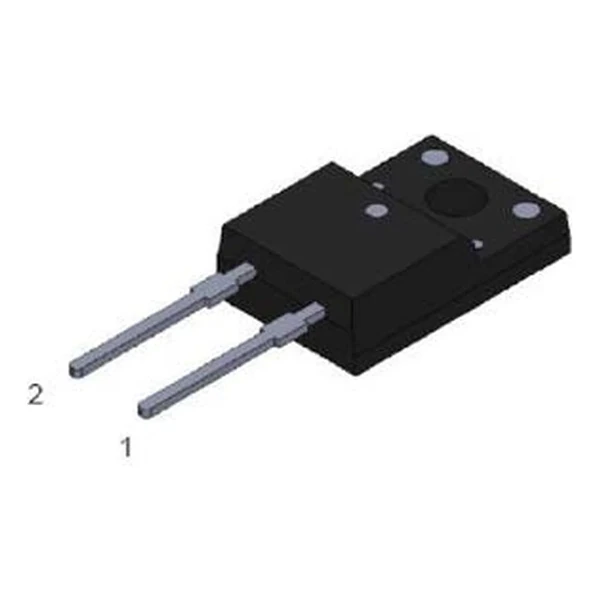
| Package | TO-220FP-2L |
| Mounting | Through-hole |
| Weight | 2.0 g typical |
| Polarity | Cathode marked on the tab |
| Recovery class | Superfast |
| RoHS | Compliant, halogen free |
| Data sheet | Eaton Technical Data ELX1453 |
Rating conditions (ambient or case temperature, test current, dI/dt) are
as printed in Eaton Technical Data ELX1453; the values above are taken from the
table for this part number, not from a family summary.
What the Numbers Mean
The recovery waveform matters as much as its duration. Soft recovery means the current falls back to zero without a sharp snap, which keeps the voltage spike across the parasitic inductance of the loop low. A hard recovery of the same trr can ring harder.
15 A through a 1.7 V drop is 25.5 W of conduction loss, and that is the figure the thermal path has to carry. The switch in the same loop dissipates on its own, so the diode is rarely the only heat source on the tab.
Against 4 °C/W the same 25.5 W lifts the junction by about 102 °C above the reference point of that figure. With 150 °C allowed, that leaves the margin the ambient or the heatsink has to stay inside.
The 600 V repetitive rating comes with a 420 V RMS figure, which is the 0.707 factor of the same sine. On a 230 V mains input the peak is already 325 V before any surge, so the margin here is what the transient clamp has to respect.
The surge rating is 13 times the average current, but only for one 8.3 ms half sine. Inrush that repeats on every power-up accumulates heat and has to be checked against the transient thermal impedance curve instead.
A rectifier is chosen on three numbers: the reverse voltage it must hold off, the average current it must carry, and the forward drop at that current. Everything else on the data sheet describes how the part behaves while it is switching, which is where the recovery charge turns into heat.
Where It Goes on the Board
Keep the commutating loop small. The reverse recovery current falls out of the diode into the switch that turned it off, and that current times the loop inductance is the voltage overshoot the switch has to survive. A few centimetres of loop is enough to double the spike.
- Average forward current is quoted at a case or ambient temperature. Run the part hotter and the allowable current falls faster than the linear derating curve suggests, because the forward drop rises with temperature as well.
- Reverse recovery charge is the integral of the recovery current. It is the figure that turns into switching loss in the counterpart switch, and it scales with forward current, not with voltage.
Frequently Asked Questions
How much voltage margin should the diode have?
The repetitive peak reverse voltage should clear the worst-case peak on the line with margin for regulation and surge. On a 230 V mains input that means 600 V is the practical choice rather than 400 V, because the peak already sits at 325 V before any transient.
Does a faster recovery always mean less loss?
No. The recovery loss falls, but the forward drop of a faster die is usually higher, and conduction loss scales with current while recovery loss scales with frequency. Below a few tens of kilohertz the forward drop dominates; above a hundred kilohertz the recovery charge does.
Is the surge rating a repetitive rating?
It is a single non-repetitive half sinewave at the stated duration. Repeated inrush, such as a capacitive load charging on every power-up, accumulates heat and has to be checked against the transient thermal impedance curve.
Shenzhen Gaorunxin Technology Co., Ltd
Online message
Shenzhen Gaorunxin Technology Co., Ltd