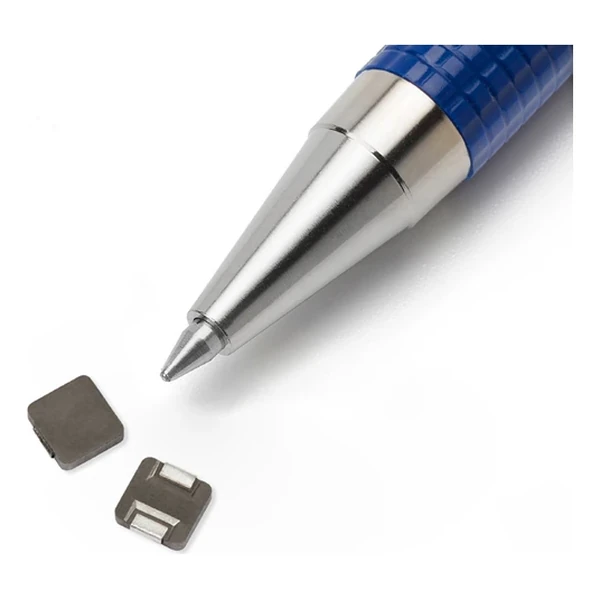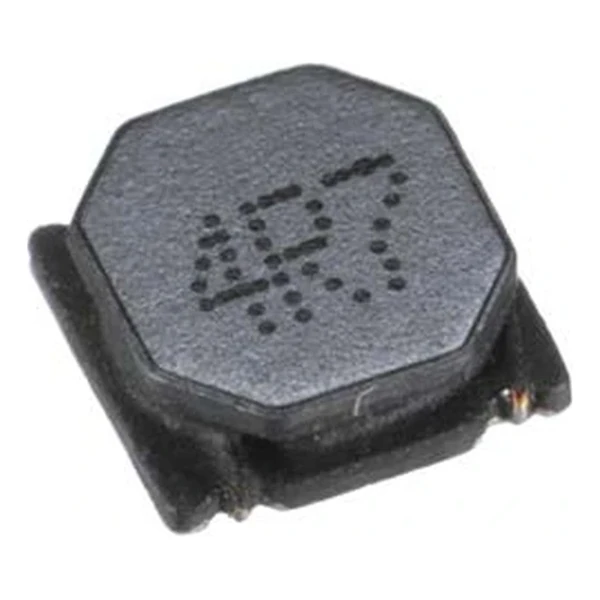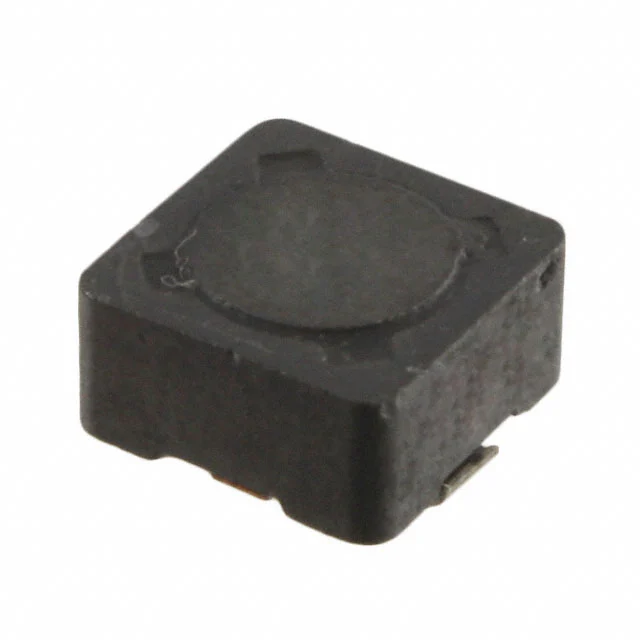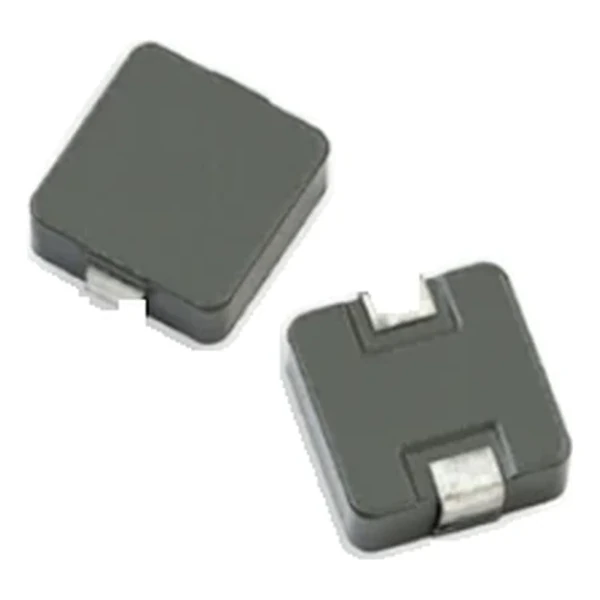
Eaton EXL1V0503-R60-R 0.6 uH Molded Power Inductor, Soft Saturation
- Product Details
- Download
Eaton EXL1V0503-R60-R 0.6 uH Molded Power Inductor, Soft Saturation
Ratings at a Glance
| Parameter | Value |
|---|---|
| Orderable part number | EXL1V0503-R60-R |
| OCL | 0.6 uH ±20% |
| FLL minimum (at Isat) | 0.33 uH |
| Irms typical, +20 °C rise | 13.6 A |
| Irms typical, +40 °C rise | 17.7 A |
| Isat (30% rolloff @ +25 °C) | 20 A |
| DCR typical @ +25 °C | 4.11 mOhm |
| DCR maximum @ +25 °C | 4.52 mOhm |
| SRF typical | 68 MHz |
| Rated operating voltage (across inductor) | 40 V typical |
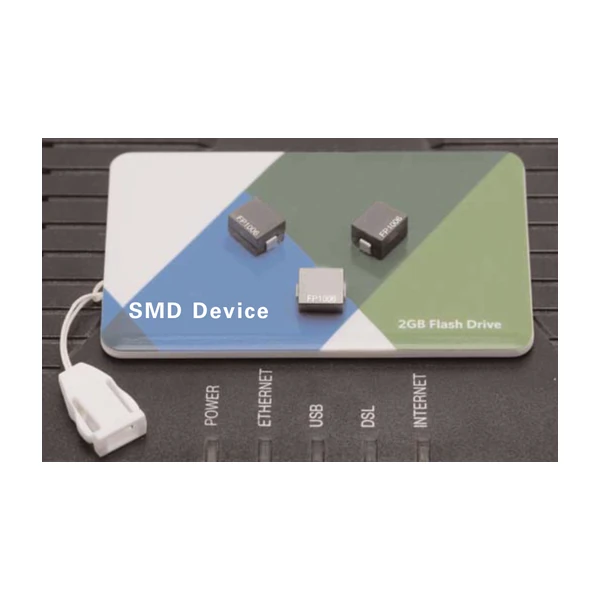
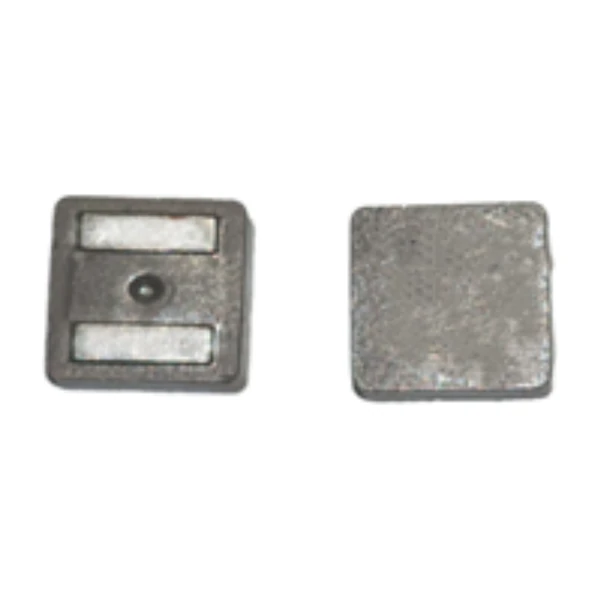
| Package | 6.2 x 5.9 mm footprint, 3.1 mm height |
| Mounting | Surface mount |
| Operating temperature | -40 °C to +125 °C |
| Qualification | Commercial grade |
| RoHS | Compliant (-R suffix) |
Outline Drawing

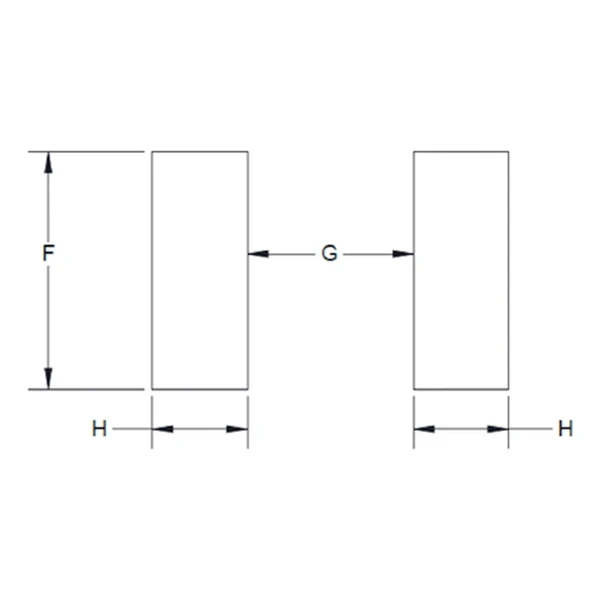
Drawings from the Eaton data sheet: mechanical outline with rated mm dimensions, recommended PCB pad layout, and winding schematic. Tolerances and pad tolerances are stated on the drawing itself.
How to Read These Ratings
Moulded construction, magnetically shielded, alloy powder core: this part packs high current into a small footprint with low DCR. The moulding makes the body rugged and the shielding keeps the switching harmonics off the rest of the board.
The typical and the maximum DCR are both quoted for a reason: production spread. A loss budget that has to hold across a build uses 4.11 mOhm as the optimistic case and plans against the maximum.
Isat is defined as the peak current for approximately 30% rolloff at +25 °C. With an alloy powder core the rolloff is soft: past Isat the inductance keeps working, just lower - which is a design resource, not an excuse to run at the limit.
The two Irms columns are the same winding at two allowed self-heating levels: +20 °C for boards with a tight thermal budget, +40 °C when the enclosure has airflow or headroom. Pick the column that matches the board, not the bigger number.
Positioning in the Range
EXL is the high-current moulded family for VRMs, multiphase regulators and point-of-load converters: soft-saturating alloy powder cores, low DCR, shielded, from a 4.6 mm footprint at 2.1 mm up to a 12.2 mm body at 10 mm.
- Typical applications: VRM and multiphase regulators, point-of-load converters, desktop and server VRMs, base station equipment, laptop and graphics rails.
- Irms assumes the datasheet pad and airflow; the 40 °C rise is a board-level outcome, not a property of the part alone.
- Data sheet 11188; footprint 6.2 x 5.9 mm footprint, 3.1 mm height.
Sizing It Into a Design
Frequently Asked Questions
Is the part shielded?
Yes, magnetically shielded and moulded, which is what keeps it usable next to sensitive circuitry on a dense VRM board.
Is the part shielded?
Yes, magnetically shielded and moulded, which is what keeps it usable next to sensitive circuitry on a dense VRM board.
What is the difference between OCL and FLL?
OCL is measured at zero bias; FLL is the inductance at Isat. Use FLL for ripple calculations at full load - that is what the converter actually sees.
Design note: use FLL for ripple at load, the +20 °C Irms column for tight thermal budgets, and keep the transient peak inside the soft part of the saturation curve.
Mechanical Dimensions

Dimensional drawing and recommended PCB pad layout from the Eaton data sheet. Tolerances and pad dimensions are as printed on the drawing; check the outline against your layout before release.
Shenzhen Gaorunxin Technology Co., Ltd
Online message
Shenzhen Gaorunxin Technology Co., Ltd