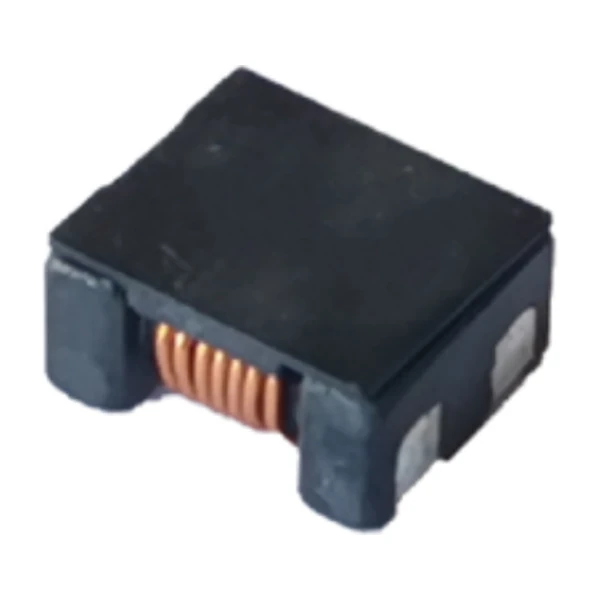


Eaton EXLA1V0603-R68-R 0.68 AEC-Q200 Molded Inductor, 20 A
- Product Details
- Download
Eaton EXLA1V0603-R68-R 0.68 AEC-Q200 Molded Inductor, 20 A
Ratings at a Glance
| Parameter | Value |
|---|---|
| Orderable part number | EXLA1V0603-R68-R |
| OCL | 0.68 uH ±20% |
| Irms | 20 A |
| Isat (30% rolloff @ +25 °C) | 21 A |
| DCR typical @ +25 °C | 4.7 mOhm |
| DCR maximum @ +25 °C | 5.17 mOhm |
| Rated operating voltage (across inductor) | 40 V |
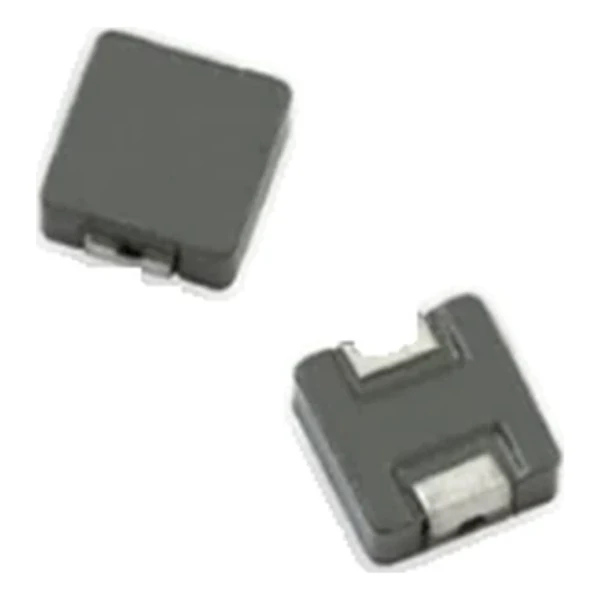
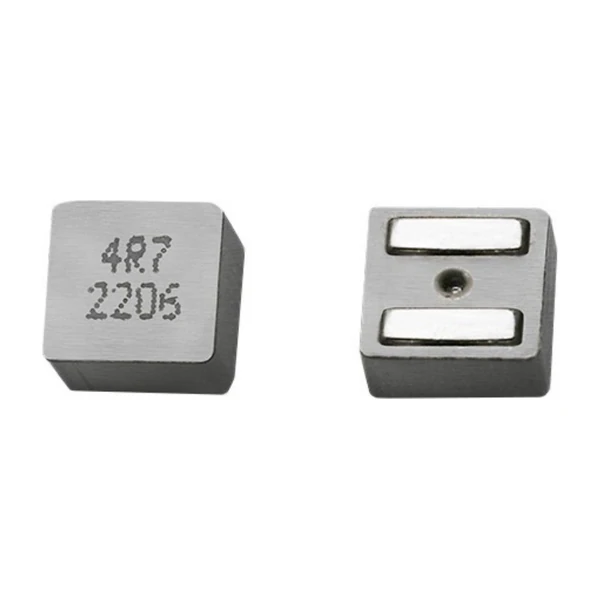
| Package | 7.4 x 7.1 mm footprint, 3.1 mm height |
| Mounting | Surface mount |
| Operating temperature | -55 °C to +155 °C |
| Qualification | AEC-Q200 |
| RoHS | Compliant (-R suffix) |
Dimensions and Pad Layout

Drawings from the Eaton data sheet: mechanical outline with rated mm dimensions, recommended PCB pad layout, and winding schematic. Tolerances and pad tolerances are stated on the drawing itself.
Reading the Data Sheet
This is the part for automotive DC rails that cannot afford a collapsing inductor: AEC-Q200 qualified, soft saturation, shielded, and rated across the full -55 to +155 °C range. The electrical behaviour matches the commercial moulded family; the qualification and the temperature rating do not.
At 4.7 mOhm the winding dominates the loss budget at load. The moulded construction spreads that heat into the body, but the board the part sits on still decides the actual temperature rise.
Isat is the peak current for approximately 30% rolloff at +25 °C. In a multiphase converter the transient peak lands on the inductors before the loop corrects; a soft-saturating core keeps controlling di/dt through exactly that window.
The 155 °C rating is ambient plus self-heating, and the alloy powder core keeps its soft-saturation shape across that range - the transient behaviour at the hot corner is a milder version of the room-temperature curve, not a different part.
Series Positioning
EXLA is the automotive moulded family: AEC-Q200 qualified, soft-saturating, shielded, rated to 155 °C - the power-inductor choice for ADAS, body electronics and infotainment rails.
- Typical applications: ADAS power rails, body electronics, infotainment, zonal modules and other automotive DC-DC stages.
- Automotive derating practice: size against Isat and the hot DCR at the worst ambient, with margin for the load transient.
- Data sheet ELX1221; footprint 7.4 x 7.1 mm footprint, 3.1 mm height.
Sizing and Layout Notes
Frequently Asked Questions
What is the rated operating voltage?
A bias condition for characterisation (per size, 15 V or 40 V across the inductor). It is not an isolation rating.
What does "soft saturation" mean in practice?
The alloy powder core loses inductance gradually with current instead of collapsing. At transient peaks the inductor still limits di/dt - it is the behaviour that keeps a multiphase rail stable through load steps.
Is this AEC-Q200 qualified?
Yes - the family is qualified to the automotive passive-component standard, including the terminal-strength and vibration test methods referenced on the datasheet.
Design note: budget the loss at the hot corner with the maximum DCR, and keep the transient peak below Isat with margin - the soft curve forgives, but does not eliminate, saturation.
Mechanical Dimensions

Dimensional drawing and recommended PCB pad layout from the Eaton data sheet. Tolerances and pad dimensions are as printed on the drawing; check the outline against your layout before release.
Shenzhen Gaorunxin Technology Co., Ltd
Online message
Shenzhen Gaorunxin Technology Co., Ltd