

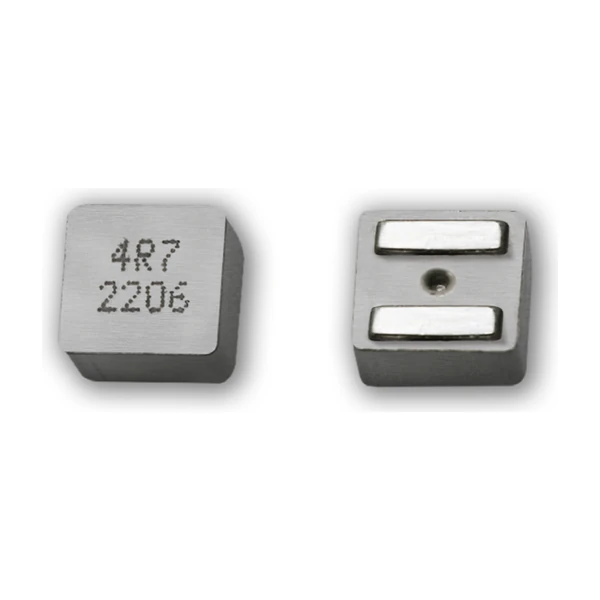
Eaton EXLA1V1003-1R5-R 1.5 AEC-Q200 Molded Inductor, 18 A
- Product Details
- Download
Eaton EXLA1V1003-1R5-R 1.5 AEC-Q200 Molded Inductor, 18 A
Key Specifications
| Parameter | Value |
|---|---|
| Orderable part number | EXLA1V1003-1R5-R |
| OCL | 1.5 uH ±20% |
| Irms | 18 A |
| Isat (30% rolloff @ +25 °C) | 25 A |
| DCR typical @ +25 °C | 6 mOhm |
| DCR maximum @ +25 °C | 6.6 mOhm |
| Rated operating voltage (across inductor) | 40 V |
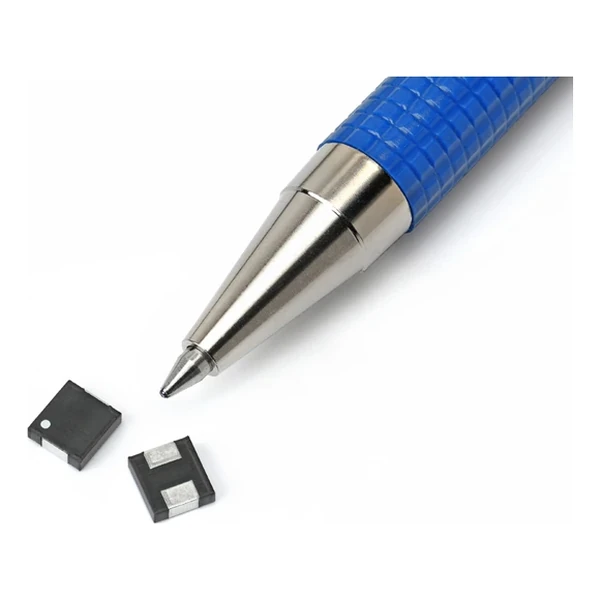
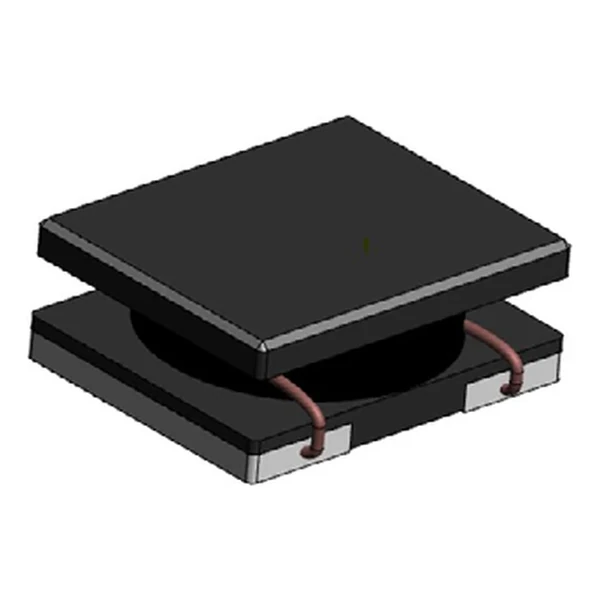
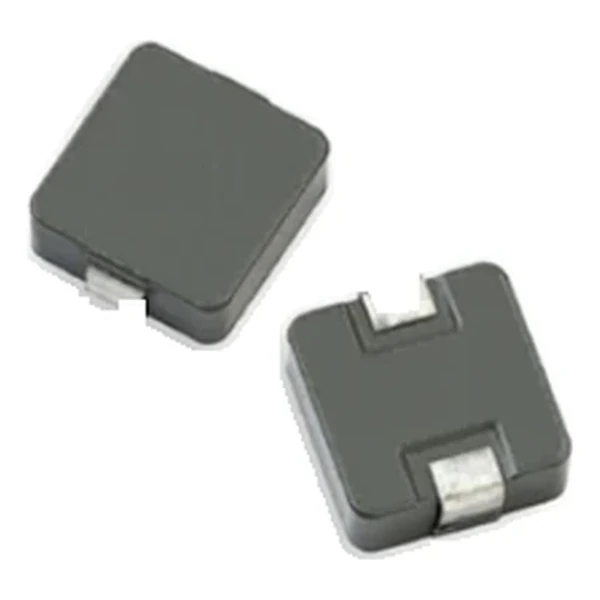
| Package | 12.2 x 11.3 mm footprint, 3.1 mm height |
| Mounting | Surface mount |
| Operating temperature | -55 °C to +155 °C |
| Qualification | AEC-Q200 |
| RoHS | Compliant (-R suffix) |
Mechanical Drawing

Drawings from the Eaton data sheet: mechanical outline with rated mm dimensions, recommended PCB pad layout, and winding schematic. Tolerances and pad tolerances are stated on the drawing itself.
The Figures Explained
Between the battery and the load sits a rail that must survive cranking transients, thermal cycling and vibration. This AEC-Q200 moulded inductor is built for that point in the circuit: high current, low DCR, and a saturation curve that degrades gracefully.
Copper loss is the efficiency floor. 6 mOhm at 25 °C rises about 30% by 100 °C, so the hot-corner budget should use the maximum column, not the typical.
Isat is defined as the peak current for approximately 30% rolloff at +25 °C. With an alloy powder core the rolloff is soft: past Isat the inductance keeps working, just lower - which is a design resource, not an excuse to run at the limit.
The 155 °C rating is ambient plus self-heating, and the alloy powder core keeps its soft-saturation shape across that range - the transient behaviour at the hot corner is a milder version of the room-temperature curve, not a different part.
Where This Series Fits
EXLA is the automotive moulded family: AEC-Q200 qualified, soft-saturating, shielded, rated to 155 °C - the power-inductor choice for ADAS, body electronics and infotainment rails.
- Typical applications: ADAS power rails, body electronics, infotainment, zonal modules and other automotive DC-DC stages.
- Automotive derating practice: size against Isat and the hot DCR at the worst ambient, with margin for the load transient.
- Data sheet ELX1251; footprint 12.2 x 11.3 mm footprint, 3.1 mm height.
Sizing It Into a Design
Frequently Asked Questions
What is the temperature range?
-55 °C to +155 °C, ambient plus self-temperature rise. The part should not exceed +155 °C under worst-case operating conditions.
Is this AEC-Q200 qualified?
Yes - the family is qualified to the automotive passive-component standard, including the terminal-strength and vibration test methods referenced on the datasheet.
Is this AEC-Q200 qualified?
Yes - the family is qualified to the automotive passive-component standard, including the terminal-strength and vibration test methods referenced on the datasheet.
Design note: budget the loss at the hot corner with the maximum DCR, and keep the transient peak below Isat with margin - the soft curve forgives, but does not eliminate, saturation.
Mechanical Dimensions

Dimensional drawing and recommended PCB pad layout from the Eaton data sheet. Tolerances and pad dimensions are as printed on the drawing; check the outline against your layout before release.
Shenzhen Gaorunxin Technology Co., Ltd
Online message
Shenzhen Gaorunxin Technology Co., Ltd