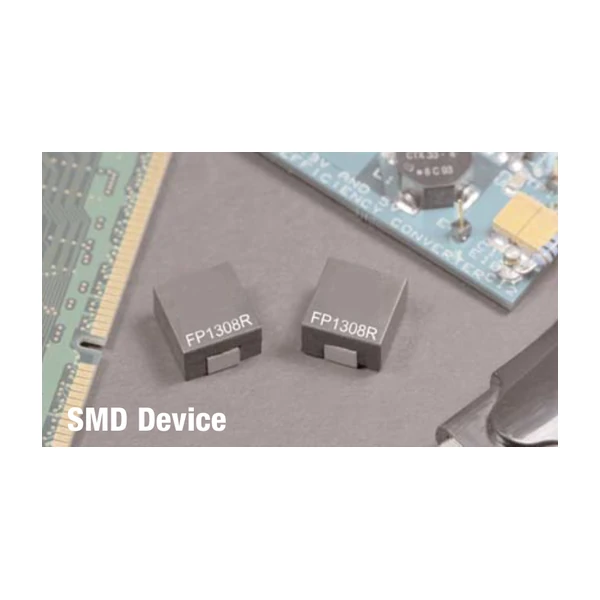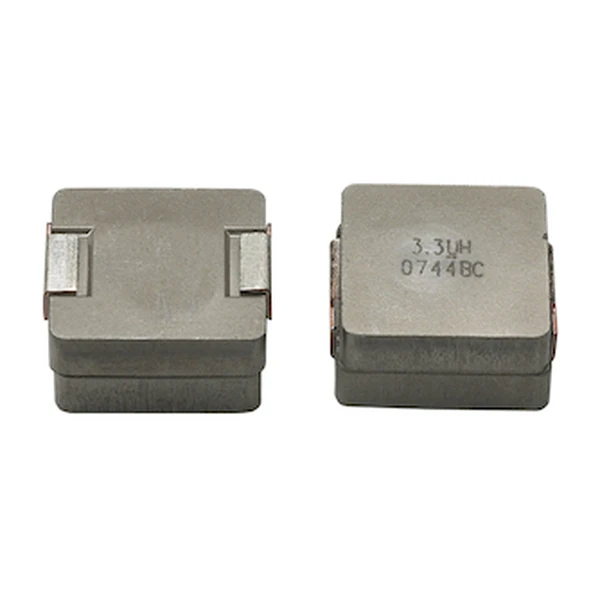


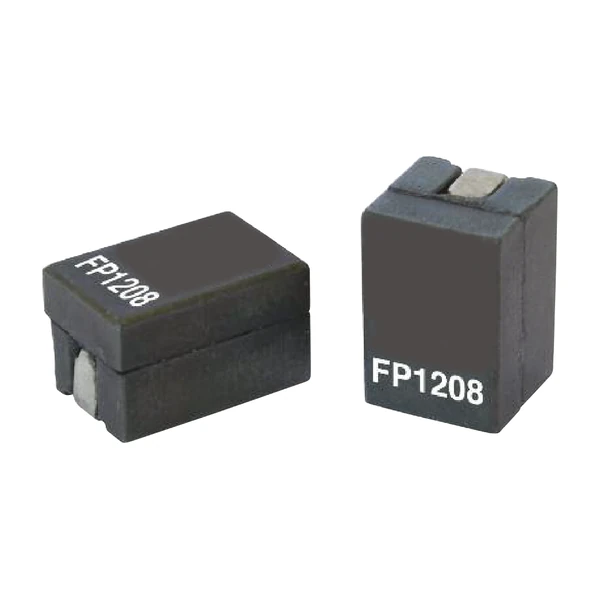
Eaton FP1208R1-R18-R 180 nH 72 A Saturation Inductor
- Product Details
- Download
FP1208R1-R18-R at a glance: 180 nH high frequency, high current power inductor, 50 A Irms, 72 A Isat, DCR 0.29 mOhm, 12.0 x 8.0 mm body, 8.0 mm tall.
Eaton FP1208R1-R18-R High frequency, high current power inductors
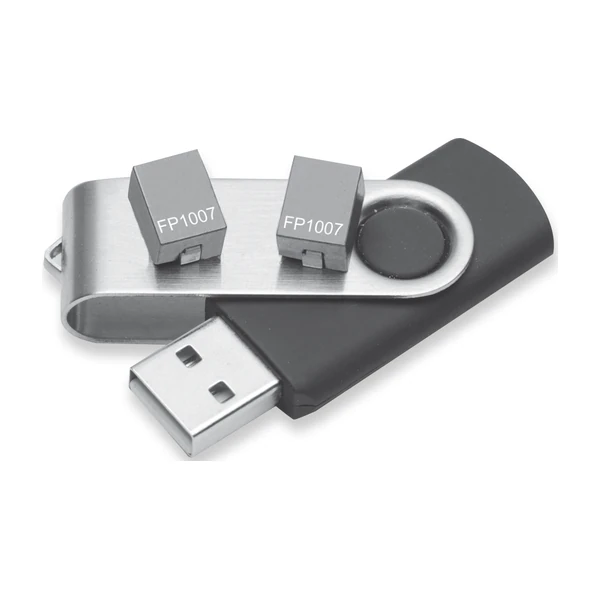
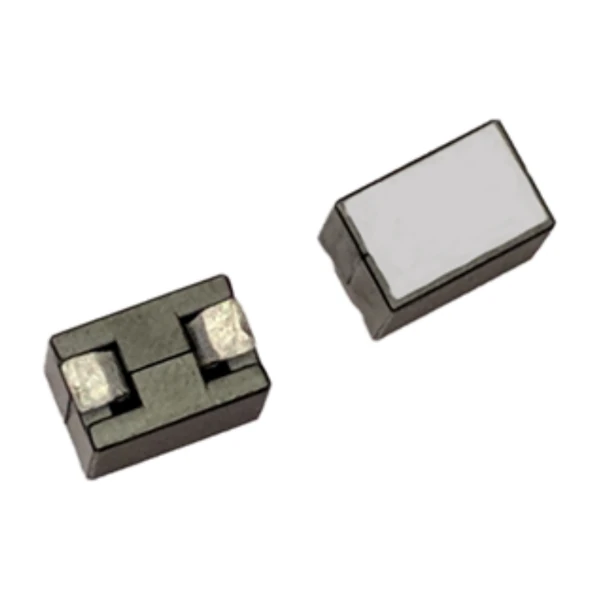
Eaton FP1208R1-R18-R is a high frequency, high current power inductor in a 12.0 x 8.0 mm surface-mount package. It carries 180 nH of open-circuit inductance with 50 A Irms and a typical DCR of 0.29 mOhm, which places it in the switching stage of a multi-phase regulator rather than in bulk energy storage. The body is 8.0 mm tall and rated from -40 °C to +125 °C.
Ratings at a Glance
| Orderable part number | FP1208R1-R18-R |
| Inductance, OCL (0 Adc) | 180 nH |
| Inductance, FLL (minimum) | 137 nH |
| Irms (40 °C rise, no core loss) | 50 A |
| Isat (20% roll-off @ +25 °C) | 72 A |
| Isat2 (20% roll-off @ +85 °C) | 66 A |
| Isat3 (20% roll-off @ +125 °C) | 63 A |
| DCR typical @ +20 °C | 0.29 mOhm |
| K-factor (Bp-p = K x L x dI) | 283 |
| Package | 12.0 x 8.0 mm, 8.0 mm height |
| Core material | Ferrite, magnetically shielded |
| Operating temperature | -40 °C to +125 °C (ambient plus self-temperature rise) |
| RoHS | Compliant (-R suffix) |
The Figures Explained
Two inductance figures are published. 180 nH is measured with no DC in the winding, 137 nH with the winding loaded to Isat1. The gap between them is 24%, and it is the reason a converter that looks well damped at no load can ring at full current.
The first Isat column, 72 A at +25 °C, is the peak the part takes at 20% roll-off. Note the temperature: run the same part in a hot enclosure and the usable peak drops, which is why the data sheet prints more than one column.
Irms of 50 A is a thermal rating: the current that lifts the part about 40 °C with no core loss counted. Into 0.29 mOhm that is roughly 725 mW of copper loss, which is where the rise comes from. Add core loss and the usable DC current falls below the tabulated value.
Flux swing follows Bp-p = K x L x dI. With K = 283 and a ripple of 21.6 A the core sees roughly 110 mT, which is the number to put into the core-loss curve before you trust a 40 °C rise estimate.
Positioning in the FP Range
At 12.0 x 8.0 mm this is one of the larger FP bodies, aimed at high-current rails where a single phase carries enough current that paralleling smaller parts would cost more board area than it saves. At 180 nH this is mid-range for the body: moderate ripple, DCR still low, and comfortable operation across most of the switching-frequency range the data sheet quotes.
That makes it part 2 of 5 when the data sheet is sorted by inductance.
- Application fit: Multi-phase and Vcore regulators.
- Construction: ferrite core, magnetically shielded, surface mount, supplied on tape and reel.
- Temperature: -40 °C to +125 °C, ambient plus self-temperature rise.
Design Notes
The order of checks that works: compute ripple from 180 nH and the duty cycle, add half of it to the DC load to get peak, compare that peak with Isat at the real ambient, and only then look at Irms for heating. Doing it the other way round hides saturation problems.
On the board, place the part so the switch-node copper is short and wide. At 0.29 of DCR the component is not the resistive bottleneck; the trace and the vias usually are. Thermal vias under the body help more than a bigger copper pour further away.
Outline Drawing
Body outline, pad layout and schematic follow. Check the pad drawing against your own footprint library before the first build: these parts are heavy relative to their footprint and the solder joint carries both the current and the mechanical load.

Frequently Asked Questions
How is the part packed?
Tape and reel, with the reel quantity stated in the packaging section of the data sheet. The parts are polarised by the terminal marking, so check orientation in the reel before setting up the feeder.
Is this part AEC-Q200 qualified?
No. The FP, FPT and FPV families are commercial-grade parts rated for the operating temperature range in the table. For automotive work Eaton uses the EXLA and DRA families, which carry AEC-Q200 qualification and a wider temperature range.
Shenzhen Gaorunxin Technology Co., Ltd
Online message
Shenzhen Gaorunxin Technology Co., Ltd