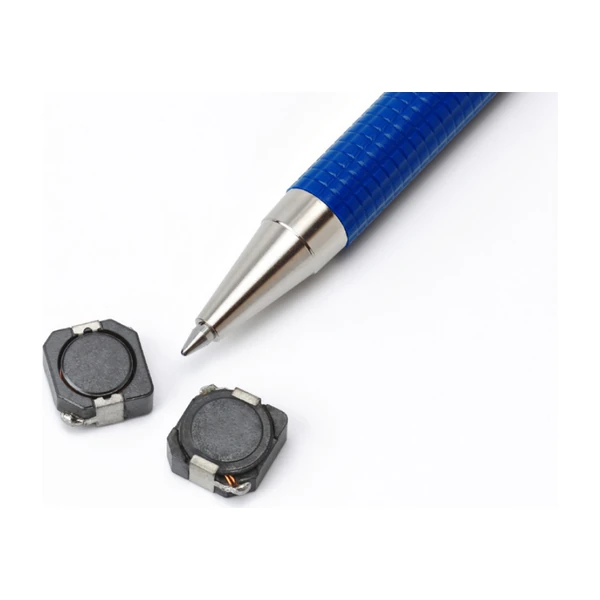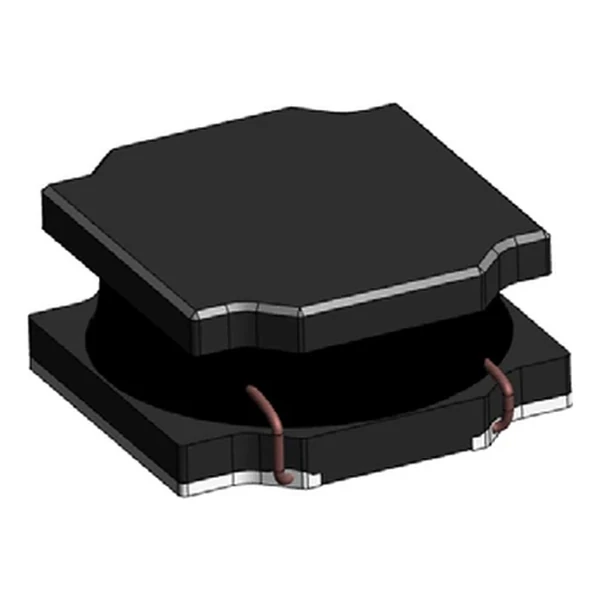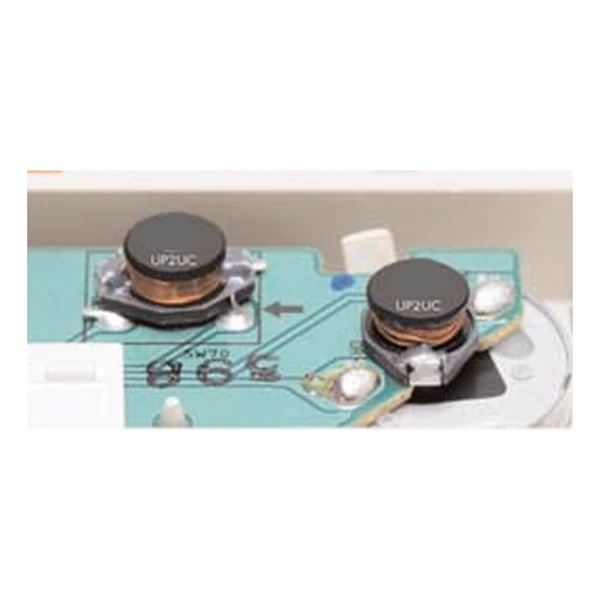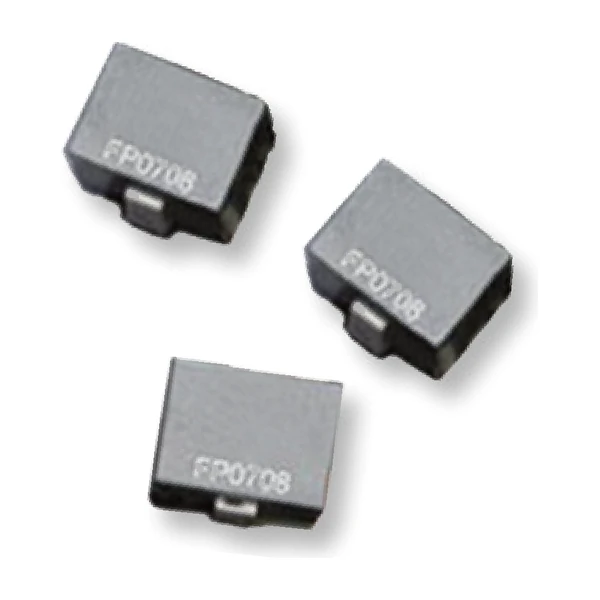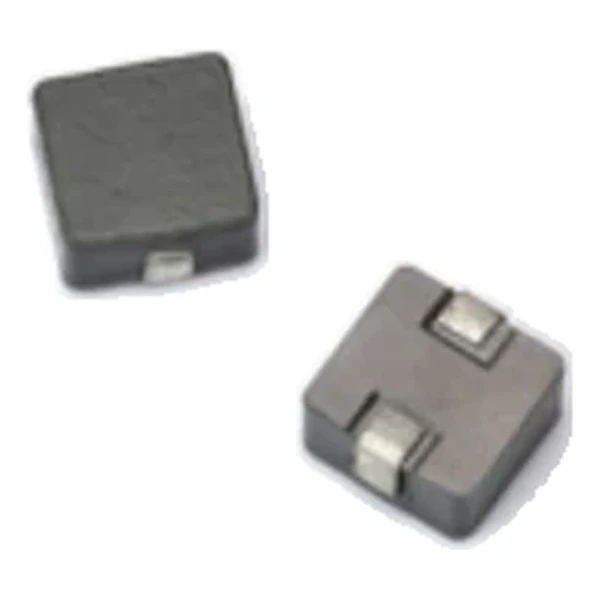
Eaton HC9-1R0-R 1.04 uH High-Current Inductor 1.87 mOhm
- Product Details
- Download
Eaton HC9-1R0-R 1.04 uH High-Current Inductor 1.87 mOhm
Ratings at a Glance
| Parameter | Value |
|---|---|
| Orderable part number | HC9-1R0-R |
| OCL (open circuit inductance) | 1.04 uH ±15% |
| Irms (DC, 40 °C rise) | 23.7 A |
| Isat (20% rolloff) | 28 A |
| Isat2 (30% rolloff) | 41 A |
| DCR typical @ +20 °C | 1.87 mOhm |
| Volt-time rating (V-us) | 6.7 |
| Package | 13.1 x 14.1 mm |
| Height | 7.5 mm |
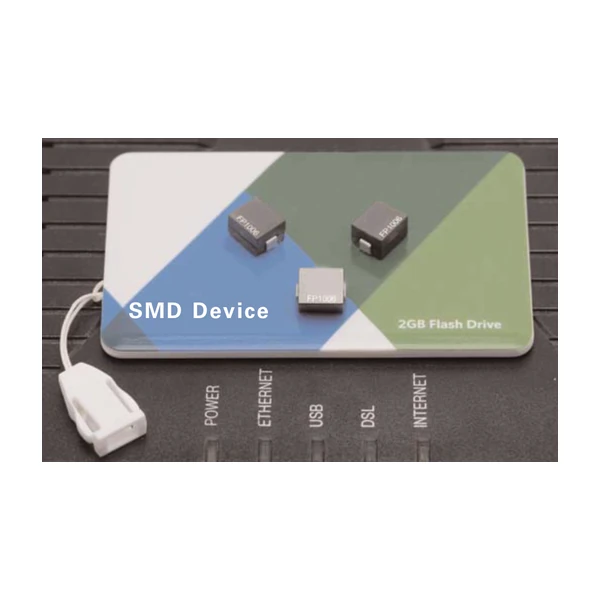
| Mounting | Surface mount |
| Operating temperature | -40 °C to +155 °C (ambient plus self-heating) |
| Qualification | Commercial grade |
| RoHS | Compliant, -R suffix |
| Data sheet | Eaton Technical Data DS4312 |
Mechanical Drawing

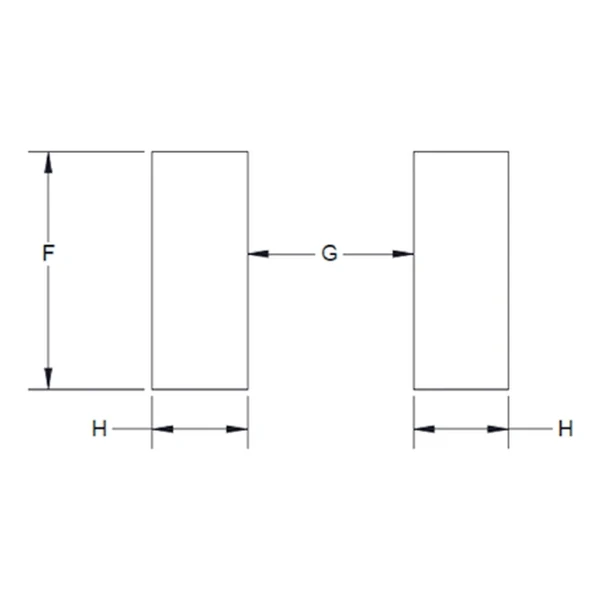
Drawing reproduced from Eaton Technical Data DS4312: outline with
rated mm dimensions, recommended pad layout and winding schematic. Tolerances are stated on
the drawing itself.
How to Read These Ratings
Powder iron is the material choice that gives this family its soft saturation curve and its stable inductance over temperature. There is no thermal aging of the binder, so the inductance you measure on day one is the inductance you have after a thousand thermal cycles.
Copper loss at the rated current works out to roughly 1.05 W from a typical DCR of 1.87 mOhm at 23.7 A. It is the number to start a thermal stack-up with, before core loss and before AC resistance rise.
The saturation rating reads 20% rolloff. Treat it as the edge of the linear region: below it the inductance is within tolerance, above it the value droops. For a current-mode converter that means the peak current at the worst-case load step is what must fit under this number.
Stored energy at Isat is about 408 uJ, which is the energy the inductor hands to the load during a transient before the control loop reacts.
The second saturation column, 41 A at 30% rolloff, is the same core taken further into rolloff. The ratio between the two columns is a direct measure of how soft the curve is: a part with a wide gap between them loses inductance slowly and tolerates a larger transient peak.
What This Family Is For
The HC powder family sits at the higher-inductance end of the high-current range: from a fraction of a microhenry up to tens of microhenry, on surface-mount bodies with powder iron cores. Every row carries two saturation columns so the rolloff criterion can be chosen explicitly.
In the HC9 line-up this part is number 3 of 12 by inductance, between 0.218 uH and 49.2 uH.
Compared with its neighbours in the table, HC9-1R5-R trades 12.7 A of rated current for the next inductance step, which is the usual compromise in this family.
- Core material: powder iron core, 13.1 x 14.1 mm body at 7.5 mm.
- Typical applications: multi-phase regulators; voltage regulator modules (vrms); distributed power systems dc-dc converters; desktop and server vrms and evrds; point-of-load (pol) modules; field programmable gate array (fpga) dc-dc converters.
- The two saturation columns are different criteria, not two measurements of the same thing. Pick the rolloff you can tolerate in the application and stay with that column.
Design Notes
Copper resistance rises with temperature, so at the +155 °C limit the maximum DCR of 1.87 mOhm becomes roughly 2.86 mOhm. That is the figure to put into a hot-enclosure loss calculation; the +20 °C column is a bench number.
Design note: use the 30% rolloff column only if the loop can tolerate the inductance droop; the tighter column keeps more inductance at the cost of a lower usable peak current.
- Confirm the part marking is visible after placement for traceability.
- Check the volt-time rating against the applied V-us at the switching frequency.
- Decide which rolloff column the loop can tolerate, then stay with that column.
Frequently Asked Questions
Why is the DCR higher than a ferrite part of the same size?
Iron powder has lower permeability, so more turns are needed for the same inductance, and more turns mean more copper. The compensation is the much higher saturation flux density.
What is soft saturation?
The inductance falls gradually as current rises instead of collapsing at a threshold. A powder core with a distributed gap behaves this way, which keeps the converter stable through a load transient.
What is soft saturation?
The inductance falls gradually as current rises instead of collapsing at a threshold. A powder core with a distributed gap behaves this way, which keeps the converter stable through a load transient.
Shenzhen Gaorunxin Technology Co., Ltd
Online message
Shenzhen Gaorunxin Technology Co., Ltd