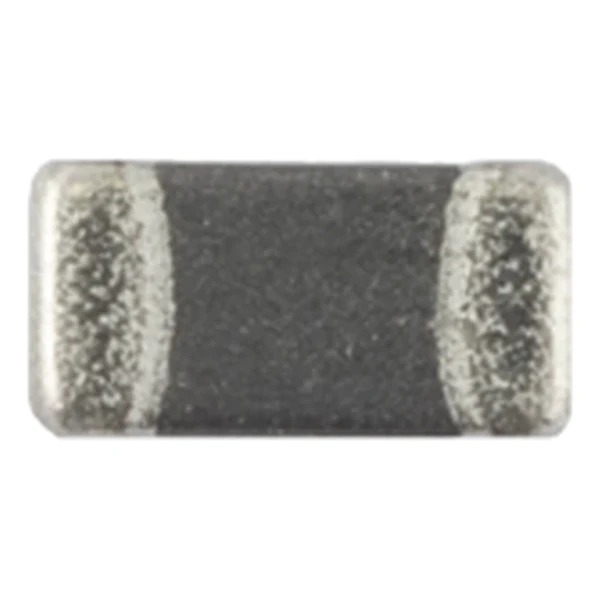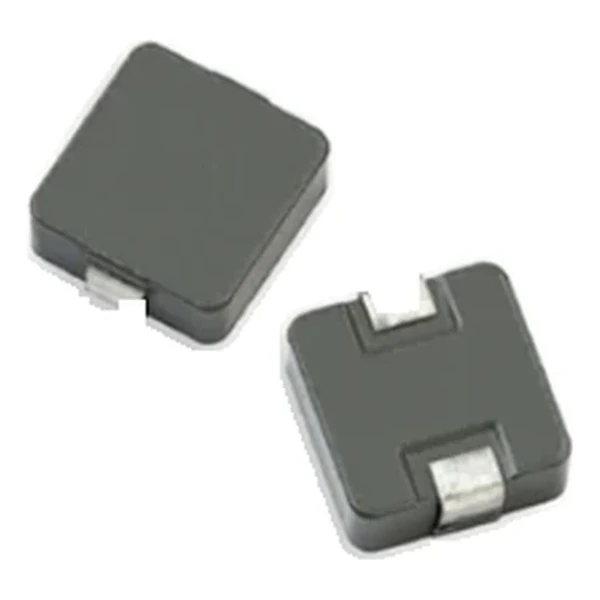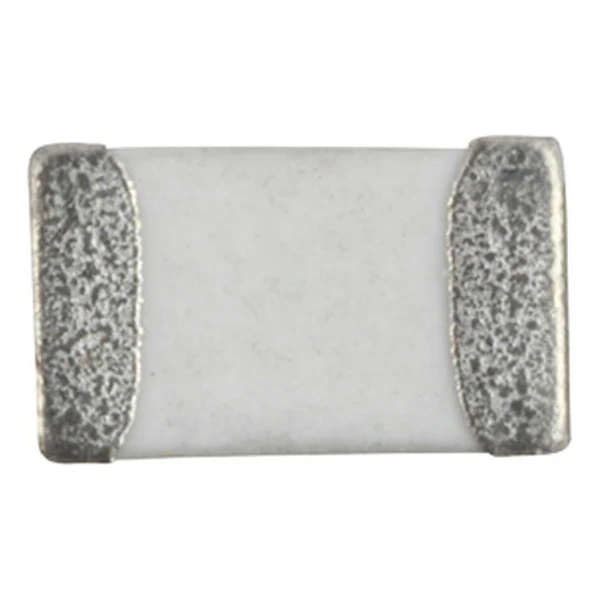


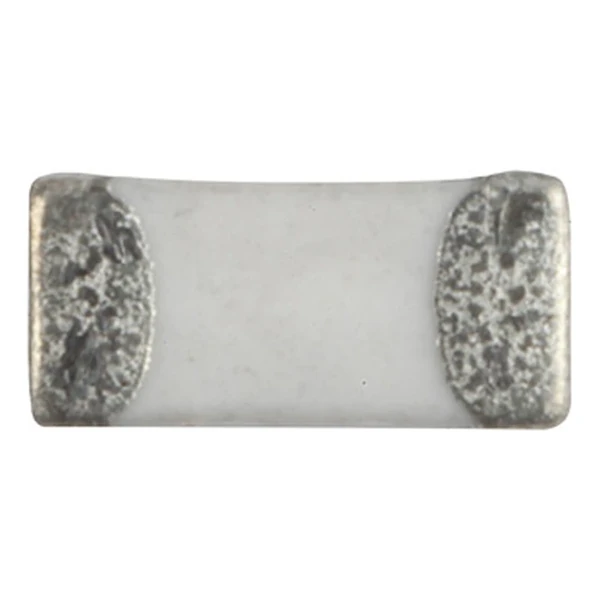
Eaton MCL1608V2-221-R 220.0 nH Multilayer Inductor 200
- Product Details
- Download
Eaton MCL1608V2-221-R 220.0 nH Multilayer Inductor 200
Ratings at a Glance
| Parameter | Value |
|---|---|
| Orderable part number | MCL1608V2-221-R |
| Inductance | 220.0 nH 200 |
| Q minimum | 100 |
| DCR maximum @ +25 °C | 350000 mOhm |
| Rated current maximum | 2 mA |
| SRF minimum | 8 MHz |
| Test frequency | 50 MHz |
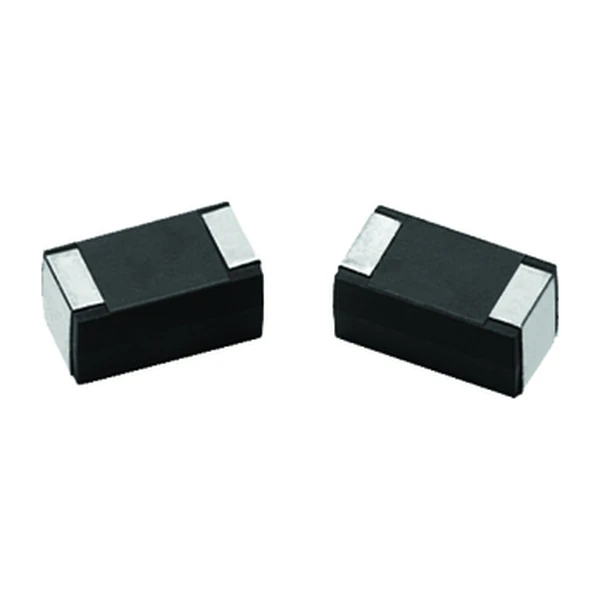
| Package | 1.6 x 0.8 mm |
| Size code | 1608 (0603) |
| Mounting | Surface mount |
| Operating temperature | -40 °C to +85 °C |
| Qualification | Commercial grade |
| RoHS | Compliant, -R suffix |
| Data sheet | Eaton Technical Data 10927 |
Mechanical Dimensions & Pad Layout

Drawing reproduced from Eaton Technical Data 10927: outline with rated mm dimensions, pad layout and marking. Tolerances are stated on the drawing.
How to Read These Ratings
The inductance here is a few nanohenry, which puts the part in RF and high-speed digital territory: matching networks, filter sections, bias chokes on amplifier supplies, and the small isolation inductors that keep clock harmonics out of connectors. The multilayer body keeps the parasitics predictable, and the Q column tells you how much loss the part adds at the test frequency.
The row reads 220.0 nH 200 with a minimum Q of 100 at 50 MHz. Q is the ratio of reactance to resistance at that frequency, so a Q of 100 means the part’s loss is about 1 % of its reactance in that band.
Self-resonance is quoted as 8 MHz minimum. Below it the part is inductive; above it the inter-layer capacitance takes over. The margin between the operating band and 8 MHz is the design headroom.
Within the MCL1608V2 family this is value 29 of 34, in a range that runs from 0.001 to 0.47 nH.
Positioning in the Range
The multilayer chip family covers nanohenry to a few microhenry values in 0402 through 1812 bodies. It is the range where the inductance is too small for a wound part to be practical and where the self-resonant frequency sets the usable band.
- The rated current is a thermal limit for the part in free air, not a saturation limit. At high ambient the current has to be derated.
- Typical applications: industrial connectivity (iot); wireless communiations; bluetooth; wifi; antenna.
- Design note: compare SRF against the highest frequency the circuit will see, not just the fundamental.
Frequently Asked Questions
How much does the value drift with temperature?
The data sheet gives the tolerance band; the drift inside that band is small for this construction because there is no mechanical winding to move.
How much does the value drift with temperature?
The data sheet gives the tolerance band; the drift inside that band is small for this construction because there is no mechanical winding to move.
Why is the inductance quoted at a test frequency?
At nanohenry values the parasitic capacitance and the measurement fixture both matter. The value is only meaningful at the frequency stated, and the Q column tells you how much of the reactance is loss at that point.
Shenzhen Gaorunxin Technology Co., Ltd
Online message
Shenzhen Gaorunxin Technology Co., Ltd