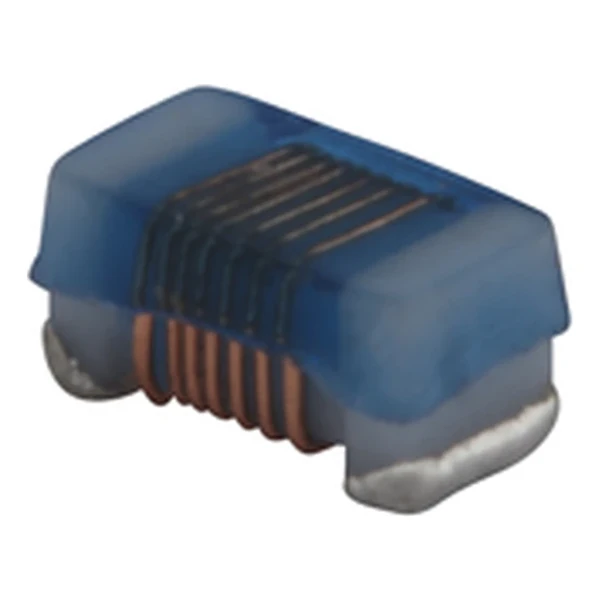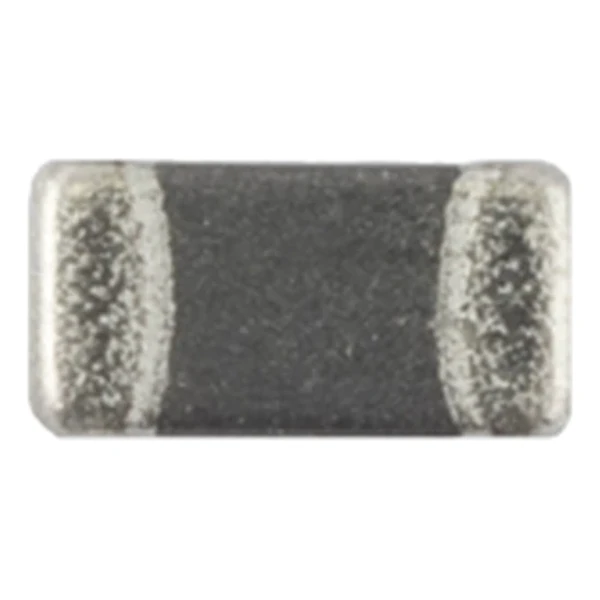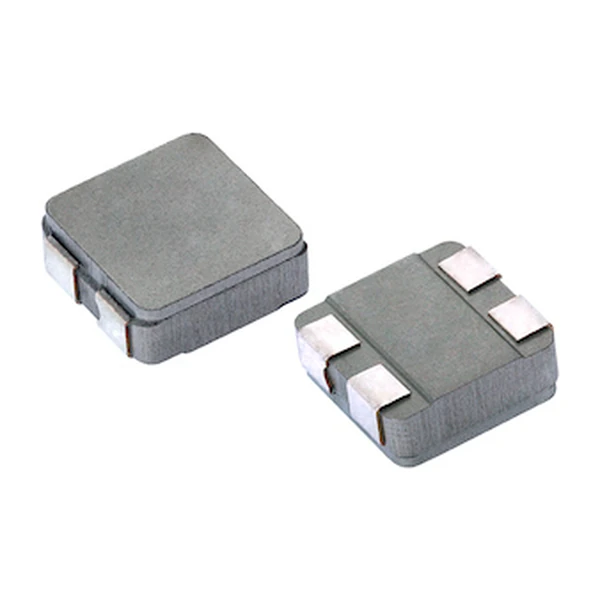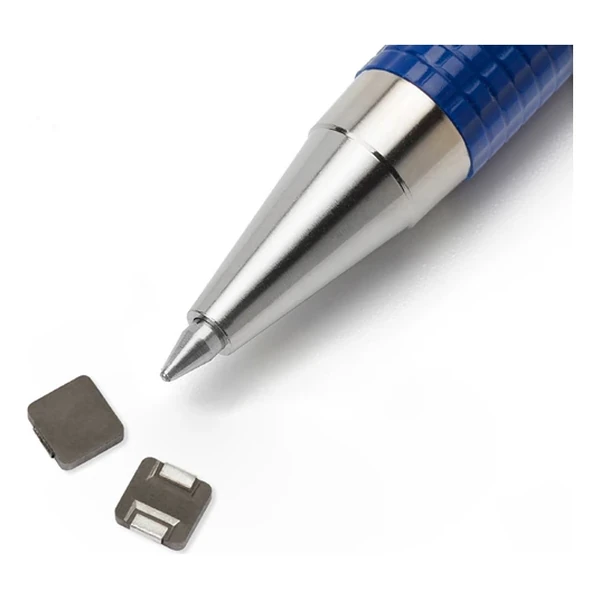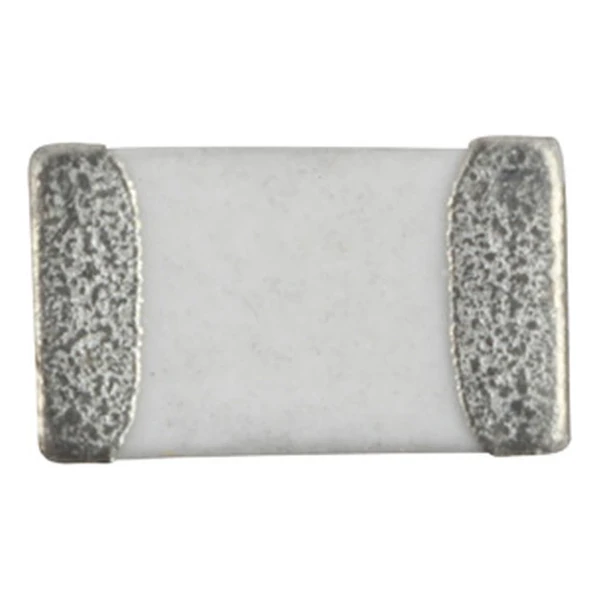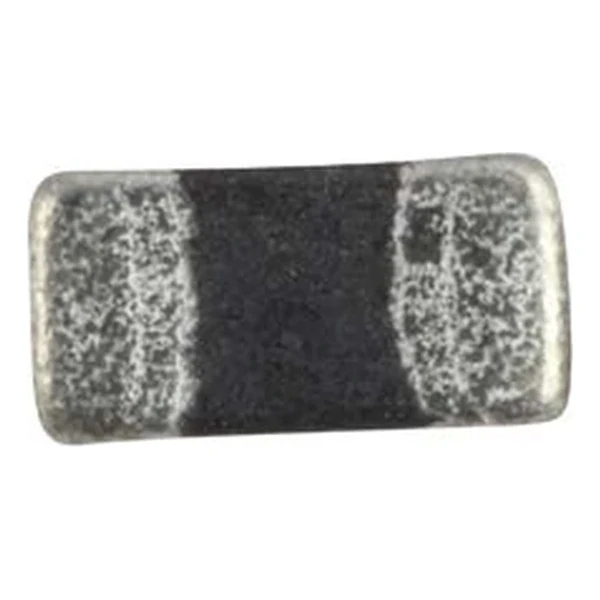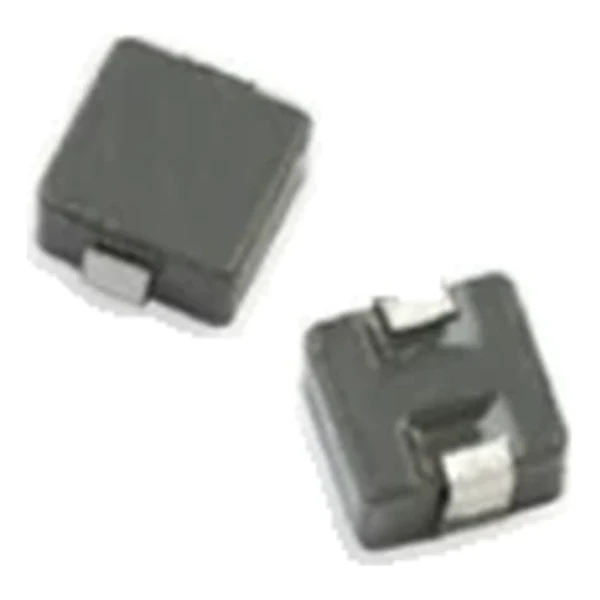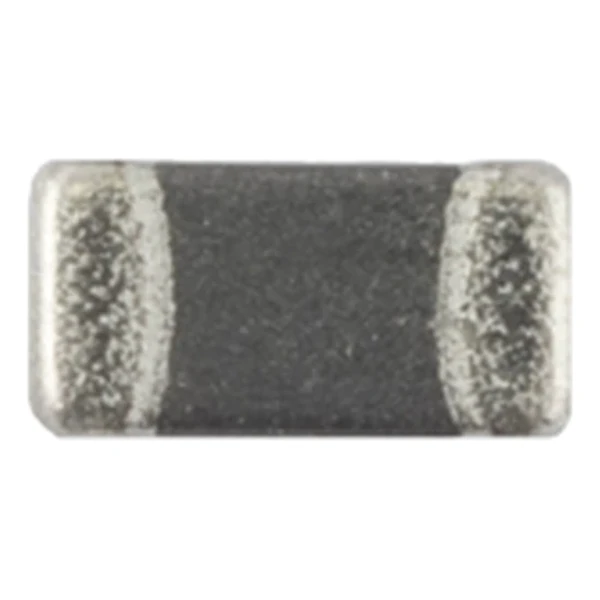


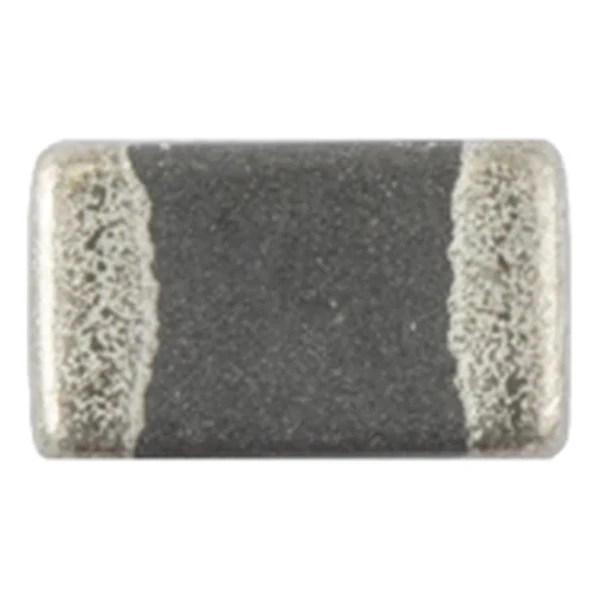
Eaton MFBW1V2012-090-R 9 Ohm SMD Bead, 3000 mA
- Product Details
- Download
Eaton MFBW1V2012-090-R 9 Ohm SMD Bead, 3000 mA
Key Specifications
| Parameter | Value |
|---|---|
| Orderable part number | MFBW1V2012-090-R |
| Impedance @ 100 MHz | 9 Ohm |
| Impedance tolerance | 5~13 Ω |
| DCR maximum @ +25 °C | 30 mOhm |
| Rated current maximum | 3000 mA |
| Test frequency | 100 MHz |
| Test voltage | 50 mV |
| Package | 2.0 x 1.25 mm |
| Size code | 2012 (0805) |
| Mounting | Surface mount |
| Operating temperature | -55 °C to +125 °C |
| Qualification | Commercial grade |
| RoHS | Compliant, -R suffix |
| Data sheet | Eaton Technical Data 11108 |
Outline Drawing

Drawing reproduced from Eaton Technical Data 11108: outline with rated mm dimensions, pad layout and marking. Tolerances are stated on the drawing.
What the Numbers Mean
A ferrite bead is not an inductor in the usual sense: it is a lossy element. At low frequency it looks like a small resistance in series with the line; at the frequency where the ferrite absorbs, its impedance rises and the noise energy is converted into heat in the material rather than reflected back into the circuit.
At 100 MHz this bead presents 9 ohm with an allowed spread of 5~13 Ω, and its DC resistance is 30 mOhm maximum. At the rated 3000 mA that resistance drops 0.09 V, which is the figure to check against the rail tolerance.
Within the MFBW1V2012 family this is value 4 of 27, in a range that runs from 0 to 0 nH.
Series Positioning
The ferrite bead family spans a few ohms to several hundred ohms at 100 MHz, in 0201 through 1206 bodies. Current ratings run from a few hundred milliamps in the small sizes to several amps in the larger ones.
- A bead in a power path drops DC volts according to its DCR. Check that drop against the rail tolerance before choosing a high-impedance part.
- Typical applications: industrial connectivity (iot); wireless communications; bluetooth; wifi; antenna.
- Design note: pick the bead from the impedance curve at the failing frequency, then check the DC current and DCR for the line it sits in.
Frequently Asked Questions
Is impedance at 100 MHz the whole story?
No. It is the specified reference point, but the impedance curve falls away on both sides. A bead chosen for a 100 MHz figure may be weak at the 30 MHz harmonic that is actually failing EMC.
How do I choose between MFBM and MFBW?
MFBM is the high-current series: lower impedance per size, higher rated current. MFBW is the high-impedance series for signal lines where DC current is small.
Does the bead dissipate the noise as heat?
Yes. The ferrite is lossy at the frequencies it absorbs, so the noise energy becomes heat in the material rather than being reflected back to the source.
Shenzhen Gaorunxin Technology Co., Ltd
Online message
Shenzhen Gaorunxin Technology Co., Ltd