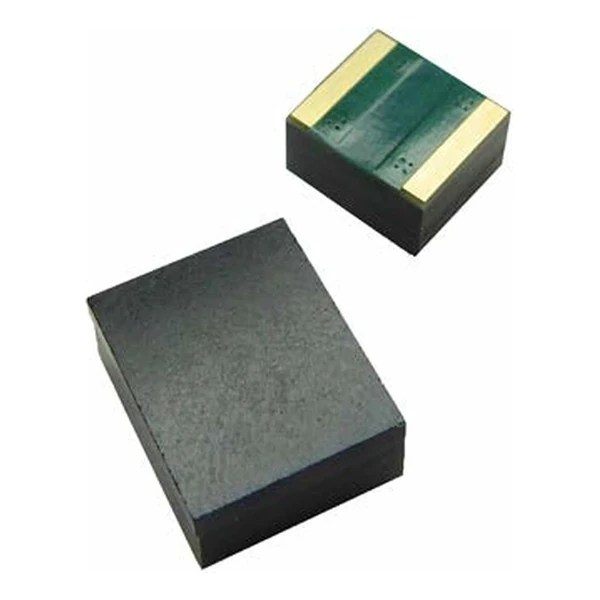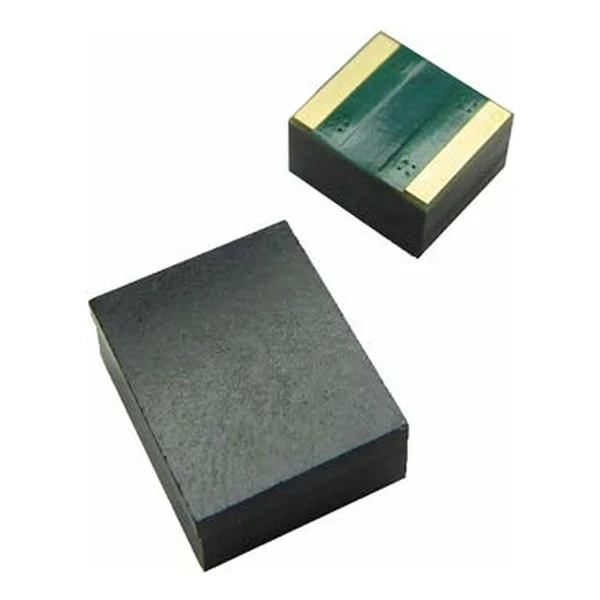
Eaton MLVC12V060C180 MLV ESD Suppressor 180 pF
- Product Details
- Download
Eaton MLVC12V060C180 MLV ESD Suppressor 180 pF
Ratings at a Glance
| Parameter | Value |
|---|---|
| Orderable part number | MLVC12V060C180 |
| Working voltage, DC | 60 Vdc |
| Working voltage, AC | 45 Vac |
| Varistor voltage at 1 mA | 76 V ±10% |
| Clamping voltage at 1 A | 134 V |
| Energy absorption, 10/1000 us | 0.4 J |
| Peak current, 8/20 us | 120 A |
| Typical capacitance at 1 MHz | 180 pF |
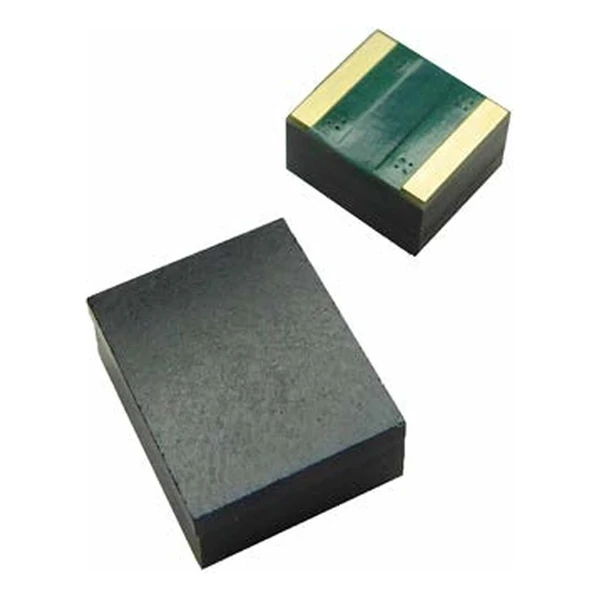
| Package | 1206 (3216 metric) |
| Mounting | Surface mount |
| Operating temperature | -55 °C to +125 °C |
| Qualification | Commercial grade |
| RoHS | Compliant, halogen free |
| Data sheet | Eaton Technical Data 11236 |
Dimensions, recommended pad or hole pattern and the derating curves are
on the data sheet pages; the package line above gives the body size as Eaton states it.
What the Numbers Mean
Multilayer varistors are chosen for board-level ESD and cable-transient protection where a TVS diode would add capacitance. The trade is a softer clamp: the varistor voltage tolerance is wide, so the clamp column, not the nominal voltage, sets the protection level.
The clamp column works out at 1.76 times the varistor voltage: 134 V at the rated current against 76 V at 1 mA. That ratio is what the downstream part has to survive, not the 76 V figure on the label.
The 180 pF typical capacitance is the cost of the clamp. On a power rail it is irrelevant; on a data line it is the reason to look at the low-capacitance versions of the same voltage.
Within the MLVC high energy family this is item 23 of 97 in the Eaton catalogue.
Where This Series Fits
The return path is half the component. A varistor tied to a ground plane far from the connector leaves the loop inductance in series with the clamp, and the residual voltage at the chip is the clamp plus L di/dt.
- The energy rating assumes a single pulse. Repeating the same transient heats the body faster than the datasheet curve suggests, because the curve is drawn for one event at a time.
- These parts are halogen free and RoHS compliant without exemptions, which matters for automotive and appliance programmes.
Frequently Asked Questions
What does the capacitance do to my signal?
It loads the line. At 1 MHz a 100 pF part is about 1.6 kOhm of reactance, which is harmless on a power rail and fatal on a 480 Mbit USB pair. Choose a low-capacitance version when the line carries data.
How many ESD strikes can it take?
The ESD rating is a qualification level, not a lifetime count. IEC 61000-4-2 level 4 is 8 kV contact and 15 kV air, and the part is expected to survive repeated strikes at that level because the energy per strike is small.
Does the clamp voltage scale with the surge current?
Yes. The clamp column is quoted at a stated current, usually 1 A. At ten times that current the residual voltage is higher, so read the V-I curve rather than the single number when the surge is large.
Shenzhen Gaorunxin Technology Co., Ltd
Online message
Shenzhen Gaorunxin Technology Co., Ltd