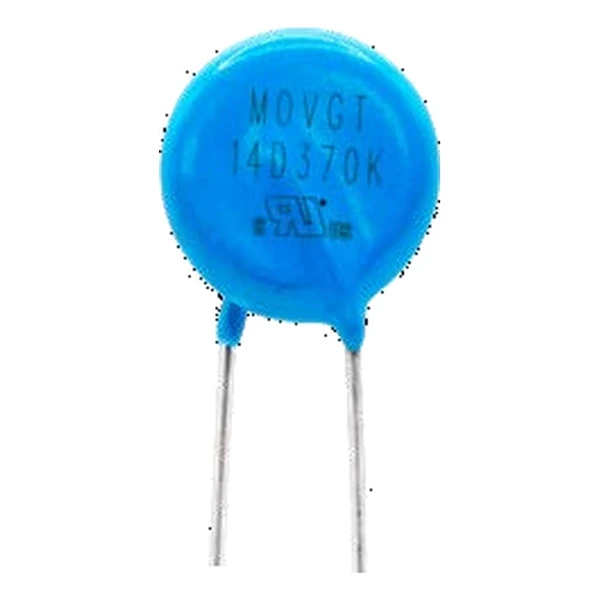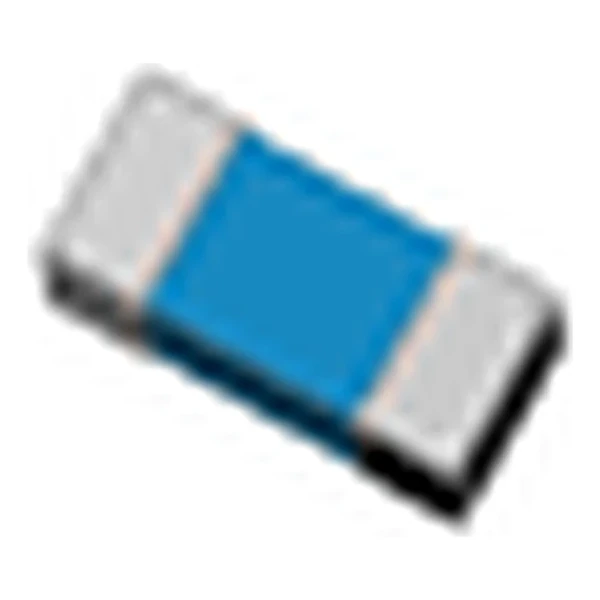
Eaton MLVC32V125C650 Multilayer Varistor, 264 V Clamp
- Product Details
- Download
Eaton MLVC32V125C650 Multilayer Varistor, 264 V Clamp
Electrical Specifications
| Parameter | Value |
|---|---|
| Orderable part number | MLVC32V125C650 |
| Working voltage, DC | 125 Vdc |
| Working voltage, AC | 95 Vac |
| Varistor voltage at 1 mA | 150 V ±10% |
| Clamping voltage at 1 A | 264 V |
| Energy absorption, 10/1000 us | 3.4 J |
| Peak current, 8/20 us | 400 A |
| Typical capacitance at 1 MHz | 650 pF |
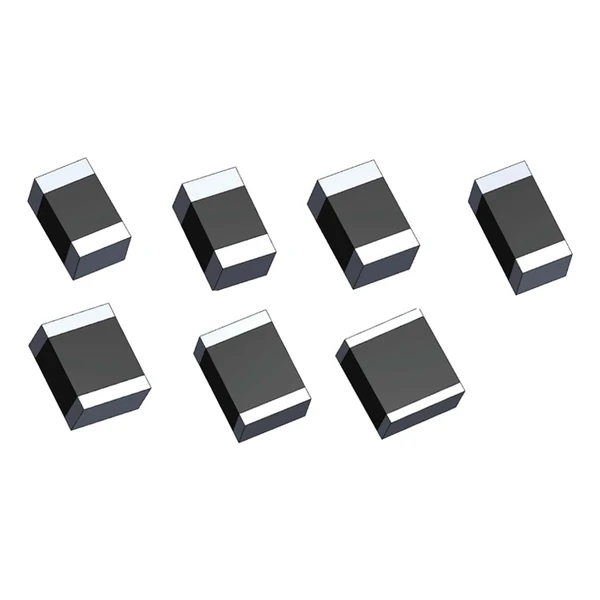
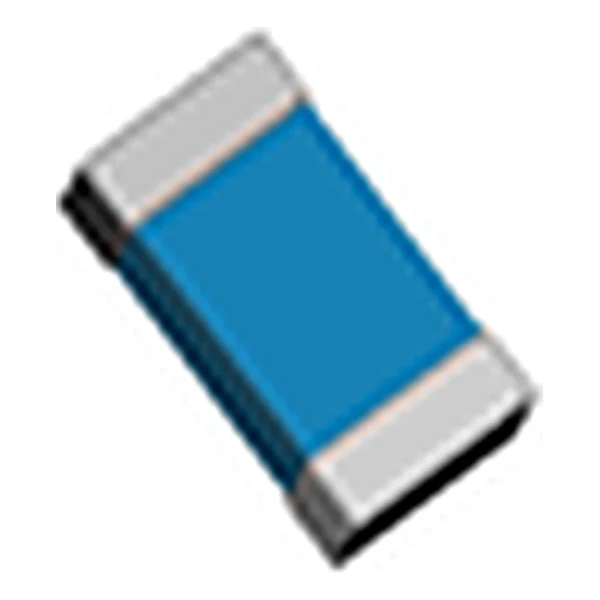
| Package | 3225 (8063 metric) |
| Mounting | Surface mount |
| Operating temperature | -55 °C to +125 °C |
| Qualification | Commercial grade |
| RoHS | Compliant, halogen free |
| Data sheet | Eaton Technical Data 11236 |
Dimensions, recommended pad or hole pattern and the derating curves are
on the data sheet pages; the package line above gives the body size as Eaton states it.
What the Numbers Mean
In a multilayer construction the zinc oxide grains are stacked in many thin layers, so the same body height gives a higher voltage per unit area than a single-layer disc. That is how an 0402 chip reaches 18 Vdc working voltage without becoming thick.
The clamp column works out at 1.76 times the varistor voltage: 264 V at the rated current against 150 V at 1 mA. That ratio is what the downstream part has to survive, not the 150 V figure on the label.
The 650 pF typical capacitance is the cost of the clamp. On a power rail it is irrelevant; on a data line it is the reason to look at the low-capacitance versions of the same voltage.
Within the MLVC high energy family this is item 77 of 97 in the Eaton catalogue.
Where This Series Fits
Place it on the connector side of any series impedance. A varistor behind a common-mode choke protects the choke and not the connector, which is usually the wrong way round.
- Do not run the part at its varistor voltage: the working voltage column is the continuous limit, and the varistor voltage is 1.5 to 2 times higher only because the ceramic is soft at the knee.
- The capacitance column is the price of the protection: a 20000 pF part will load a high speed data line, which is why the low-capacitance versions exist at the same voltage.
Frequently Asked Questions
How many ESD strikes can it take?
The ESD rating is a qualification level, not a lifetime count. IEC 61000-4-2 level 4 is 8 kV contact and 15 kV air, and the part is expected to survive repeated strikes at that level because the energy per strike is small.
Does the clamp voltage scale with the surge current?
Yes. The clamp column is quoted at a stated current, usually 1 A. At ten times that current the residual voltage is higher, so read the V-I curve rather than the single number when the surge is large.
Why is the DC rating lower than the AC rating on some parts?
It is not, on these: the AC rating is an RMS value, so the DC rating is set at the peak of that sine plus margin. Where the two look inconsistent, check which one is quoted as RMS.
Shenzhen Gaorunxin Technology Co., Ltd
Online message
Shenzhen Gaorunxin Technology Co., Ltd