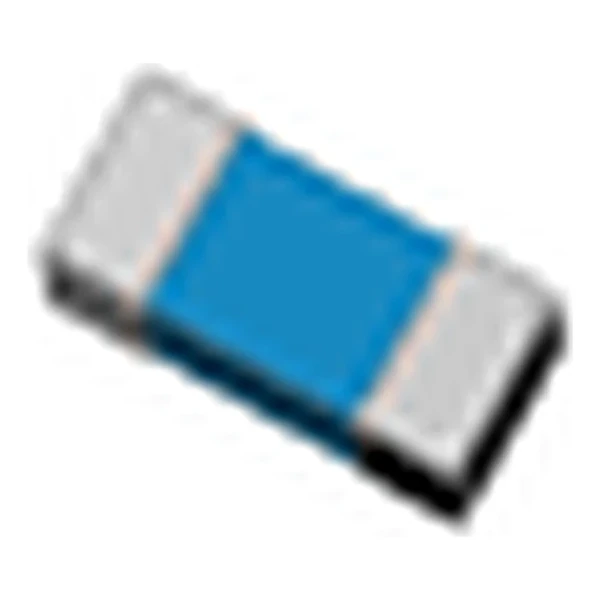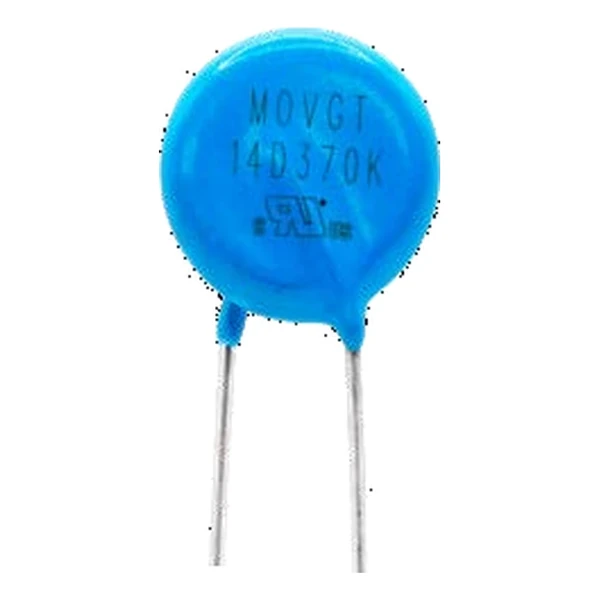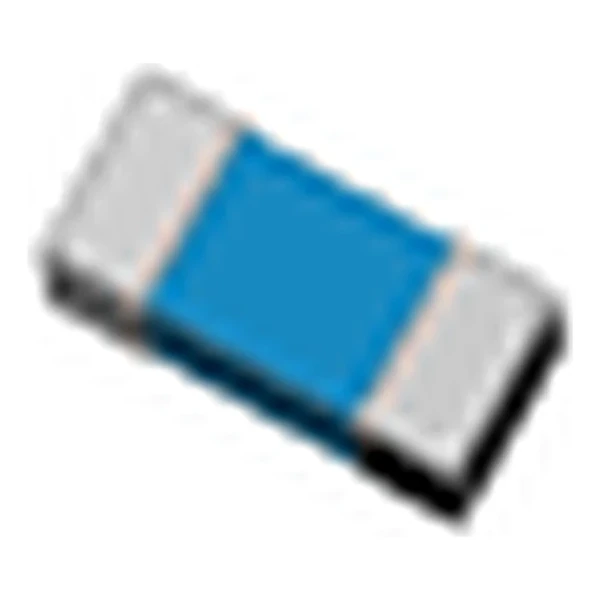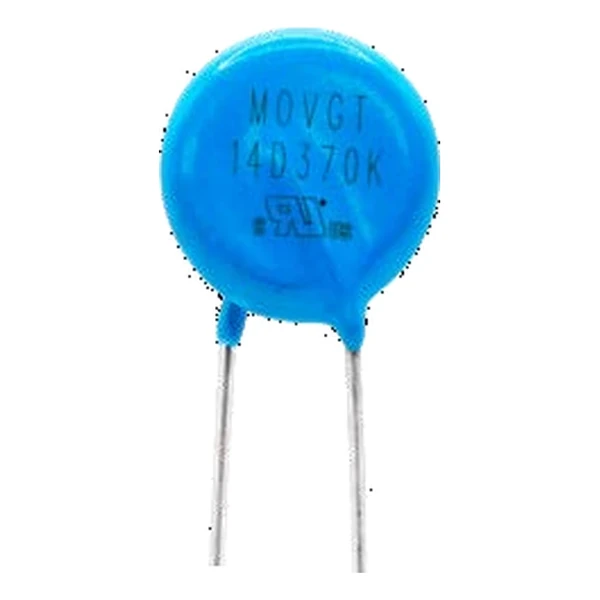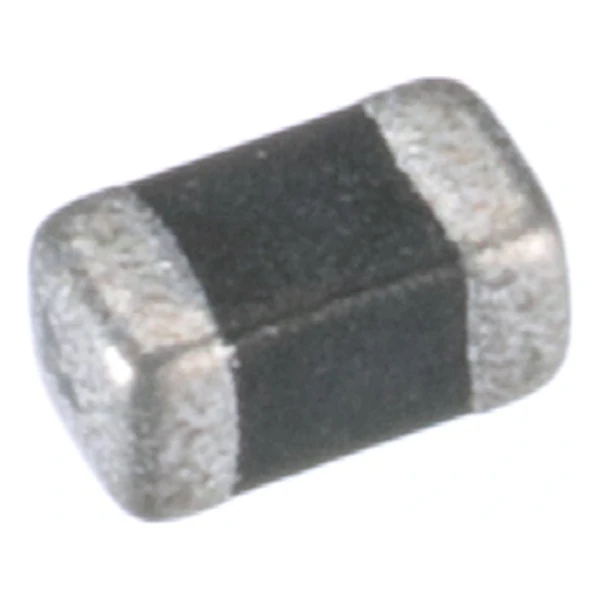
Eaton MLVHV0604V175 225 V Multilayer Varistor
- Product Details
- Download
Eaton MLVHV0604V175 225 V Multilayer Varistor
Ratings at a Glance
| Parameter | Value |
|---|---|
| Orderable part number | MLVHV0604V175 |
| Working voltage, AC | 180 Vac |
| Working voltage, DC | 225 Vdc |
| Varistor voltage at 1 mA | 270 V ±10% |
| Leakage current at 0.8 Vv | max. 50 uA |
| Clamping voltage at 1 A | 450 V |
| Typical capacitance at 1 kHz | 20 pF |
| Peak current, 8/20 us (1 pulse) | 20 A |
| Peak current, 8/20 us (15 pulses) | 10 A |
| Package | 0604 chip |
| Mounting | Surface mount |
| Operating temperature | -40 °C to +125 °C |
| Qualification | Commercial grade |
| RoHS | Compliant, halogen free |
| Data sheet | Eaton Technical Data ELX1239 |
Dimensions, recommended pad or hole pattern and the derating curves are
on the data sheet pages; the package line above gives the body size as Eaton states it.
The Figures Explained
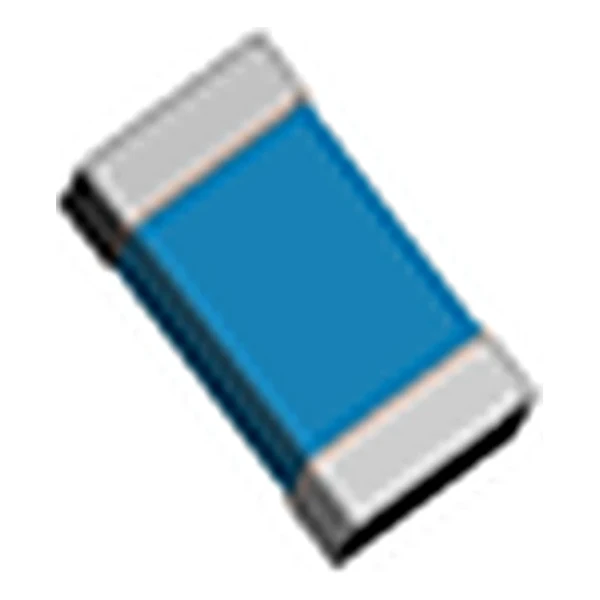
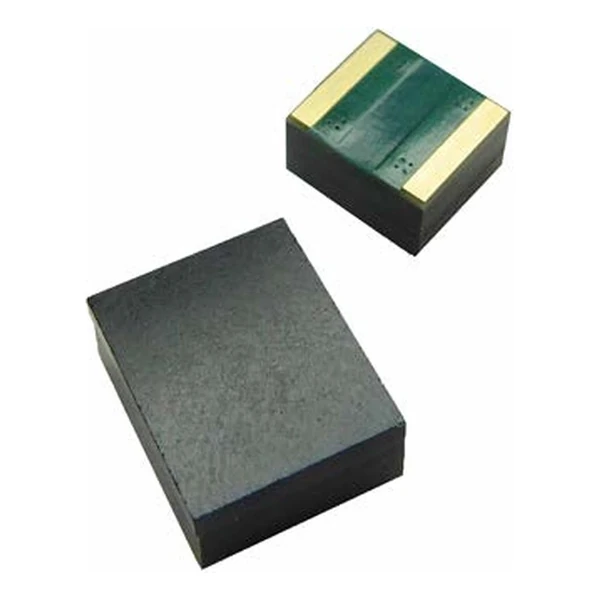
A chip varistor is a ceramic body with two metal terminations, so it looks like a capacitor and behaves like one until the transient arrives. That is why the capacitance column is quoted on every page: it is the parameter that decides whether the part can sit on a data line.
The clamp column works out at 1.67 times the varistor voltage: 450 V at the rated current against 270 V at 1 mA. That ratio is what the downstream part has to survive, not the 270 V figure on the label.
Standing at 225 V the leakage is at most 50 uA, which is 11.25 mW of continuous dissipation. Small, but it is why a varistor on a battery rail has to be chosen on leakage and not only on voltage.
The 20 pF typical capacitance is the cost of the clamp. On a power rail it is irrelevant; on a data line it is the reason to look at the low-capacitance versions of the same voltage.
Within the MLVHV family this is item 1 of 5 in the Eaton catalogue.
Positioning in the Range
The return path is half the component. A varistor tied to a ground plane far from the connector leaves the loop inductance in series with the clamp, and the residual voltage at the chip is the clamp plus L di/dt.
- A varistor is not a zener. It has no sharp knee, so it conducts a little at the working voltage and the leakage column is the honest measure of that.
- These parts are halogen free and RoHS compliant without exemptions, which matters for automotive and appliance programmes.
Frequently Asked Questions
Can it protect a differential pair?
Only with a low-capacitance part and a layout that keeps both lines symmetric. A single varistor from each line to ground is normal; one across the pair is not, because it unbalances the pair.
What happens if the part is run above its working voltage?
Leakage rises steeply and the body heats. A varistor is not a clamp with a sharp knee, so continuous operation above the rating is a slow degradation, not an immediate failure.
Does the package size change the electrical ratings?
Yes, the energy and peak current scale with the body volume, so a 0402 and a 1206 of the same voltage are not interchangeable on a surge.
Shenzhen Gaorunxin Technology Co., Ltd
Online message
Shenzhen Gaorunxin Technology Co., Ltd