Eaton MOV10V210 MOV Disc Varistor 10 mm
- Product Details
- Download
Eaton MOV10V210 MOV Disc Varistor 10 mm
Ratings at a Glance
| Parameter | Value |
|---|---|
| Orderable part number | MOV10V210 |
| Varistor voltage at 1 mA | 330 V |
| Maximum continuous AC voltage | 210 Vrms |
| Maximum continuous DC voltage | 275 Vdc |
| Clamping voltage | 550 V |
| Clamping current | 25 A |
| Maximum surge current, 8/20 us | 2500 A |
| Rated power | 0.4 W |
| Typical capacitance at 1 kHz | 300 pF |
| Maximum energy, 10/1000 us | 43 J |
| Maximum body diameter | 5 mm |
| Agency recognition | cURus (UL 1449) and TUV |
| Package | 10 mm disc |
| Mounting | Radial, through-hole |
| Operating temperature | -40 °C to +125 °C |
| Qualification | Commercial grade |
| RoHS | Compliant, halogen free |
| Data sheet | Eaton Technical Data ELX1287 |
Dimensions, recommended pad or hole pattern and the derating curves are
on the data sheet pages; the package line above gives the body size as Eaton states it.
How to Read These Ratings
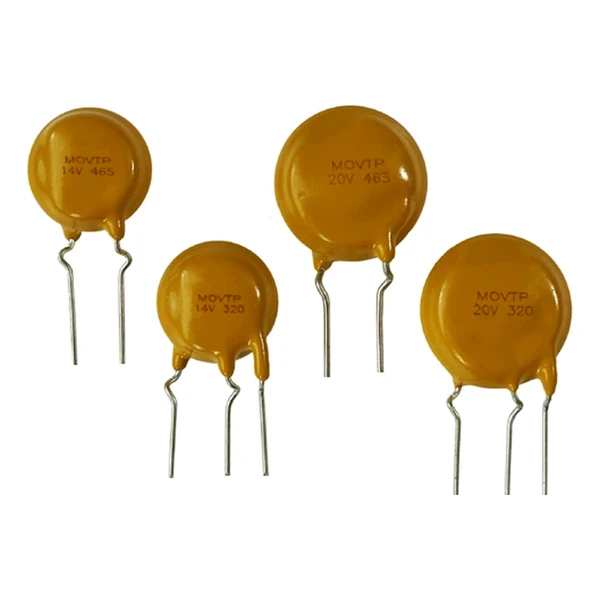
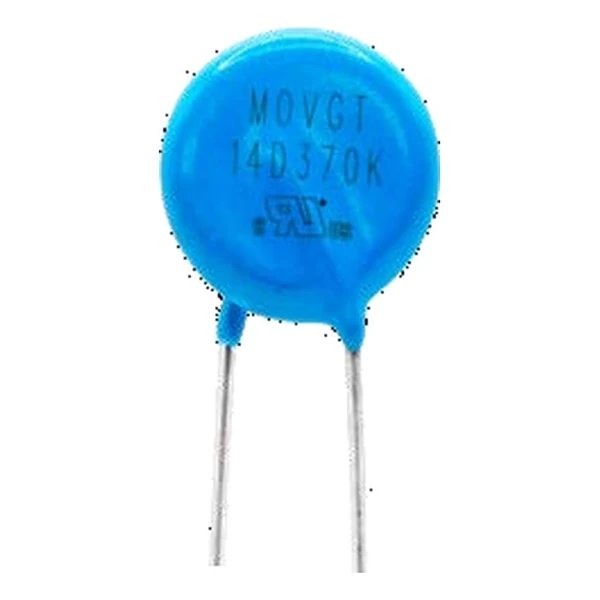
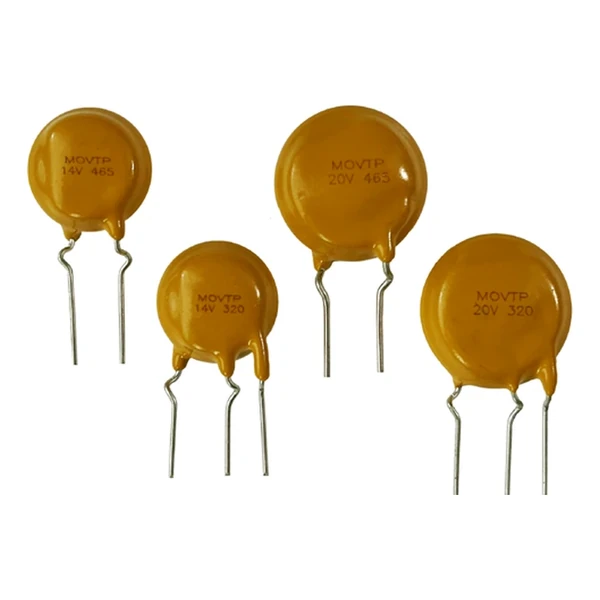
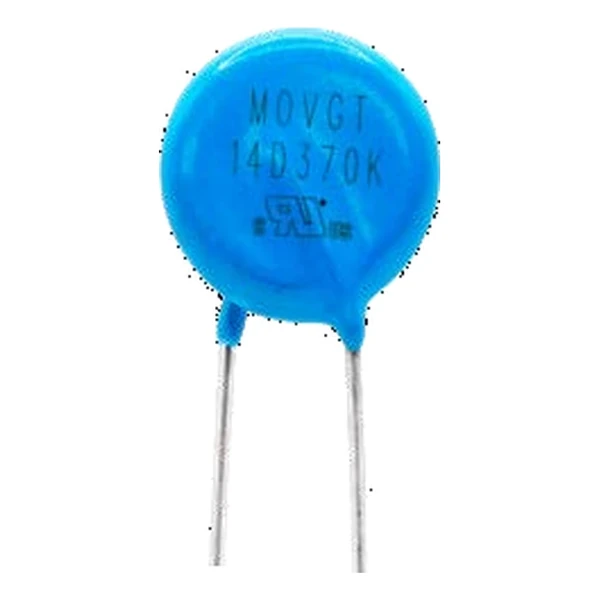
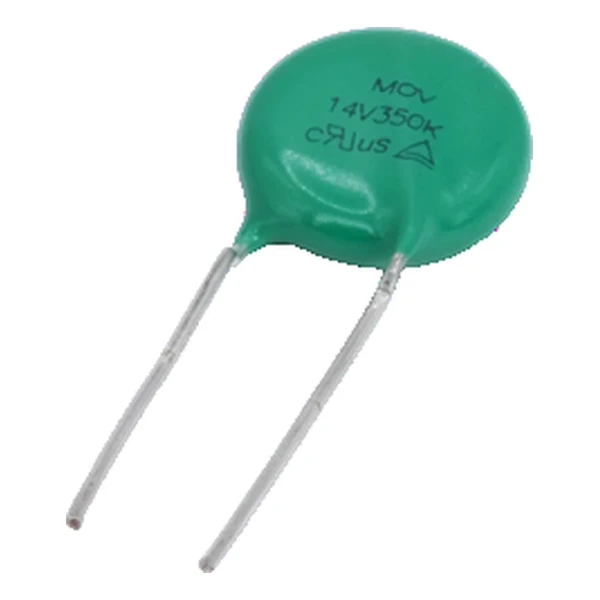
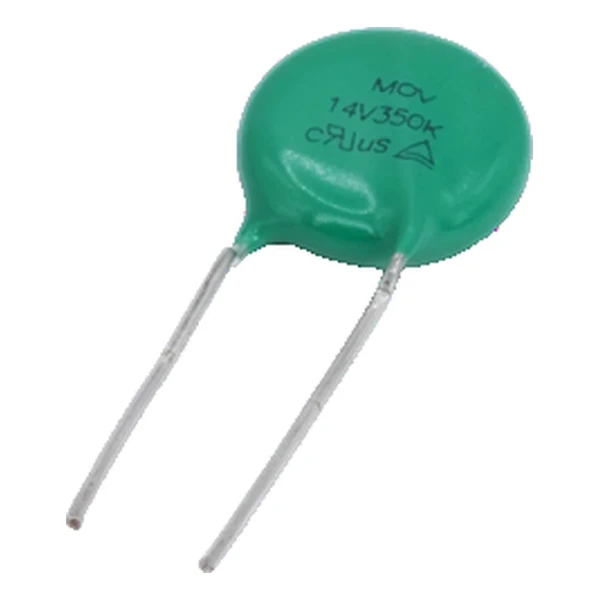
The disc is coated in epoxy and marked with the part number and the varistor voltage. Because the body is the component, the lead spacing and the disc diameter together decide the footprint – there is no separate package to shrink around it.
The clamp column works out at 1.67 times the varistor voltage: 550 V at the rated current against 330 V at 1 mA. That ratio is what the downstream part has to survive, not the 330 V figure on the label.
The disc absorbs 43 J in a 10/1000 us pulse and carries 2500 A in an 8/20 us pulse. Those are single shot figures: the same part will take a fraction of the energy repeatedly.
At 0.4 W continuous rating the body can sit at the working voltage indefinitely. A 20 mm disc handles roughly 300 pF across the line, which matters on a signal-carrying pair but not on a mains input.
Within the MOV family this is item 21 of 71 in the Eaton catalogue.
Positioning in the Range
Mount it with the body clear of the transformer and the bridge rectifier; a disc running at its rated power needs air, and the derating curve assumes it gets some.
- The clamping voltage is quoted at a test current that is far below the surge. At the full 8/20 rating the residual voltage is higher – read the V-I curve.
- The marking on the body gives the part number and the varistor voltage. In a service situation that marking is how the failed part gets identified.
Frequently Asked Questions
Why is the DC rating higher than the AC rating?
The AC rating is an RMS value, so the peak of the sine is 1.41 times higher. The DC rating is set at that peak plus margin, which is why a 130 Vac part is rated 170 Vdc.
What happens at end of life?
A varistor that absorbs more than its rating drifts low in voltage and eventually fails short. That is why a fuse or a thermal element is placed in series with it on mains inputs.
Can it be used on a DC bus?
Yes, within the DC rating, but the energy per event is usually larger because there is no zero crossing to help extinguish the follow current. Check the application note before using a mains part on a high-voltage DC bus.
Shenzhen Gaorunxin Technology Co., Ltd
Online message
Shenzhen Gaorunxin Technology Co., Ltd