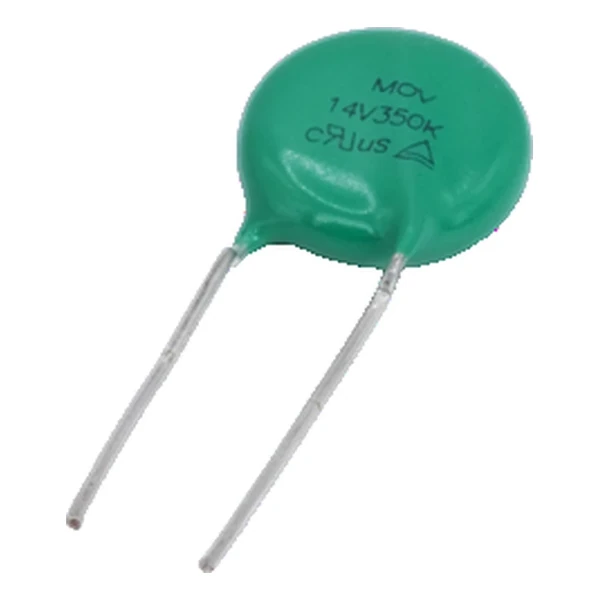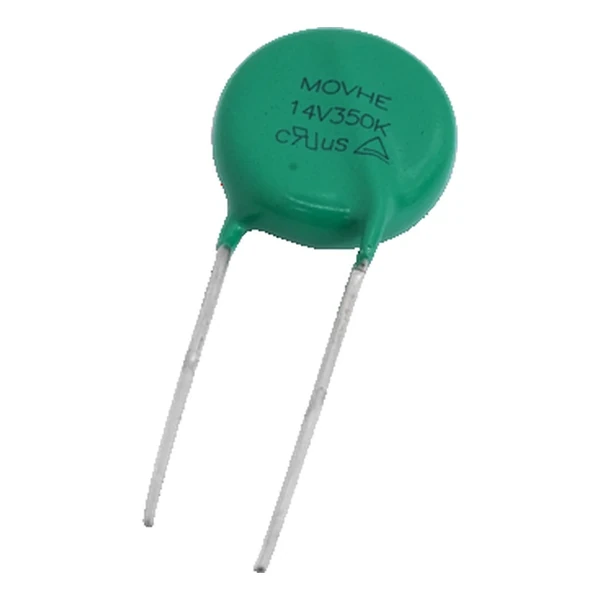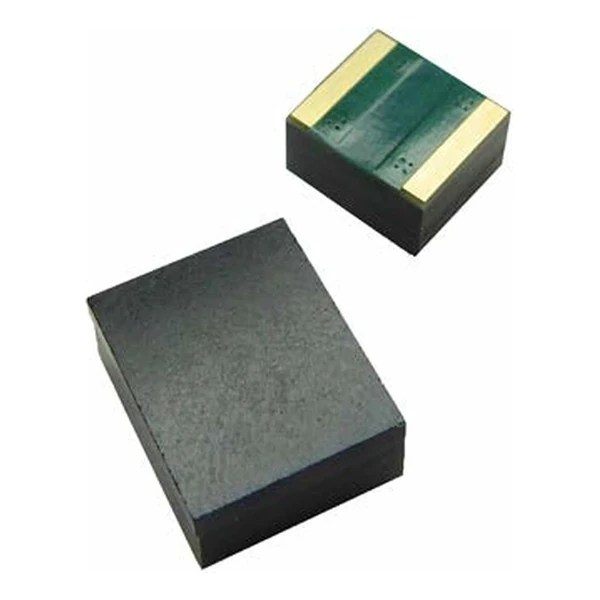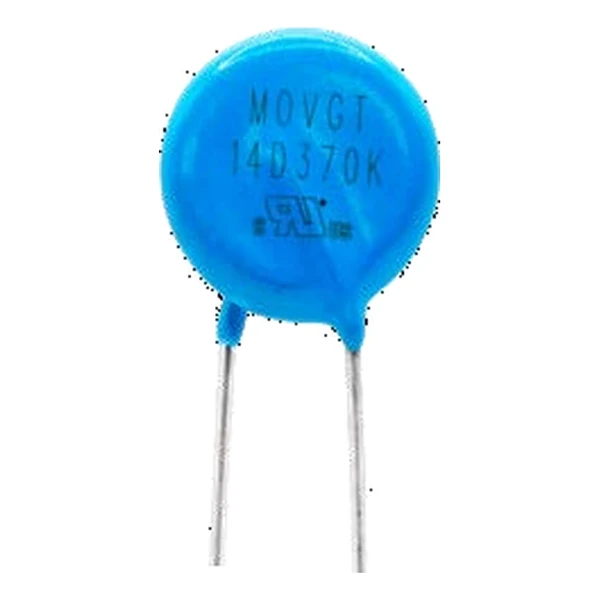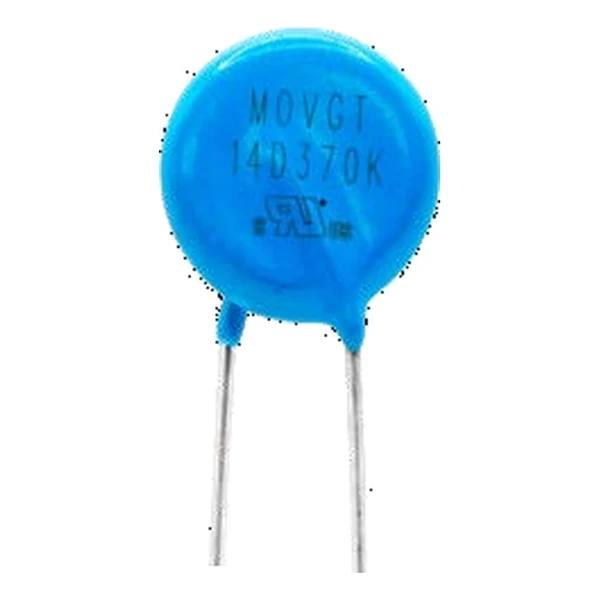
Eaton MOVGT10V160K MOVGT Hybrid Protector 10 mm
- Product Details
- Download
Eaton MOVGT10V160K MOVGT Hybrid Protector 10 mm
Specification Table
| Parameter | Value |
|---|---|
| Orderable part number | MOVGT10V160K |
| UL volts | 150 Vac |
| Recommended MCOV | 160 Vac |
| UL MCOV | 200 Vac |
| MOV voltage at 1 mA | 240(216~264) V |
| GDT voltage at 100 V/s | 350(280~420) V |
| Platform voltage at 1000 V/us | max. 430 V |
| Peak voltage at 1000 V/us | max. 1020 V |
| Withstand count at 2 kV / 1 kA | 40 shots |
| MOV withstand current, 8/20 us | 3500 A |
| Maximum energy, 10/1000 us | 42 J |
| Capacitance at 1 kHz | 5 pF |
| Package | 10 mm disc |
| Mounting | Radial, through-hole |
| Operating temperature | -40 °C to +105 °C |
| Qualification | Commercial grade |
| RoHS | Compliant, halogen free |
| Data sheet | Eaton Technical Data ELX1161 |
Dimensions, recommended pad or hole pattern and the derating curves are
on the data sheet pages; the package line above gives the body size as Eaton states it.
Reading the Data Sheet
The MOV part of the stack still does the continuous work: it holds the line voltage off the GDT and takes the first microseconds of the surge. The GDT takes over once the gap breaks down.
The MOV inside is a 240(216~264) V part and the GDT is a 350(280~420) V tube. In series the pair holds the surge at the platform voltage of 430 V, well under the peak 1020 V it would reach alone at a 1000 V/us edge.
Withstand is quoted as 40 shots at 2 kV / 1 kA. Because the GDT carries the follow current, the MOV is not eroded by the long tail of the pulse the way a stand-alone varistor is.
Within the MOVGT family this is item 54 of 160 in the Eaton catalogue.
What This Family Is For
Mount it away from the signal ground reference. The GDT arc couples noise into anything nearby, and the platform voltage appears across the package during the event.
- The series stack needs the MOV to hold off the line at the end of life as well. If the MOV degrades low in voltage the GDT starts to see the line, which is why the withstand count matters.
- The MOV inside is a disc, so the energy rating follows the disc diameter; the GDT adds current capability, not joules.
Frequently Asked Questions
Is the capacitance low enough for a signal line?
A few picofarads, yes, but this is a mains protector. Its package and its platform voltage are chosen for an input stage, not for a data pair.
Why put a GDT in series with a MOV?
The MOV triggers fast and the GDT clamps low. In series the MOV starts the conduction and the GDT carries the current, so the residual voltage is closer to the GDT arc voltage than to the MOV clamp.
What keeps the GDT from firing on the normal line voltage?
The MOV holds off the continuous voltage, so the GDT only sees the line when the MOV is conducting. That coordination is what allows the series stack to sit across mains.
Shenzhen Gaorunxin Technology Co., Ltd
Online message
Shenzhen Gaorunxin Technology Co., Ltd