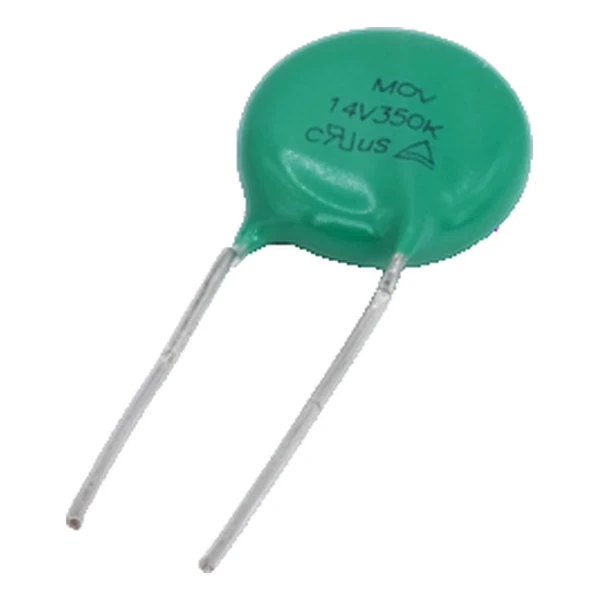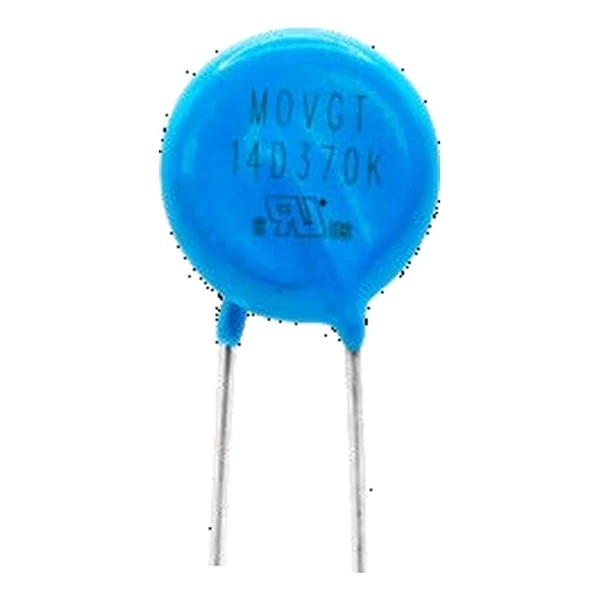
Eaton MOVGT20V150K MOV / GDT Device 150 Vac
- Product Details
- Download
Eaton MOVGT20V150K MOV / GDT Device 150 Vac
Specification Table
| Parameter | Value |
|---|---|
| Orderable part number | MOVGT20V150K |
| UL volts | 140 Vac |
| Recommended MCOV | 150 Vac |
| UL MCOV | 185 Vac |
| MOV voltage at 1 mA | 220(198~242) V |
| GDT voltage at 100 V/s | 350(280~420) V |
| Platform voltage at 1000 V/us | max. 390 V |
| Peak voltage at 1000 V/us | max. 1020 V |
| Withstand count at 2 kV / 1 kA | 40 shots |
| MOV withstand current, 8/20 us | 10000 A |
| Maximum energy, 10/1000 us | 155 J |
| Capacitance at 1 kHz | 5 pF |
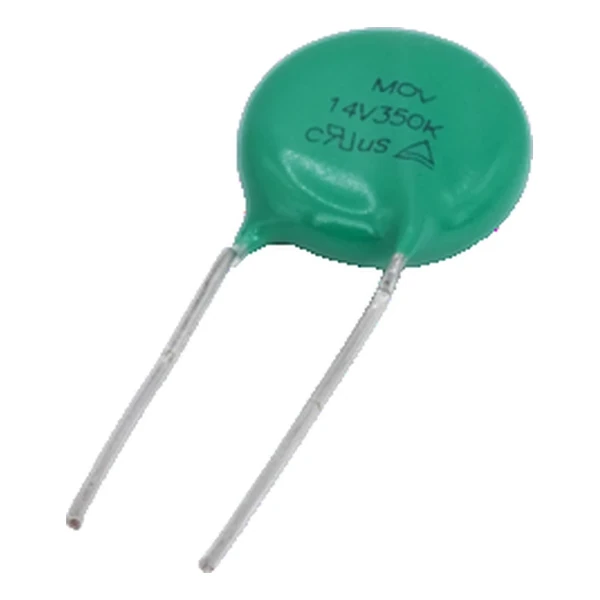
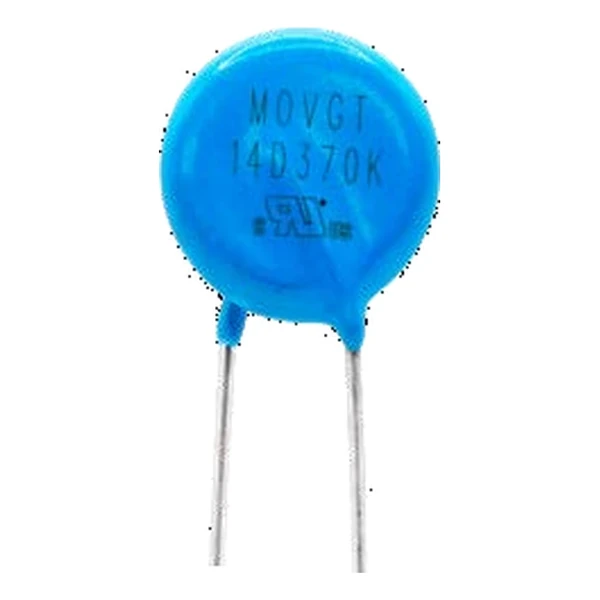
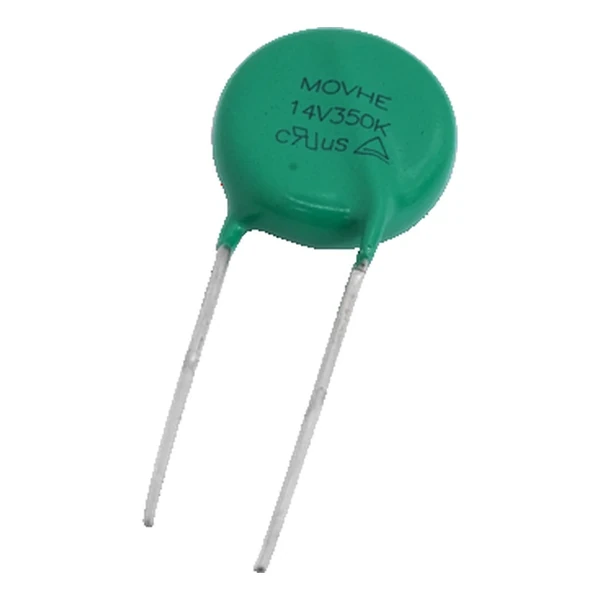
| Package | 20 mm disc |
| Mounting | Radial, through-hole |
| Operating temperature | -40 °C to +105 °C |
| Qualification | Commercial grade |
| RoHS | Compliant, halogen free |
| Data sheet | Eaton Technical Data ELX1161 |
Dimensions, recommended pad or hole pattern and the derating curves are
on the data sheet pages; the package line above gives the body size as Eaton states it.
The Figures Explained
The part is coordinated so the GDT does not see the continuous line voltage: the MOV holds off the normal operating level and the GDT only fires inside a surge. That is what makes the series connection possible at mains voltages.
The MOV inside is a 220(198~242) V part and the GDT is a 350(280~420) V tube. In series the pair holds the surge at the platform voltage of 390 V, well under the peak 1020 V it would reach alone at a 1000 V/us edge.
Withstand is quoted as 40 shots at 2 kV / 1 kA. Because the GDT carries the follow current, the MOV is not eroded by the long tail of the pulse the way a stand-alone varistor is.
Within the MOVGT family this is item 133 of 160 in the Eaton catalogue.
Positioning in the Range
The part is the first thing the surge sees, so it sits between the inlet and the fuse only if the fuse is rated for the follow current; otherwise the fuse goes first and the protector after it.
- The series stack needs the MOV to hold off the line at the end of life as well. If the MOV degrades low in voltage the GDT starts to see the line, which is why the withstand count matters.
- The capacitance is a few picofarads, which is low enough for a mains input and low enough not to load a signal pair.
Frequently Asked Questions
Is the capacitance low enough for a signal line?
A few picofarads, yes, but this is a mains protector. Its package and its platform voltage are chosen for an input stage, not for a data pair.
Why put a GDT in series with a MOV?
The MOV triggers fast and the GDT clamps low. In series the MOV starts the conduction and the GDT carries the current, so the residual voltage is closer to the GDT arc voltage than to the MOV clamp.
What keeps the GDT from firing on the normal line voltage?
The MOV holds off the continuous voltage, so the GDT only sees the line when the MOV is conducting. That coordination is what allows the series stack to sit across mains.
Shenzhen Gaorunxin Technology Co., Ltd
Online message
Shenzhen Gaorunxin Technology Co., Ltd