Eaton MOVGT20V190K MOV / GDT Device 190 Vac
- Product Details
- Download
Eaton MOVGT20V190K MOV / GDT Device 190 Vac
Key Specifications
| Parameter | Value |
|---|---|
| Orderable part number | MOVGT20V190K |
| UL volts | 175 Vac |
| Recommended MCOV | 190 Vac |
| UL MCOV | 230 Vac |
| MOV voltage at 1 mA | 270(243~297) V |
| GDT voltage at 100 V/s | 350(280~420) V |
| Platform voltage at 1000 V/us | max. 480 V |
| Peak voltage at 1000 V/us | max. 1020 V |
| Withstand count at 2 kV / 1 kA | 40 shots |
| MOV withstand current, 8/20 us | 10000 A |
| Maximum energy, 10/1000 us | 190 J |
| Capacitance at 1 kHz | 5 pF |
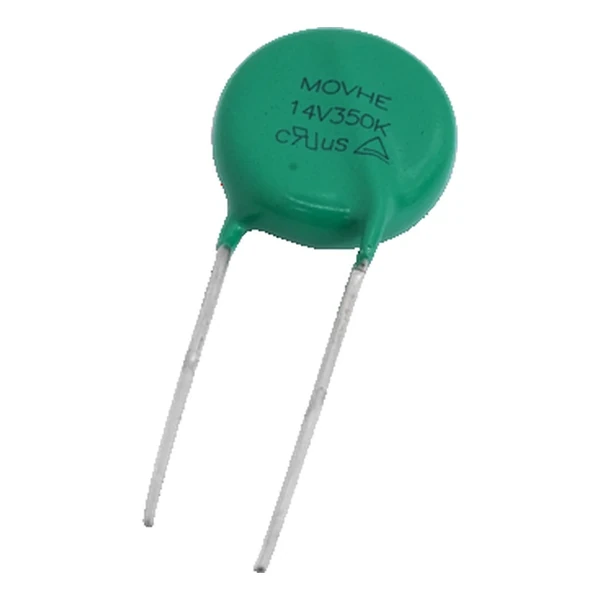
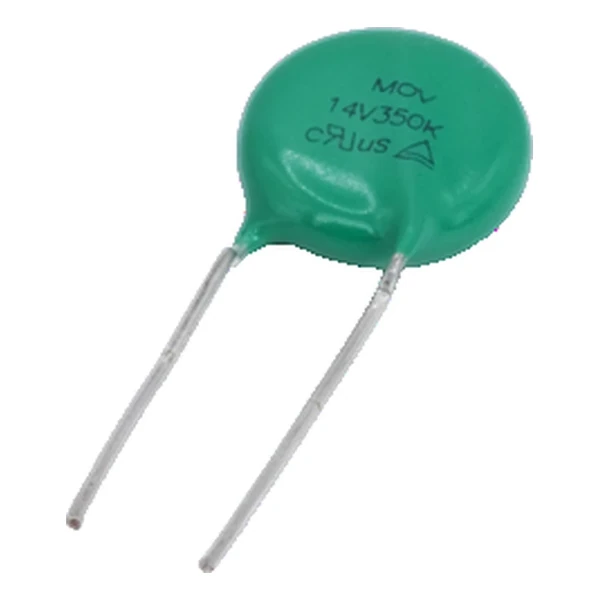
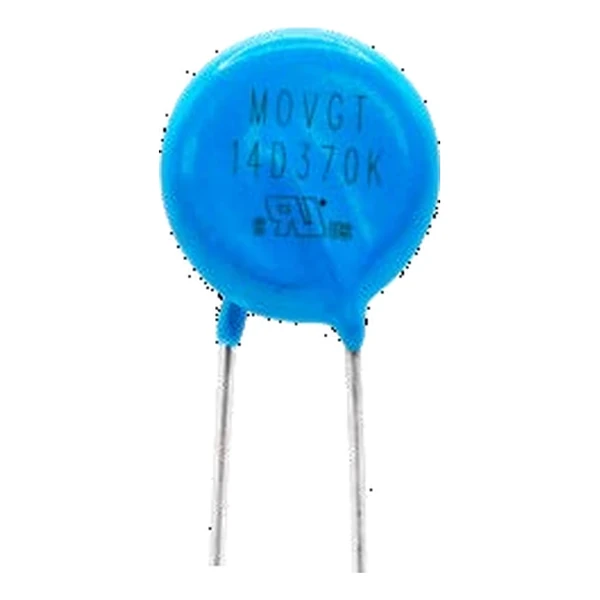
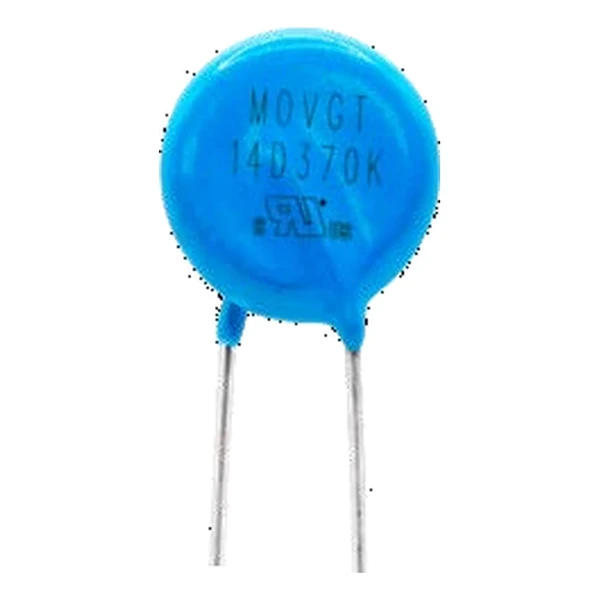
| Package | 20 mm disc |
| Mounting | Radial, through-hole |
| Operating temperature | -40 °C to +105 °C |
| Qualification | Commercial grade |
| RoHS | Compliant, halogen free |
| Data sheet | Eaton Technical Data ELX1161 |
Dimensions, recommended pad or hole pattern and the derating curves are
on the data sheet pages; the package line above gives the body size as Eaton states it.
Reading the Data Sheet
The part is coordinated so the GDT does not see the continuous line voltage: the MOV holds off the normal operating level and the GDT only fires inside a surge. That is what makes the series connection possible at mains voltages.
The MOV inside is a 270(243~297) V part and the GDT is a 350(280~420) V tube. In series the pair holds the surge at the platform voltage of 480 V, well under the peak 1020 V it would reach alone at a 1000 V/us edge.
Withstand is quoted as 40 shots at 2 kV / 1 kA. Because the GDT carries the follow current, the MOV is not eroded by the long tail of the pulse the way a stand-alone varistor is.
Within the MOVGT family this is item 137 of 160 in the Eaton catalogue.
Where This Series Fits
The part is the first thing the surge sees, so it sits between the inlet and the fuse only if the fuse is rated for the follow current; otherwise the fuse goes first and the protector after it.
- The GDT will not extinguish at DC. On a DC input the follow current keeps the tube conducting until the source is interrupted, so this part belongs on AC mains only.
- The capacitance is a few picofarads, which is low enough for a mains input and low enough not to load a signal pair.
Frequently Asked Questions
Does the GDT need a separate fuse?
The follow current is limited by the source impedance and the upstream fuse. Check that the fuse clears the follow current, otherwise the tube keeps conducting after the surge.
Is the capacitance low enough for a signal line?
A few picofarads, yes, but this is a mains protector. Its package and its platform voltage are chosen for an input stage, not for a data pair.
Why put a GDT in series with a MOV?
The MOV triggers fast and the GDT clamps low. In series the MOV starts the conduction and the GDT carries the current, so the residual voltage is closer to the GDT arc voltage than to the MOV clamp.
Shenzhen Gaorunxin Technology Co., Ltd
Online message
Shenzhen Gaorunxin Technology Co., Ltd