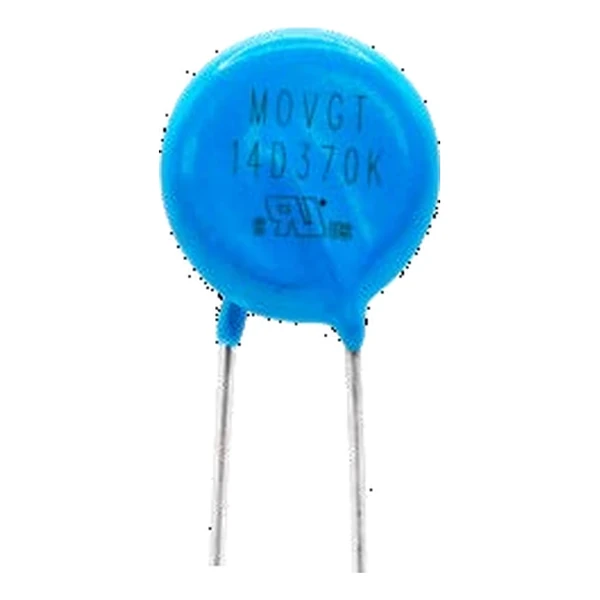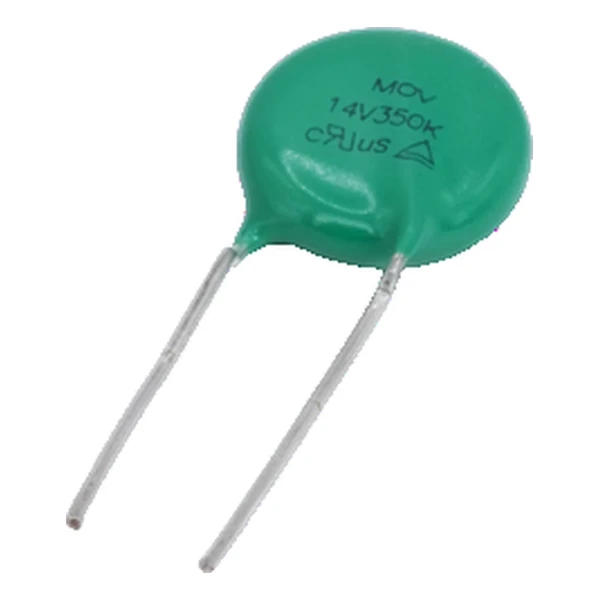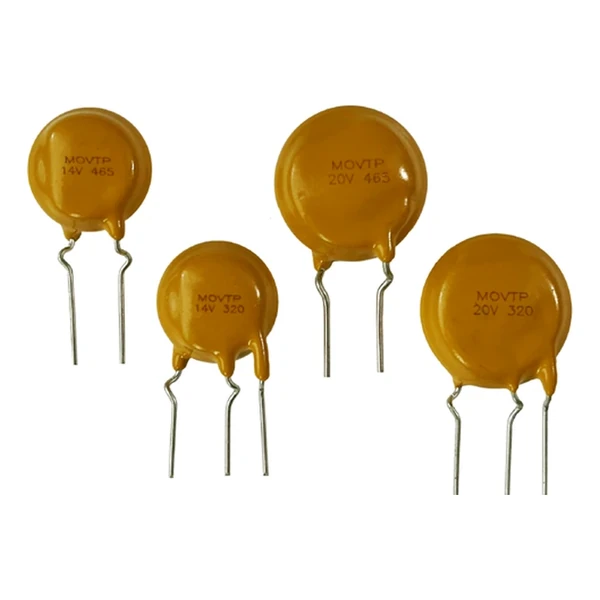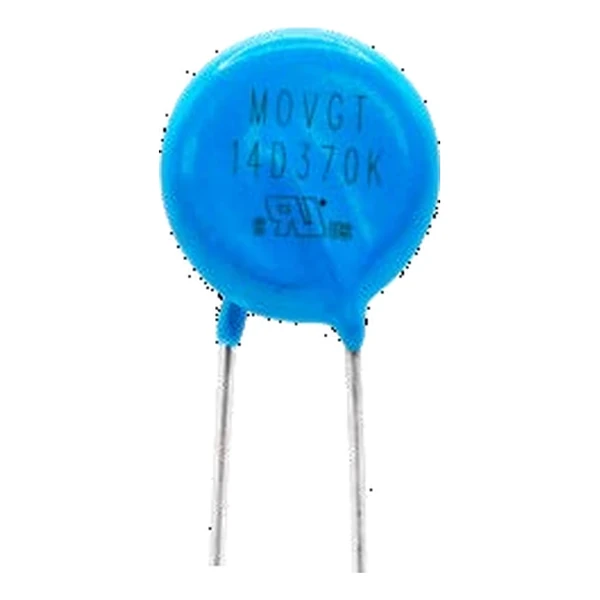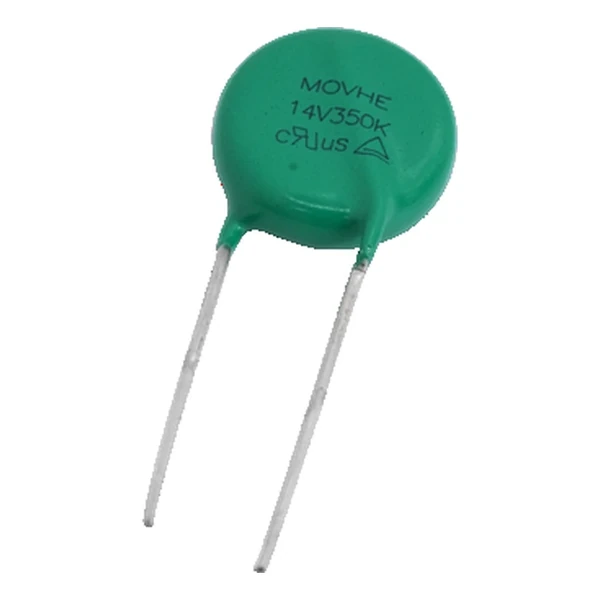
Eaton MOVHE07V420 MOV Disc Varistor 7 mm
- Product Details
- Download
Eaton MOVHE07V420 MOV Disc Varistor 7 mm
Specification Table
| Parameter | Value |
|---|---|
| Orderable part number | MOVHE07V420 |
| Varistor voltage at 1 mA | 680 V |
| Maximum continuous AC voltage | 420 Vrms |
| Maximum continuous DC voltage | 560 Vdc |
| Clamping voltage | 1120 V |
| Clamping current | 10 A |
| Maximum surge current, 8/20 us | 1750 A |
| Rated power | 0.25 W |
| Typical capacitance at 1 kHz | 75 pF |
| Maximum energy, 10/1000 us | 60 J |
| Maximum body diameter | 6 mm |
| Agency recognition | cURus (UL 1449) and TUV |
| Package | 7 mm disc |
| Mounting | Radial, through-hole |
| Operating temperature | -40 °C to +125 °C |
| Qualification | Commercial grade |
| RoHS | Compliant, halogen free |
| Data sheet | Eaton Technical Data ELX1288 |
Dimensions, recommended pad or hole pattern and the derating curves are
on the data sheet pages; the package line above gives the body size as Eaton states it.
What the Numbers Mean
A radial disc varistor is the mains-side workhorse: it absorbs the surge that comes down the line and clamps it below the withstand of what follows. The selection is a chain of three numbers – continuous voltage, varistor voltage and energy – and the disc diameter sets all three.
The clamp column works out at 1.65 times the varistor voltage: 1120 V at the rated current against 680 V at 1 mA. That ratio is what the downstream part has to survive, not the 680 V figure on the label.
The disc absorbs 60 J in a 10/1000 us pulse and carries 1750 A in an 8/20 us pulse. Those are single shot figures: the same part will take a fraction of the energy repeatedly.
At 0.25 W continuous rating the body can sit at the working voltage indefinitely. A 20 mm disc handles roughly 75 pF across the line, which matters on a signal-carrying pair but not on a mains input.
Within the MOVHE family this is item 14 of 71 in the Eaton catalogue.
Positioning in the Range
The varistor sits across the input after the fuse and before the rectifier, with short, thick traces or a direct lead-to-terminal connection. A long return path turns the trace inductance into a voltage spike that the varistor cannot clamp.
- Do not put a varistor across a DC bus without checking the follow current: at DC there is no zero crossing to extinguish it, and the disc can overheat after the surge has passed.
- The epoxy coating is the insulation, so the lead bend radius and the mounting clip both matter: a cracked coating at the lead exit is a failure point.
Frequently Asked Questions
Why is the DC rating higher than the AC rating?
The AC rating is an RMS value, so the peak of the sine is 1.41 times higher. The DC rating is set at that peak plus margin, which is why a 130 Vac part is rated 170 Vdc.
What happens at end of life?
A varistor that absorbs more than its rating drifts low in voltage and eventually fails short. That is why a fuse or a thermal element is placed in series with it on mains inputs.
Can it be used on a DC bus?
Yes, within the DC rating, but the energy per event is usually larger because there is no zero crossing to help extinguish the follow current. Check the application note before using a mains part on a high-voltage DC bus.
Shenzhen Gaorunxin Technology Co., Ltd
Online message
Shenzhen Gaorunxin Technology Co., Ltd