Eaton MOVHE10V210 210 Vac Radial Varistor
- Product Details
- Download
Eaton MOVHE10V210 210 Vac Radial Varistor
Key Specifications
| Parameter | Value |
|---|---|
| Orderable part number | MOVHE10V210 |
| Varistor voltage at 1 mA | 330 V |
| Maximum continuous AC voltage | 210 Vrms |
| Maximum continuous DC voltage | 275 Vdc |
| Clamping voltage | 550 V |
| Clamping current | 25 A |
| Maximum surge current, 8/20 us | 3500 A |
| Rated power | 0.4 W |
| Typical capacitance at 1 kHz | 300 pF |
| Maximum energy, 10/1000 us | 58 J |
| Maximum body diameter | 5 mm |
| Agency recognition | cURus (UL 1449) and TUV |
| Package | 10 mm disc |
| Mounting | Radial, through-hole |
| Operating temperature | -40 °C to +125 °C |
| Qualification | Commercial grade |
| RoHS | Compliant, halogen free |
| Data sheet | Eaton Technical Data ELX1288 |
Dimensions, recommended pad or hole pattern and the derating curves are
on the data sheet pages; the package line above gives the body size as Eaton states it.
What the Numbers Mean
For AC mains service the continuous rating is given as an RMS voltage, and the DC rating is that value multiplied by roughly 1.41. Sizing the part at or near the nominal line voltage leaves no room for regulation tolerance or a prolonged overvoltage, so the usual rule is 10 to 20 percent headroom.
The clamp column works out at 1.67 times the varistor voltage: 550 V at the rated current against 330 V at 1 mA. That ratio is what the downstream part has to survive, not the 330 V figure on the label.
The disc absorbs 58 J in a 10/1000 us pulse and carries 3500 A in an 8/20 us pulse. Those are single shot figures: the same part will take a fraction of the energy repeatedly.
At 0.4 W continuous rating the body can sit at the working voltage indefinitely. A 20 mm disc handles roughly 300 pF across the line, which matters on a signal-carrying pair but not on a mains input.
Within the MOVHE family this is item 21 of 71 in the Eaton catalogue.
Where This Series Fits
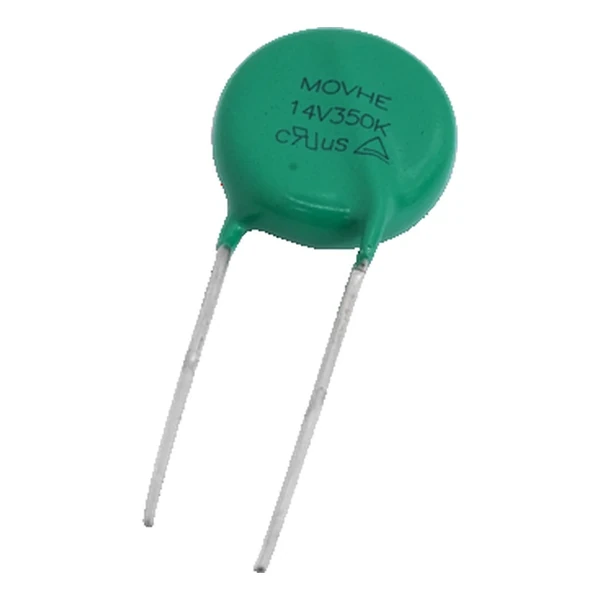
Keep the leads short and do not sleeve them together: the loop area between the two leads is part of the clamping path, and folding them against each other is what keeps the inductance low.
- A varistor that has failed short looks like a low-value resistor across the line. Always pair a mains varistor with a fuse or a thermal element.
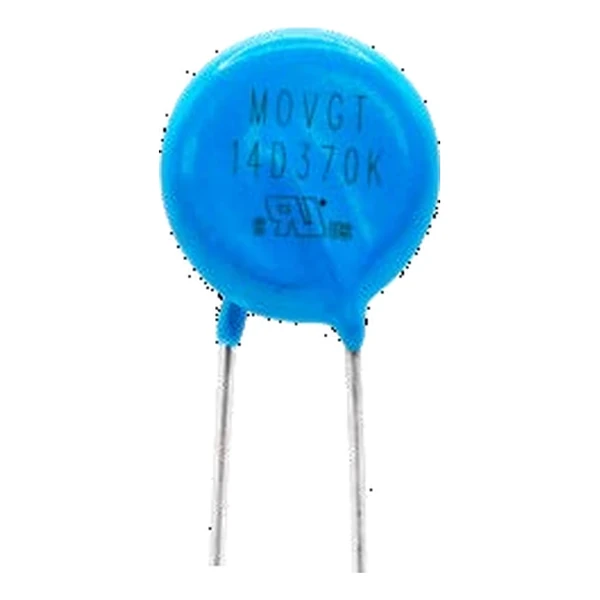
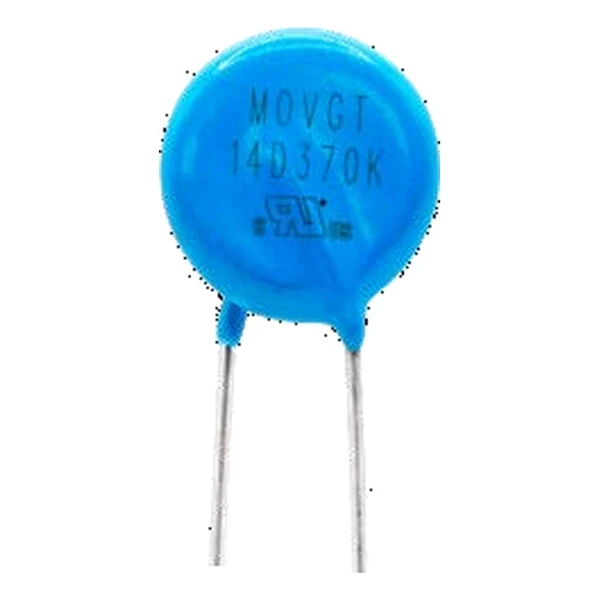
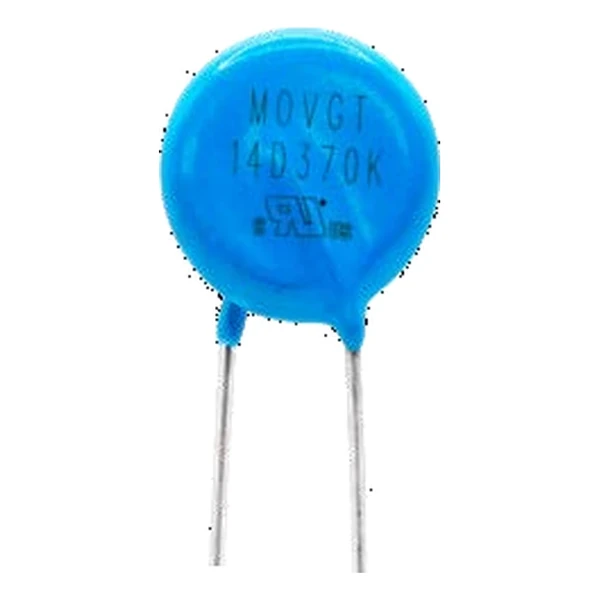
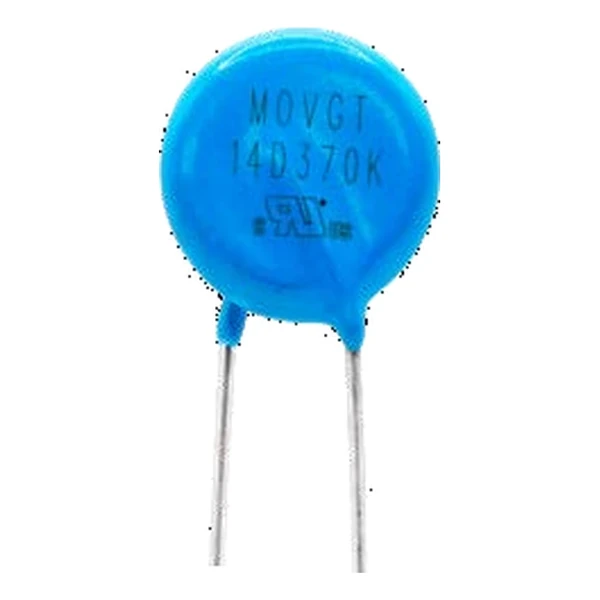
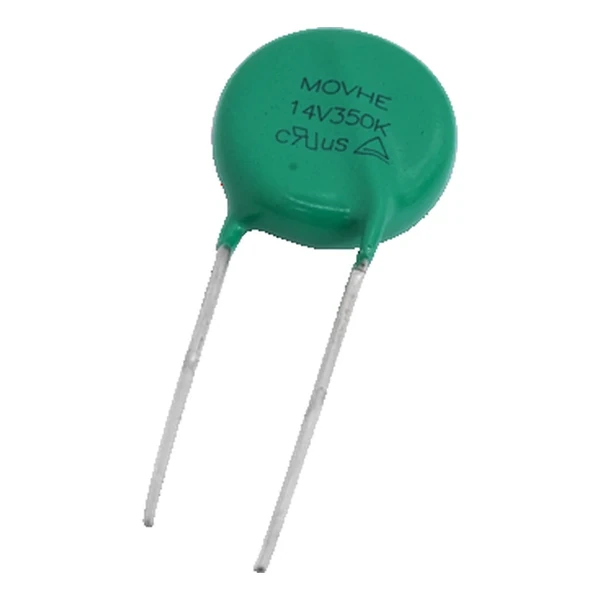
- The marking on the body gives the part number and the varistor voltage. In a service situation that marking is how the failed part gets identified.
Frequently Asked Questions
What happens at end of life?
A varistor that absorbs more than its rating drifts low in voltage and eventually fails short. That is why a fuse or a thermal element is placed in series with it on mains inputs.
Can it be used on a DC bus?
Yes, within the DC rating, but the energy per event is usually larger because there is no zero crossing to help extinguish the follow current. Check the application note before using a mains part on a high-voltage DC bus.
How do I choose between 130 V and 150 V for a 120 V line?
On a 120 V nominal line the steady-state RMS can reach 132 V or more, so a 130 Vac part has no headroom. The 150 V part is the usual choice, and the varistor voltage that comes with it is still below the withstand of most downstream parts.
Shenzhen Gaorunxin Technology Co., Ltd
Online message
Shenzhen Gaorunxin Technology Co., Ltd