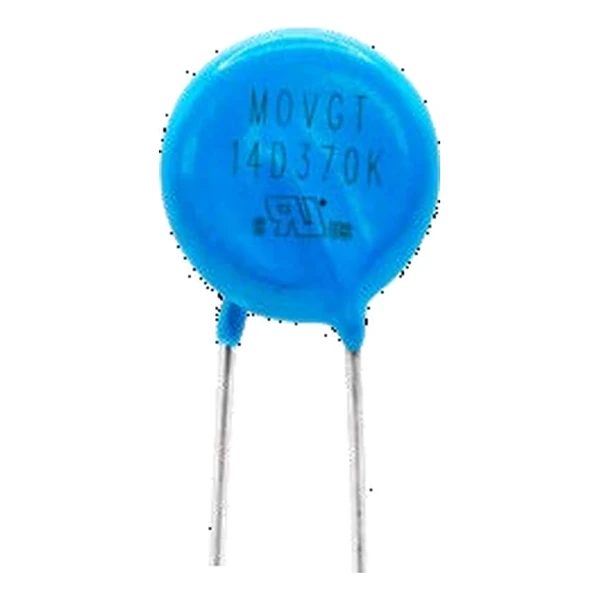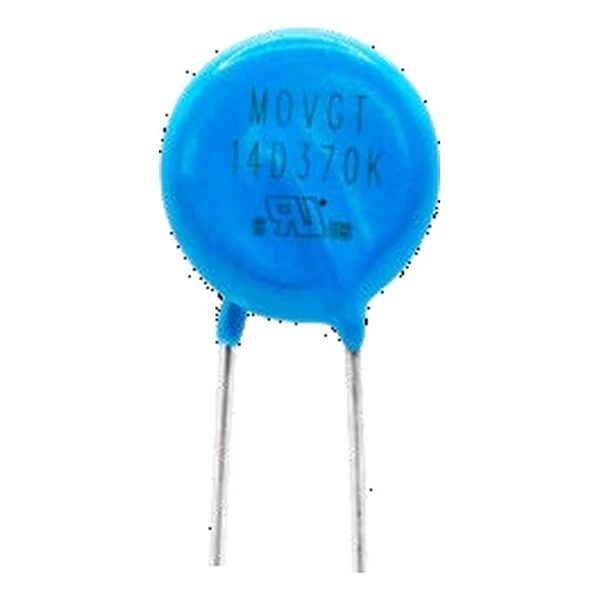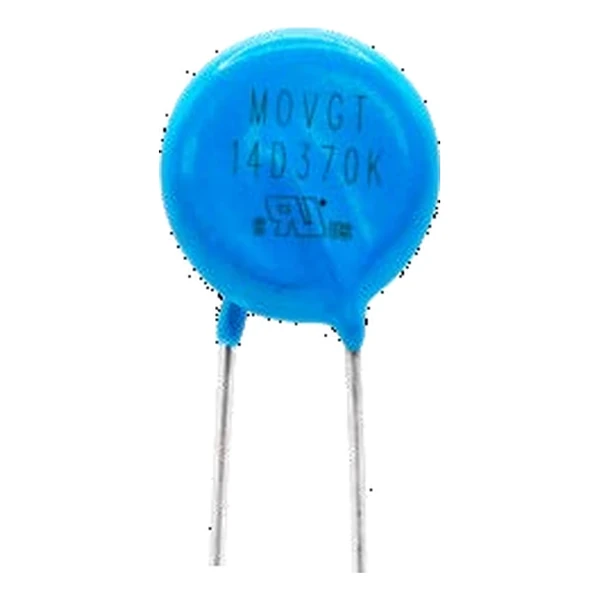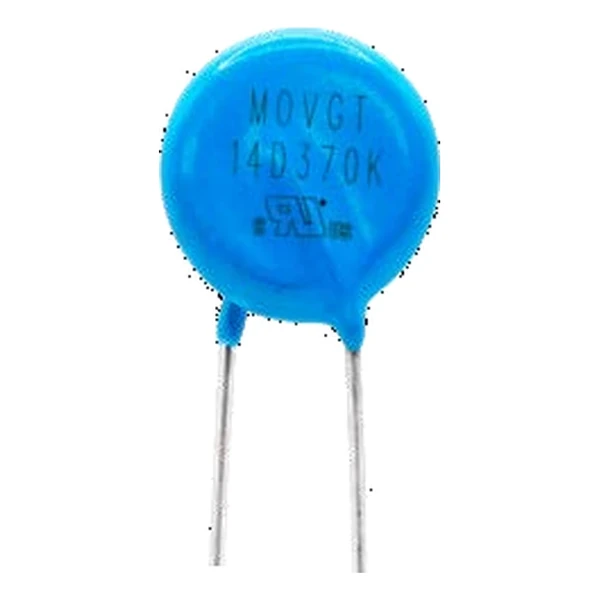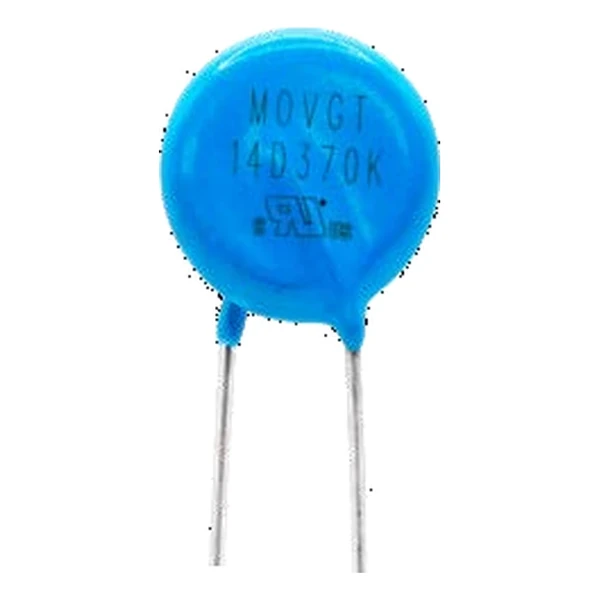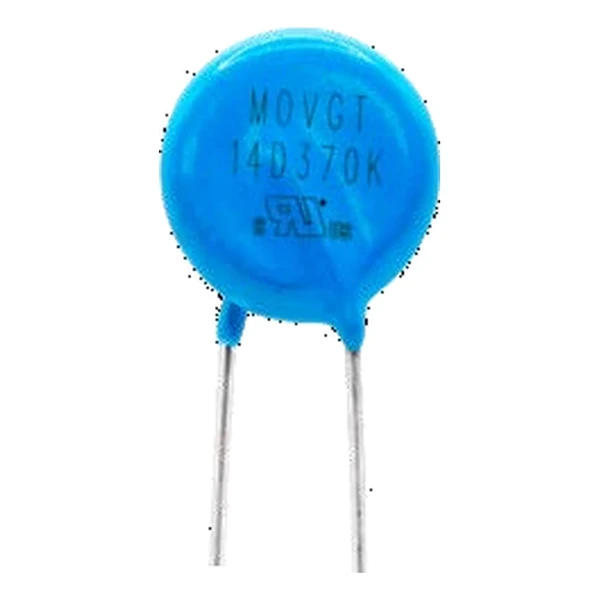
Eaton MOVHE14V420 Metal Oxide Varistor 680 V
- Product Details
- Download
Eaton MOVHE14V420 Metal Oxide Varistor 680 V
Electrical Specifications
| Parameter | Value |
|---|---|
| Orderable part number | MOVHE14V420 |
| Varistor voltage at 1 mA | 680 V |
| Maximum continuous AC voltage | 420 Vrms |
| Maximum continuous DC voltage | 560 Vdc |
| Clamping voltage | 1120 V |
| Clamping current | 50 A |
| Maximum surge current, 8/20 us | 6000 A |
| Rated power | 0.6 W |
| Typical capacitance at 1 kHz | 290 pF |
| Maximum energy, 10/1000 us | 200 J |
| Maximum body diameter | 6.5 mm |
| Agency recognition | cURus (UL 1449) and TUV |
| Package | 14 mm disc |
| Mounting | Radial, through-hole |
| Operating temperature | -40 °C to +125 °C |
| Qualification | Commercial grade |
| RoHS | Compliant, halogen free |
| Data sheet | Eaton Technical Data ELX1288 |
Dimensions, recommended pad or hole pattern and the derating curves are
on the data sheet pages; the package line above gives the body size as Eaton states it.
Reading the Data Sheet
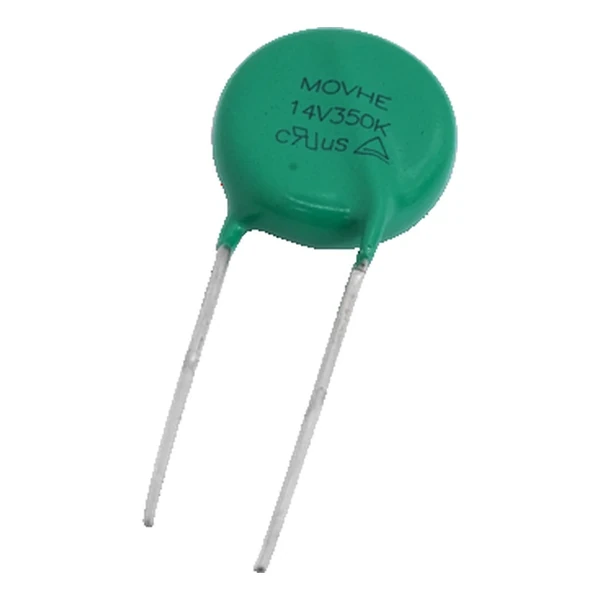
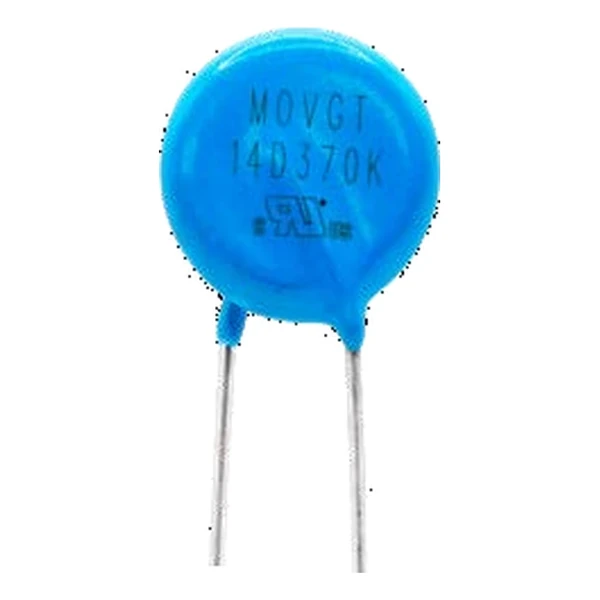
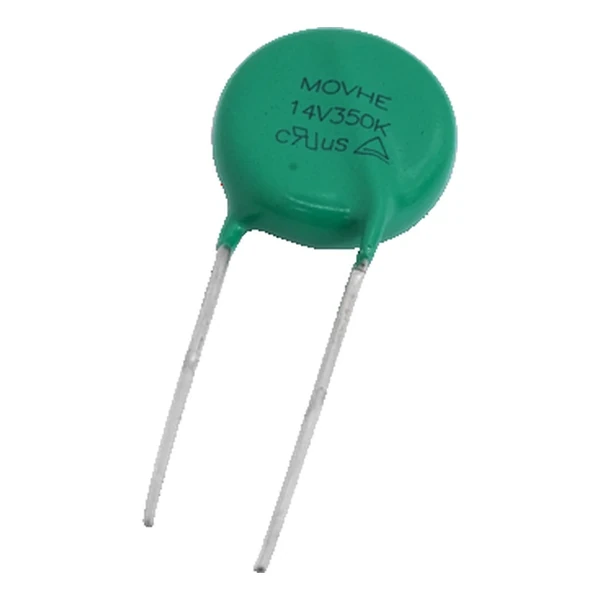
The disc is coated in epoxy and marked with the part number and the varistor voltage. Because the body is the component, the lead spacing and the disc diameter together decide the footprint – there is no separate package to shrink around it.
The clamp column works out at 1.65 times the varistor voltage: 1120 V at the rated current against 680 V at 1 mA. That ratio is what the downstream part has to survive, not the 680 V figure on the label.
The disc absorbs 200 J in a 10/1000 us pulse and carries 6000 A in an 8/20 us pulse. Those are single shot figures: the same part will take a fraction of the energy repeatedly.
At 0.6 W continuous rating the body can sit at the working voltage indefinitely. A 20 mm disc handles roughly 290 pF across the line, which matters on a signal-carrying pair but not on a mains input.
Within the MOVHE family this is item 47 of 71 in the Eaton catalogue.
Series Positioning
Keep the leads short and do not sleeve them together: the loop area between the two leads is part of the clamping path, and folding them against each other is what keeps the inductance low.
- The energy rating is for a single 10/1000 microsecond pulse. Repeated surges add up, and a part that absorbs its full rating once will not do it twice without a voltage shift.
- The marking on the body gives the part number and the varistor voltage. In a service situation that marking is how the failed part gets identified.
Frequently Asked Questions
How do I choose between 130 V and 150 V for a 120 V line?
On a 120 V nominal line the steady-state RMS can reach 132 V or more, so a 130 Vac part has no headroom. The 150 V part is the usual choice, and the varistor voltage that comes with it is still below the withstand of most downstream parts.
Does the lead spacing matter electrically?
It matters mechanically and for inductance. Wider spacing means a larger loop, which adds inductance in series with the clamp; the disc diameter sets the spacing, so the two choices are linked.
What is the rated power for?
It is the continuous dissipation the disc can take at 85 °C ambient. It matters when the varistor sits at a voltage close to its knee, not during the surge.
Shenzhen Gaorunxin Technology Co., Ltd
Online message
Shenzhen Gaorunxin Technology Co., Ltd