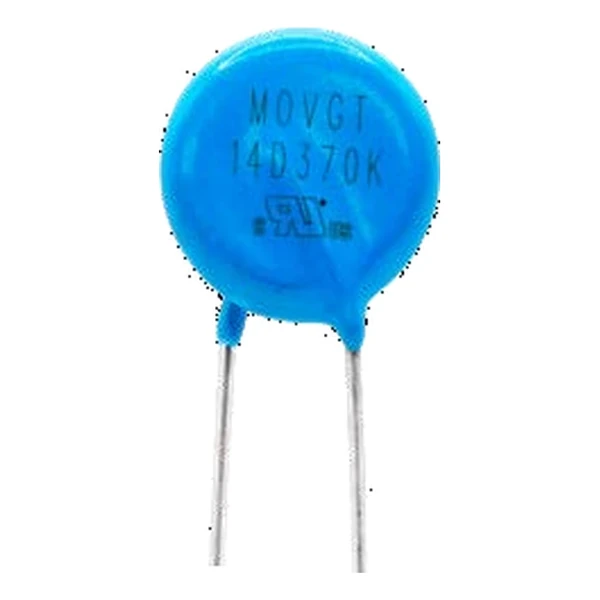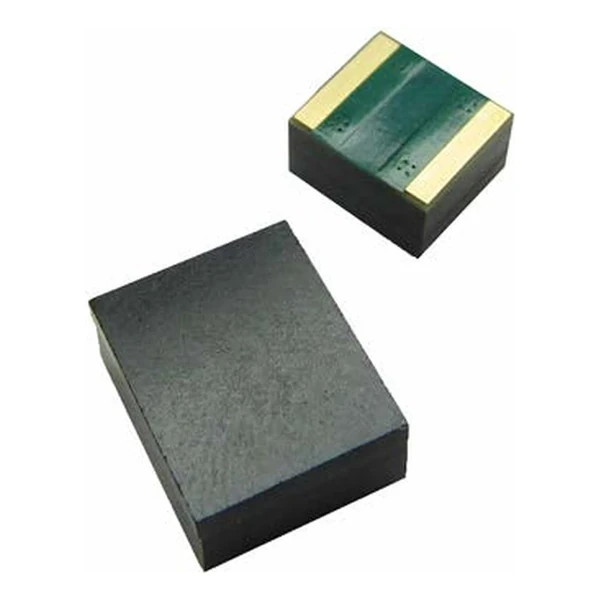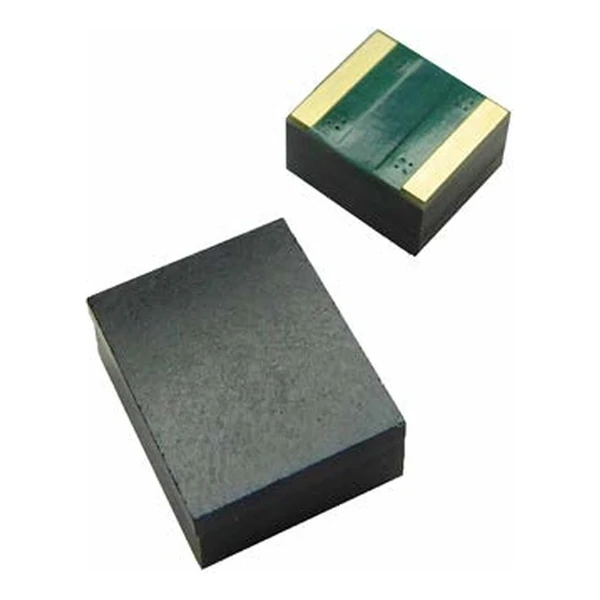
Eaton MOVS2825V275 SMD Varistor 275 Vac
- Product Details
- Download
Eaton MOVS2825V275 SMD Varistor 275 Vac
Ratings at a Glance
| Parameter | Value |
|---|---|
| Orderable part number | MOVS2825V275 |
| Working voltage, RMS | 275 Vrms |
| Working voltage, DC | 370 Vdc |
| Varistor voltage at 1 mA | 387-473 V |
| Leakage current at 0.8 Vv | max. 50 uA |
| Clamping voltage, 8/20 us | 745 V |
| Peak current, 8/20 us | 400 A |
| Maximum energy, 10/1000 us | 13 J |
| Rated power | 0.1 W |
| Typical capacitance at 1 kHz | 50 pF |
| Component thickness | 5.6 mm |
| Package | 2825 |
| Mounting | Surface mount |
| Operating temperature | -40 °C to +85 °C |
| Qualification | Commercial grade |
| RoHS | Compliant, halogen free |
| Data sheet | Eaton Technical Data ELX1005 |
Dimensions, recommended pad or hole pattern and the derating curves are
on the data sheet pages; the package line above gives the body size as Eaton states it.
How to Read These Ratings
On a dense board the SMD varistor competes with the connector for space, and the part is usually placed on the incoming side of the first filter. That position is chosen for the current path, not for convenience.
The clamp column works out at 1.93 times the varistor voltage: 745 V at the rated current against 387~473 V at 1 mA. That ratio is what the downstream part has to survive, not the 387~473 V figure on the label.
Standing at 370 V the leakage is at most 50 uA, which is 18.5 mW of continuous dissipation. Small, but it is why a varistor on a battery rail has to be chosen on leakage and not only on voltage.
At 5.6 mm tall this is the part that has to fit under the enclosure. The 13 J rating and the 400 A peak come from a body that size, so a lower profile in the same footprint would mean less energy.
Within the MOVS2825 family this is item 22 of 27 in the Eaton catalogue.
Where This Series Fits
Put it before the series ferrite or inductor, on the side that faces the cable. The order of the two components decides which one takes the surge.
- Reflow once. A second pass reflows the termination and can crack the ceramic at the silver-nickel barrier.
- The 2825 and 4032 bodies are thick enough that the pick-and-place nozzle needs the right tip; a standard 0402 nozzle will not hold them.
Frequently Asked Questions
What is the peak current rating for?
It is the 8/20 microsecond single-shot current the body survives. The energy column is the better guide for a long pulse, because a 10/1000 microsecond waveform delivers far more joules at the same peak.
Why is the capacitance so high?
A 4032 body at 14 Vdc has a large electrode area and a thin dielectric, so the capacitance runs into thousands of picofarads. That is fine on a supply rail and not fine on a data line.
Can two parts be paralleled for more energy?
Only if they are matched, which they are not. The varistor voltage tolerance means one part takes most of the current, so the pair behaves like the weaker one plus a little.
Shenzhen Gaorunxin Technology Co., Ltd
Online message
Shenzhen Gaorunxin Technology Co., Ltd