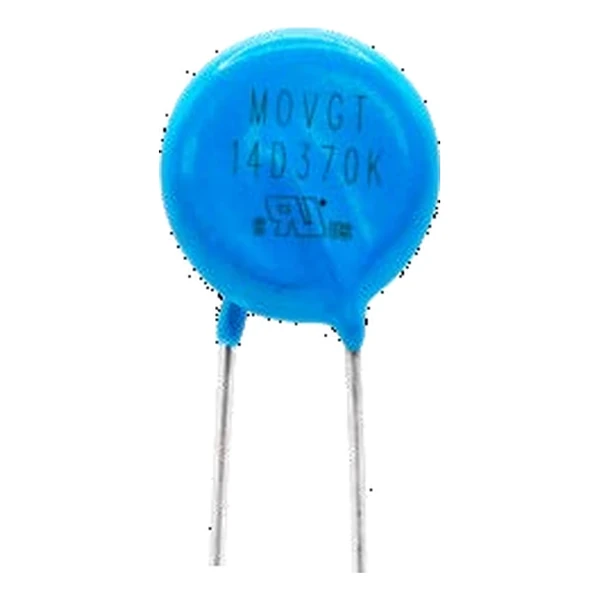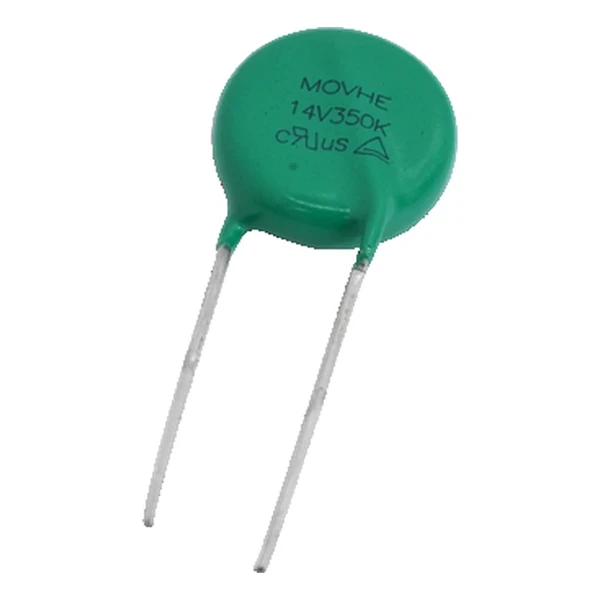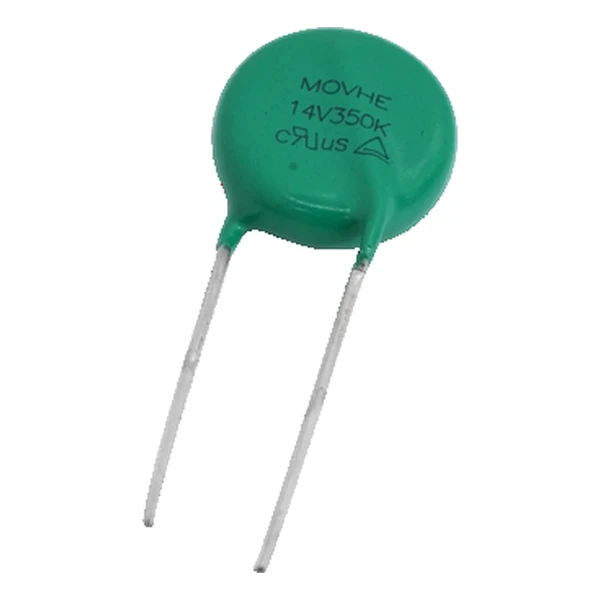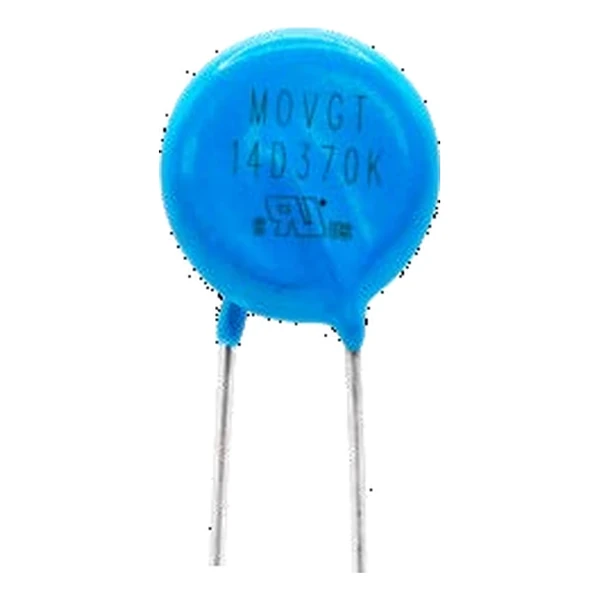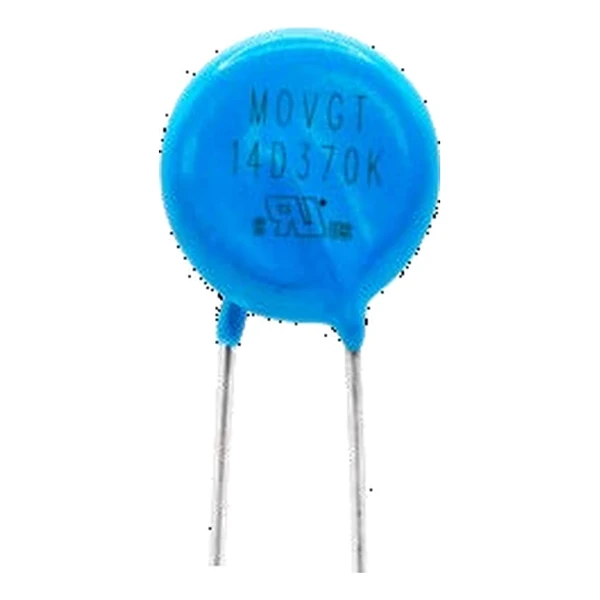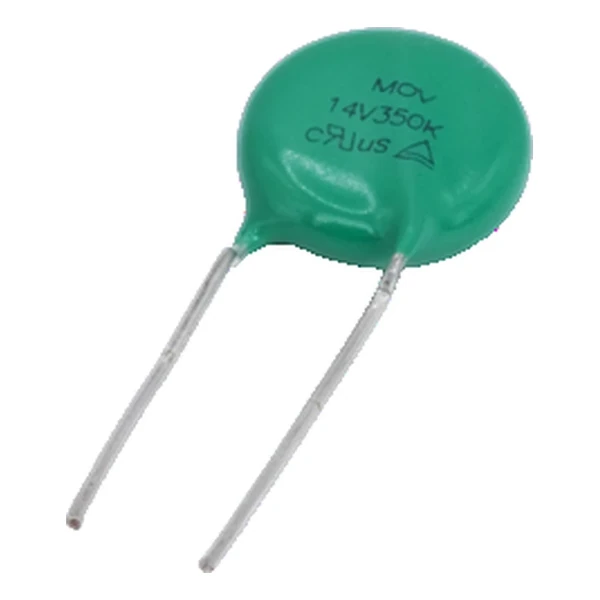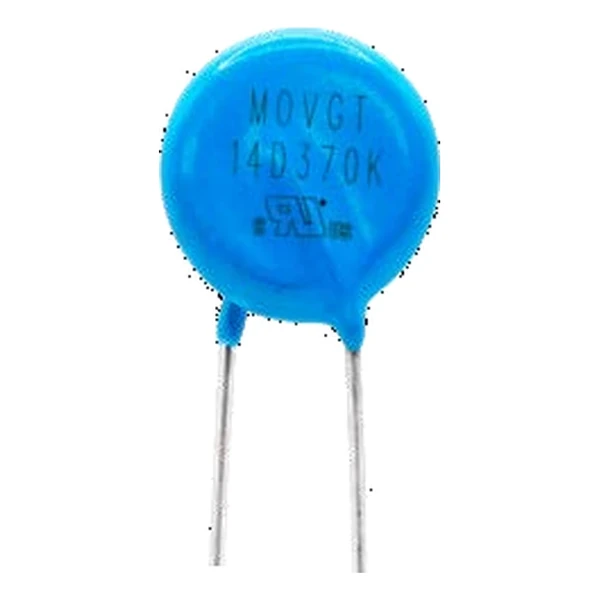
Eaton MOVTP14V150N Protected MOV 14 mm, 2-Lead
- Product Details
- Download
Eaton MOVTP14V150N Protected MOV 14 mm, 2-Lead
Ratings at a Glance
| Parameter | Value |
|---|---|
| Orderable part number | MOVTP14V150N |
| Working voltage, DC | 200 Vdc |
| Working voltage, AC | 150 Vac |
| Varistor voltage at 1 mA | 216 V to 264 V |
| Clamping voltage, 8/20 us | 395 V at 50 A |
| Energy absorption, 10/1000 us | 94 J |
| Rated power | 0.6 W |
| Peak current, 8/20 us | 6000 A |
| Impulse response time | under 25 ns |
| Leakage current at 0.75 V1mA | max. 20 uA |
| Pin form | 2-lead, no status contact |
| Package | 14 mm disc |
| Mounting | Radial, through-hole |
| Operating temperature | -40 °C to +105 °C |
| Qualification | Commercial grade |
| RoHS | Compliant, halogen free |
| Data sheet | Eaton Technical Data ELX1079 |
Dimensions, recommended pad or hole pattern and the derating curves are
on the data sheet pages; the package line above gives the body size as Eaton states it.
Reading the Data Sheet
The electrical ratings match an unprotected part of the same disc size, so the selection is unchanged. What changes is the space around the part: the thermal element needs clearance and the third lead needs a route.
The clamp column works out at 1.65 times the varistor voltage: 395 V at the rated current against 240 V at 1 mA. That ratio is what the downstream part has to survive, not the 240 V figure on the label.
Standing at 200 V the leakage is at most 20 uA, which is 4 mW of continuous dissipation. Small, but it is why a varistor on a battery rail has to be chosen on leakage and not only on voltage.
The thermal element is the difference from a plain disc of the same rating. If the body overheats the element opens at 0.6 W of continuous overload, before the epoxy and the board around it are damaged.
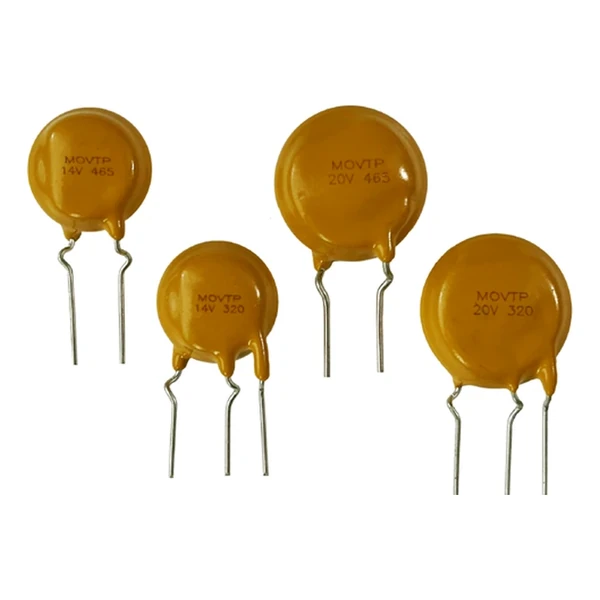
The 2-lead form is the mechanical difference: two leads replace a plain disc one for one. The electrical table is identical for both.
Within the MOVTP family this is item 3 of 28 in the Eaton catalogue.
Positioning in the Range
The protected part goes across the input downstream of the fuse, with the body clear of other heat sources. In the three-lead version the third pin is a signal, not a current path, and should be routed to the monitoring circuit rather than tied to ground.
- After the element opens, the circuit has no protection at all. The monitoring signal exists so the board can be taken out of service rather than run unprotected.
- Agency recognition covers the varistor; the thermal element is part of the same approval and does not need a separate file.
Frequently Asked Questions
What approvals does it carry?
The data sheet lists the agency file for the family. The thermal element is covered by the same approval as the varistor inside.
What exactly opens inside the part?
A thermal element – a fuse or a spring contact – that is thermally coupled to the varistor body. When the body exceeds its limit the element opens and the part becomes an open circuit instead of a short.
Should I use the two-lead or the three-lead version?
Two-lead where the part only has to protect. Three-lead where the status has to be reported: the third pin carries the thermal contact out so a monitoring circuit can see that the protector has operated.
Shenzhen Gaorunxin Technology Co., Ltd
Online message
Shenzhen Gaorunxin Technology Co., Ltd