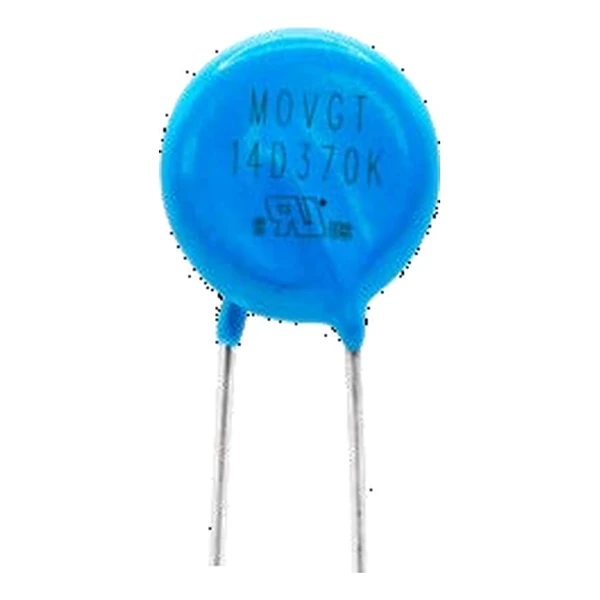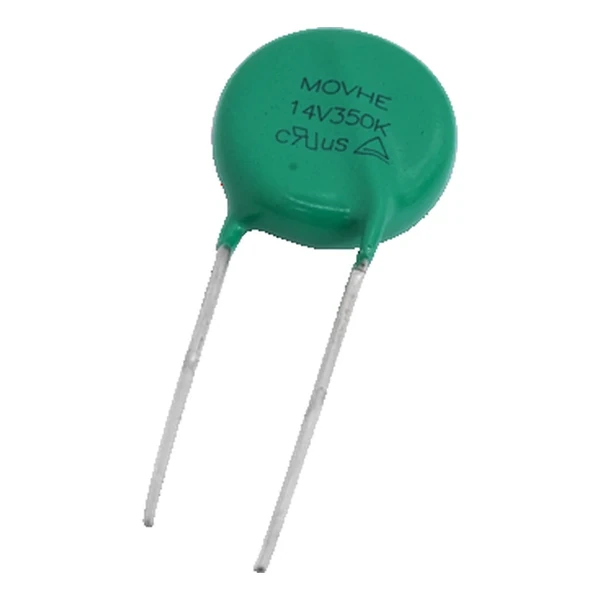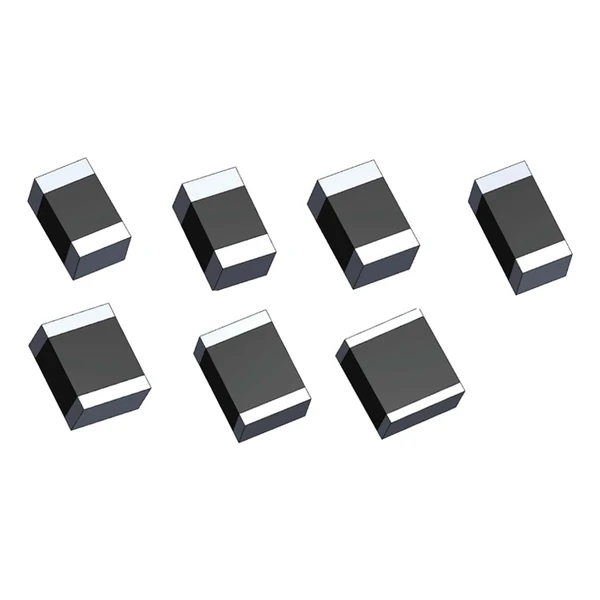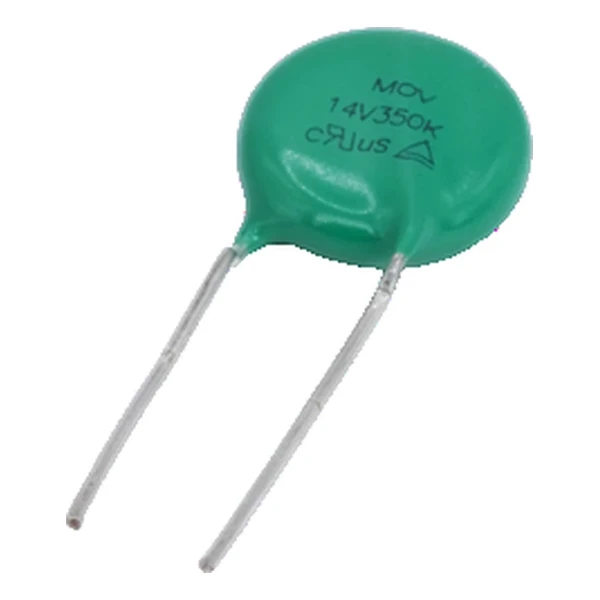
Eaton MOVTP14V250T MOVTP Varistor with Thermal Fuse
- Product Details
- Download
Eaton MOVTP14V250T MOVTP Varistor with Thermal Fuse
Specification Table
| Parameter | Value |
|---|---|
| Orderable part number | MOVTP14V250T |
| Working voltage, DC | 320 Vdc |
| Working voltage, AC | 250 Vac |
| Varistor voltage at 1 mA | 351 V to 429 V |
| Clamping voltage, 8/20 us | 650 V at 50 A |
| Energy absorption, 10/1000 us | 154 J |
| Rated power | 0.6 W |
| Peak current, 8/20 us | 6000 A |
| Impulse response time | under 25 ns |
| Leakage current at 0.75 V1mA | max. 20 uA |
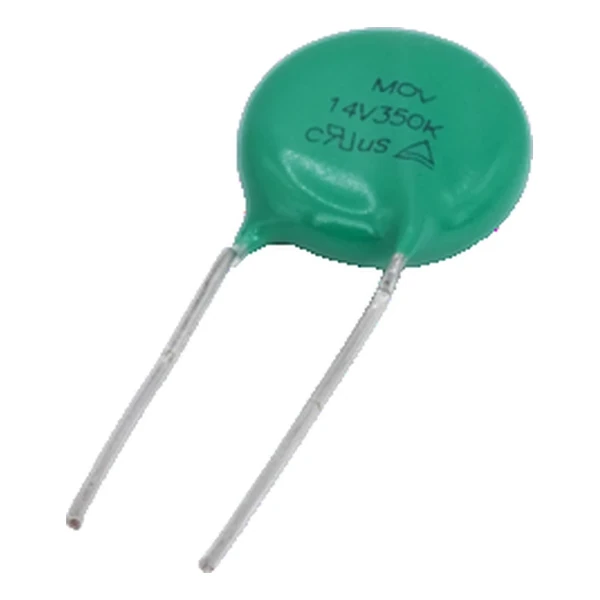
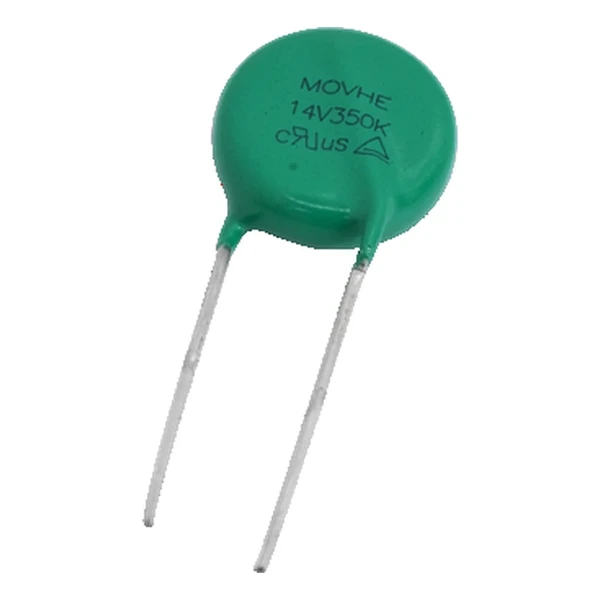
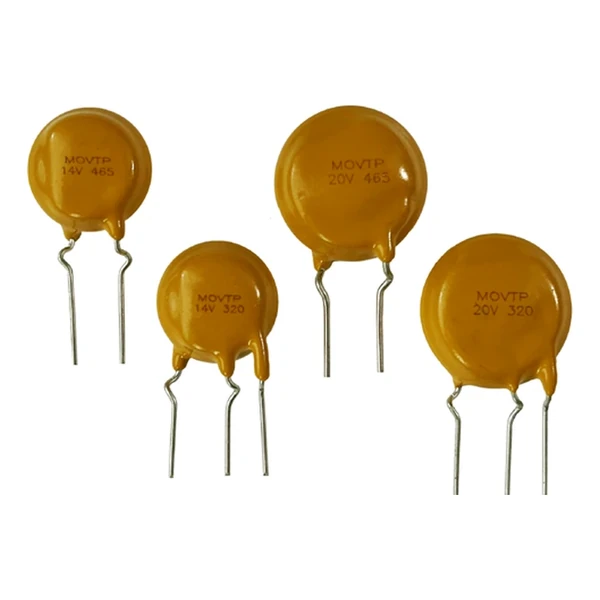
| Pin form | 3-lead, status contact on the third pin |
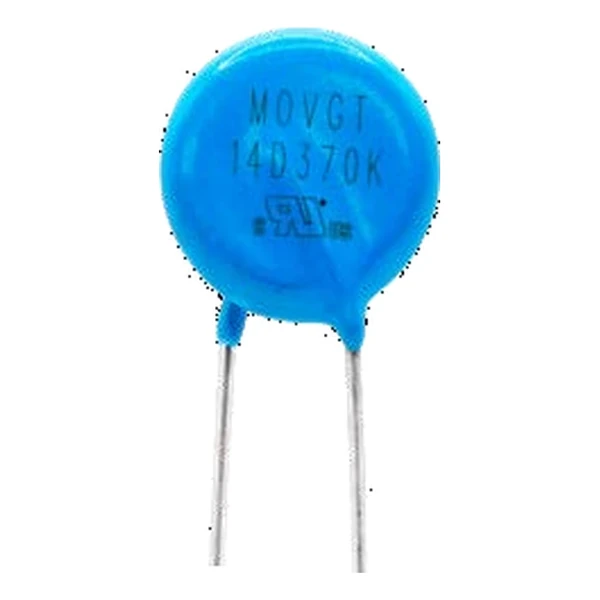
| Package | 14 mm disc |
| Mounting | Radial, through-hole |
| Operating temperature | -40 °C to +105 °C |
| Qualification | Commercial grade |
| RoHS | Compliant, halogen free |
| Data sheet | Eaton Technical Data ELX1079 |
Dimensions, recommended pad or hole pattern and the derating curves are
on the data sheet pages; the package line above gives the body size as Eaton states it.
How to Read These Ratings
A thermally protected varistor adds a fuse or a spring-loaded contact inside the same package. When the body overheats – the end state of a varistor that has absorbed more than it can take – the element opens and removes the part from the circuit instead of letting it sit in a low-resistance failure mode.
The clamp column works out at 1.67 times the varistor voltage: 650 V at the rated current against 390 V at 1 mA. That ratio is what the downstream part has to survive, not the 390 V figure on the label.
Standing at 320 V the leakage is at most 20 uA, which is 6.4 mW of continuous dissipation. Small, but it is why a varistor on a battery rail has to be chosen on leakage and not only on voltage.
The thermal element is the difference from a plain disc of the same rating. If the body overheats the element opens at 0.6 W of continuous overload, before the epoxy and the board around it are damaged.
The 3-lead form is the mechanical difference: the third pin brings the thermal contact out for monitoring. The electrical table is identical for both.
Within the MOVTP family this is item 6 of 28 in the Eaton catalogue.
Series Positioning
The protected part goes across the input downstream of the fuse, with the body clear of other heat sources. In the three-lead version the third pin is a signal, not a current path, and should be routed to the monitoring circuit rather than tied to ground.
- The thermal element protects against a shorted varistor, not against overvoltage. It does not replace the fuse, and it does not reset: once it opens the part is finished.
- The response time is quoted for the thermal element, not for the varistor. The electrical clamp happens in nanoseconds; the thermal trip takes seconds.
Frequently Asked Questions
Should I use the two-lead or the three-lead version?
Two-lead where the part only has to protect. Three-lead where the status has to be reported: the third pin carries the thermal contact out so a monitoring circuit can see that the protector has operated.
Does it reset after operation?
No. The element is one-shot, like a fuse. Once it opens the board has to be repaired, which is the intended behaviour: the alternative is a shorted MOV heating the board.
Is the electrical rating different from an unprotected MOV?
No, the disc inside is the same. The thermal element adds series resistance of a few milliohms and takes space, but the voltage and energy ratings are unchanged.
Shenzhen Gaorunxin Technology Co., Ltd
Online message
Shenzhen Gaorunxin Technology Co., Ltd