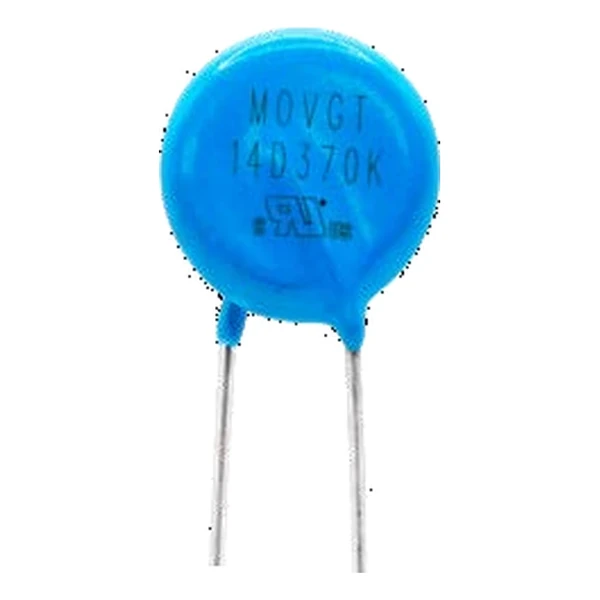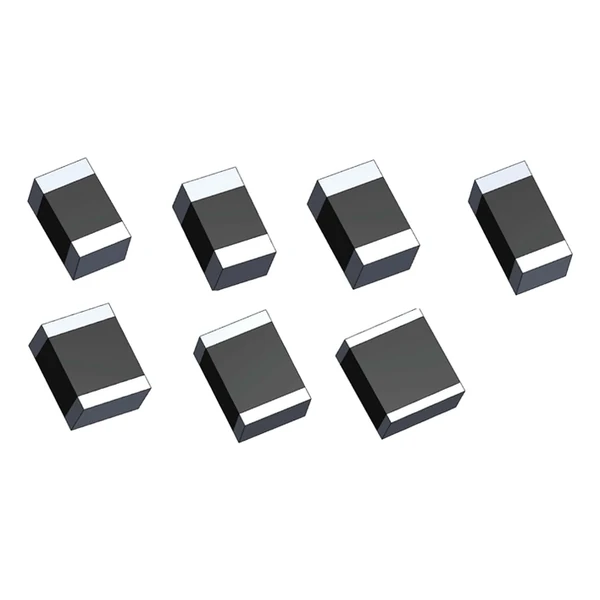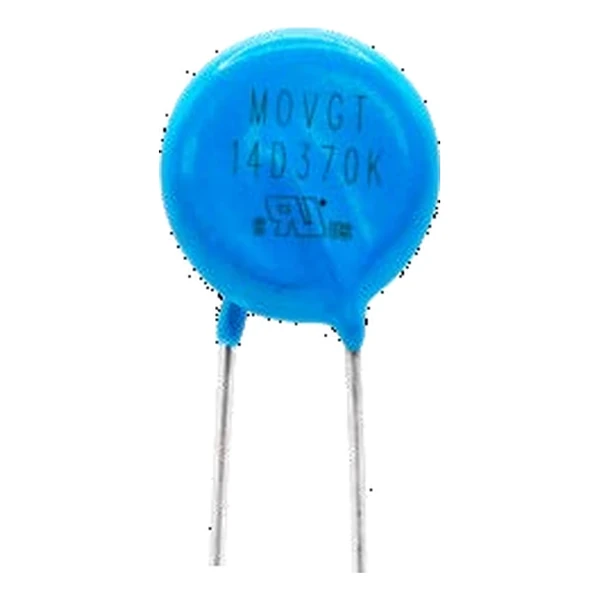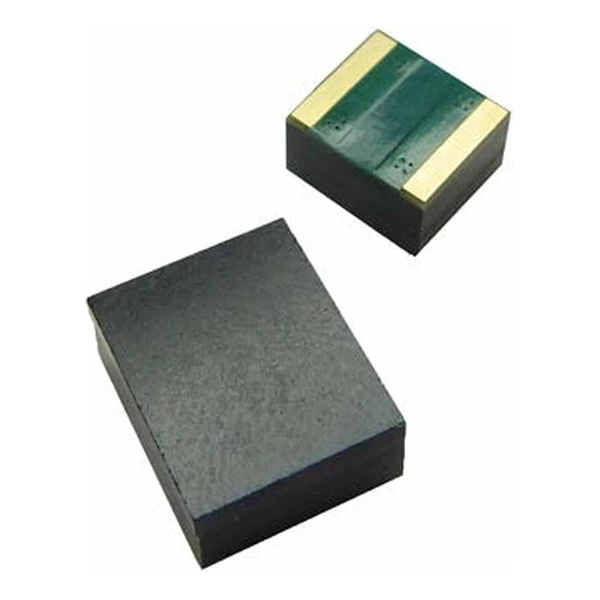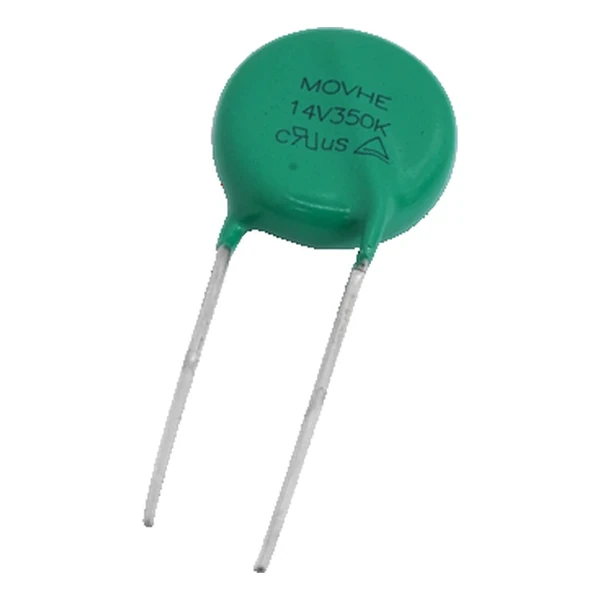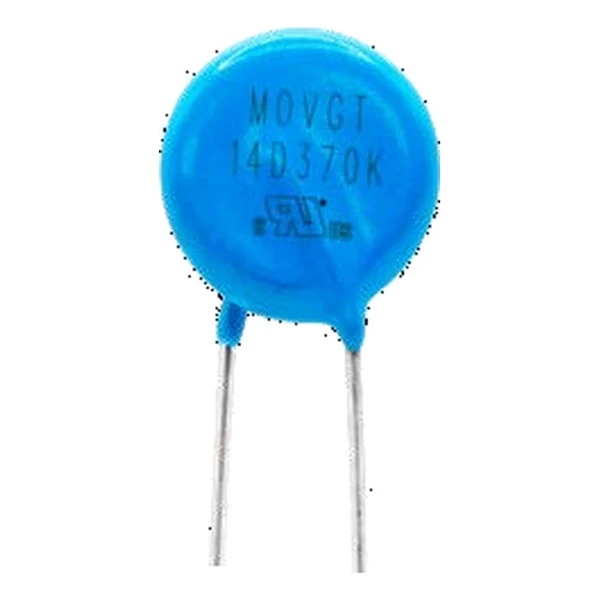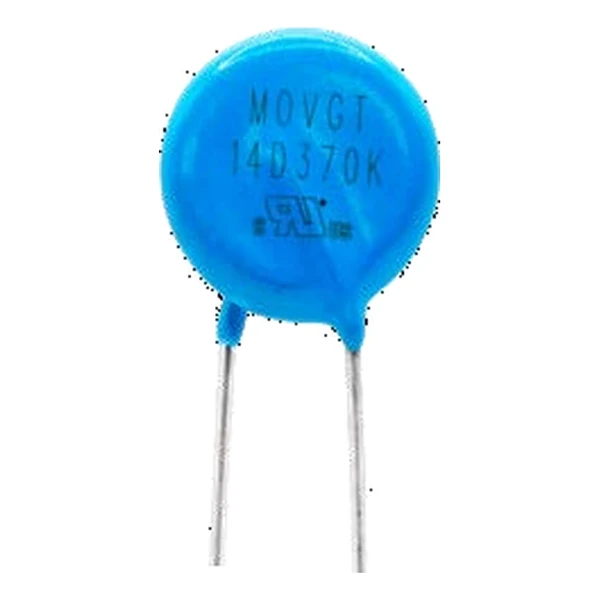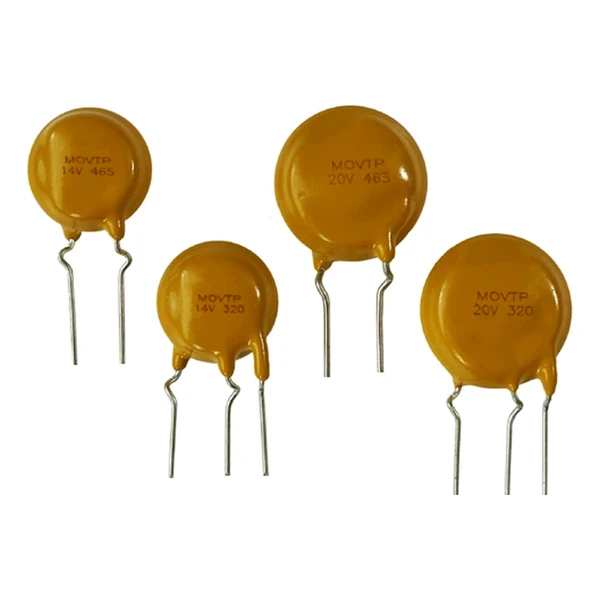
Eaton MOVTP20V150N Thermally Protected Varistor 150 Vac
- Product Details
- Download
Eaton MOVTP20V150N Thermally Protected Varistor 150 Vac
Key Specifications
| Parameter | Value |
|---|---|
| Orderable part number | MOVTP20V150N |
| Working voltage, DC | 200 Vdc |
| Working voltage, AC | 150 Vac |
| Varistor voltage at 1 mA | 216 V to 264 V |
| Clamping voltage, 8/20 us | 395 V at 100 A |
| Energy absorption, 10/1000 us | 170 J |
| Rated power | 1 W |
| Peak current, 8/20 us | 10000 A |
| Impulse response time | under 25 ns |
| Leakage current at 0.75 V1mA | max. 20 uA |
| Pin form | 2-lead, no status contact |
| Package | 20 mm disc |
| Mounting | Radial, through-hole |
| Operating temperature | -40 °C to +105 °C |
| Qualification | Commercial grade |
| RoHS | Compliant, halogen free |
| Data sheet | Eaton Technical Data ELX1079 |
Dimensions, recommended pad or hole pattern and the derating curves are
on the data sheet pages; the package line above gives the body size as Eaton states it.
What the Numbers Mean
Two pin forms are available from the same rating. The two-lead version replaces a plain disc directly; the three-lead version brings the thermal contact out to a third pin so the status can be wired to an indicator or a safety loop.
The clamp column works out at 1.65 times the varistor voltage: 395 V at the rated current against 240 V at 1 mA. That ratio is what the downstream part has to survive, not the 240 V figure on the label.
Standing at 200 V the leakage is at most 20 uA, which is 4 mW of continuous dissipation. Small, but it is why a varistor on a battery rail has to be chosen on leakage and not only on voltage.
The thermal element is the difference from a plain disc of the same rating. If the body overheats the element opens at 1 W of continuous overload, before the epoxy and the board around it are damaged.
The 2-lead form is the mechanical difference: two leads replace a plain disc one for one. The electrical table is identical for both.
Within the MOVTP family this is item 17 of 28 in the Eaton catalogue.
What This Family Is For
In the three-lead version the third pin should be treated as a low-voltage signal: it is isolated from the line, but it runs close to it, so keep the creepage of the monitoring track in mind.
- After the element opens, the circuit has no protection at all. The monitoring signal exists so the board can be taken out of service rather than run unprotected.
- Agency recognition covers the varistor; the thermal element is part of the same approval and does not need a separate file.
Frequently Asked Questions
What exactly opens inside the part?
A thermal element – a fuse or a spring contact – that is thermally coupled to the varistor body. When the body exceeds its limit the element opens and the part becomes an open circuit instead of a short.
Should I use the two-lead or the three-lead version?
Two-lead where the part only has to protect. Three-lead where the status has to be reported: the third pin carries the thermal contact out so a monitoring circuit can see that the protector has operated.
Does it reset after operation?
No. The element is one-shot, like a fuse. Once it opens the board has to be repaired, which is the intended behaviour: the alternative is a shorted MOV heating the board.
Shenzhen Gaorunxin Technology Co., Ltd
Online message
Shenzhen Gaorunxin Technology Co., Ltd