Eaton P4SMA82A 70.1 V 400 W TVS Diode
- Product Details
- Download
Eaton P4SMA82A 70.1 V 400 W TVS Diode
Electrical Specifications
| Parameter | Value |
|---|---|
| Orderable part number | P4SMA82A |
| Standoff voltage (VR) | 70.1 V |
| Leakage current at VR | 1 uA |
| Breakdown voltage at IT | 77.9 V to 86.1 V |
| Test current (IT) | 1 mA |
| Clamping voltage at IPP | 113 V |
| Peak pulse current | 3.6 A |
| Polarity | Unidirectional |
| Peak pulse power, 10/1000 us | 400 W |
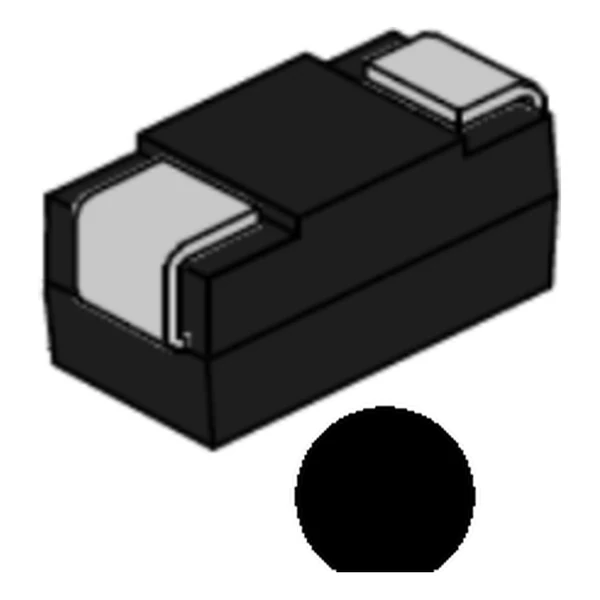
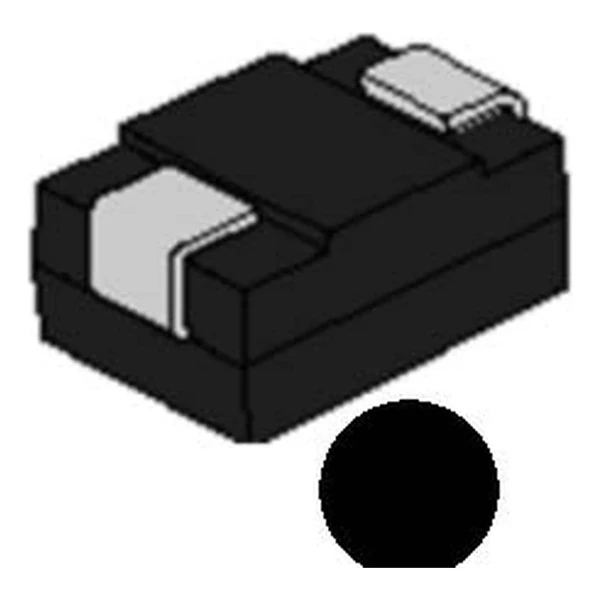
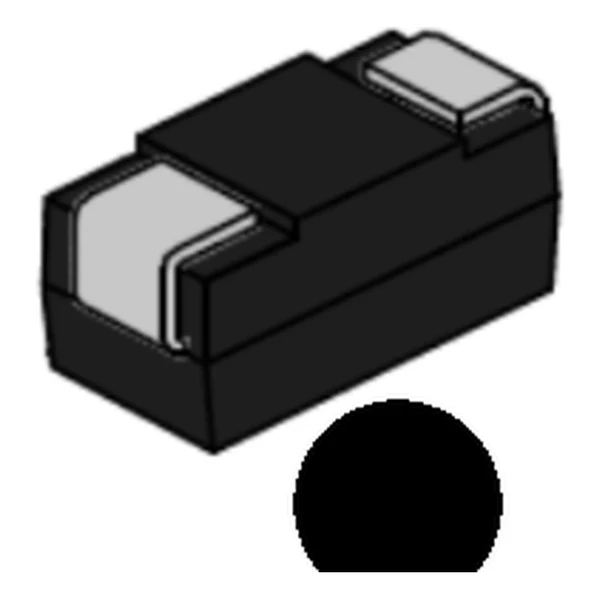
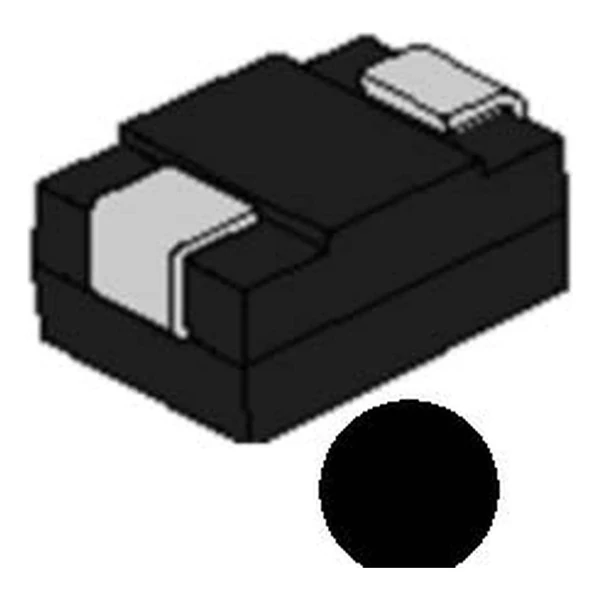
| Package | SMA (DO-214AC) |
| Mounting | Surface mount |
| Operating temperature | -55 °C to +150 °C |
| Qualification | Commercial grade |
| RoHS | Compliant, halogen free |
| Data sheet | Eaton Technical Data 11211 |
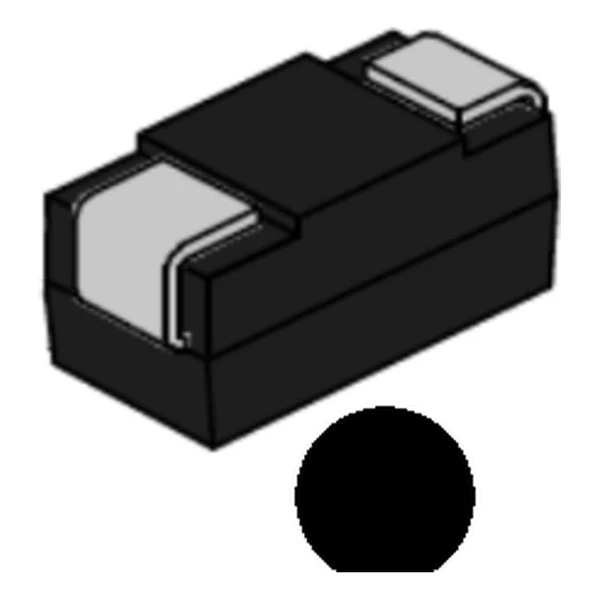
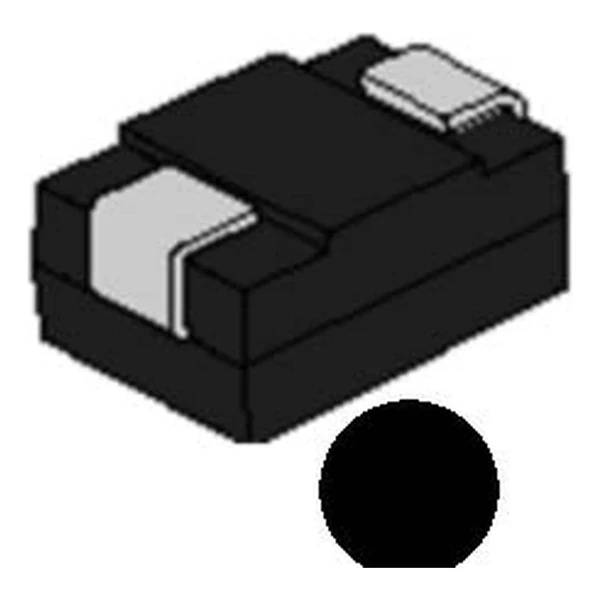
Outline drawing, pad or lead geometry and the pulse derating curves are
on the pages of Eaton Technical Data 11211; the package line above is the
body the part is built in.
What the Numbers Mean
The standoff voltage has to sit above the highest steady state level on the line, including regulation and ripple. The breakdown voltage is then one diode drop above that, and the clamp is what the downstream circuit actually sees.
The breakdown window spans 10.53 percent, from 77.9 V to 86.1 V. Design against the minimum, because a part at the bottom of the window starts conducting first.
At 70.1 V standing the leakage is at most 1 uA, so the part draws 0.0701 mW on the rail. Small, but it is the number that matters on a battery input.
Within the P4SMA family this is item 27 of 44 in the Eaton catalogue.
Where This Series Fits
Place it on the protected side of any series impedance, not behind it. A TVS behind a common mode choke protects the choke, which is usually the opposite of what the design intends.
- A unidirectional part clamps a positive surge to its forward drop and a negative one to its breakdown. On an AC or bipolar signal that asymmetry is a design error, not a detail.
- The clamp column is measured at the rated pulse current. At a lower current the residual voltage is lower, which is why a part chosen for a small surge clamps better than its headline number suggests.
Frequently Asked Questions
Unidirectional or bidirectional?
Unidirectional on a DC rail, where the forward direction gives a low clamp for one polarity. Bidirectional on AC, on differential pairs and wherever the surge can arrive with either polarity.
How much capacitance does it add?
Enough to matter on a fast line. A 1500 W part can be several thousand picofarads, which is fine on a supply rail and not fine on a USB or Ethernet pair.
What happens if the surge exceeds the rating?
The junction overheats and fails short, which then puts the full fault current through the board. That is why a fuse ahead of the suppressor is part of the protection, not an optional extra.
Shenzhen Gaorunxin Technology Co., Ltd
Online message
Shenzhen Gaorunxin Technology Co., Ltd