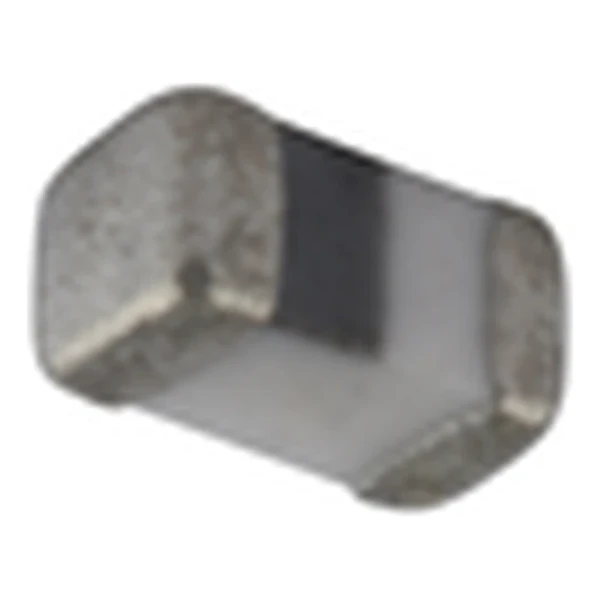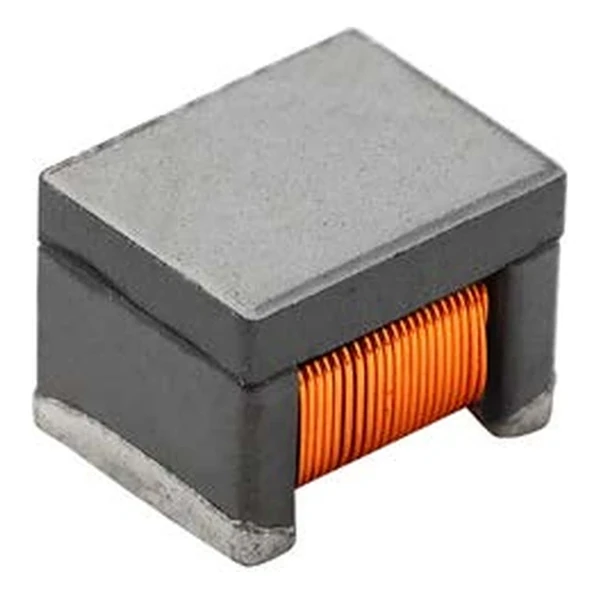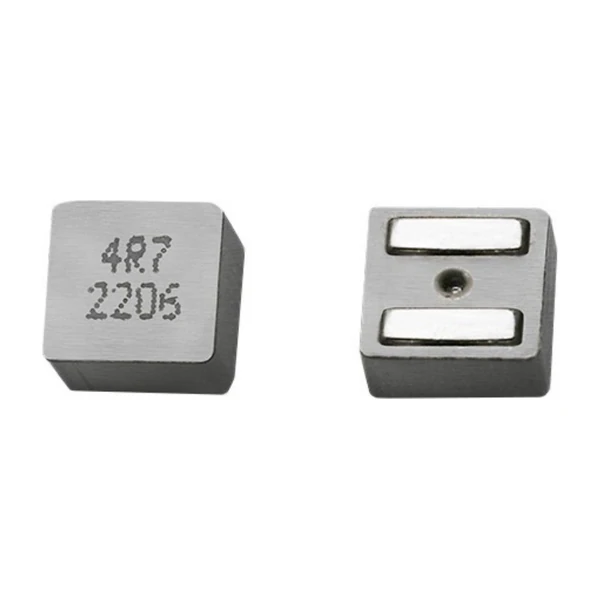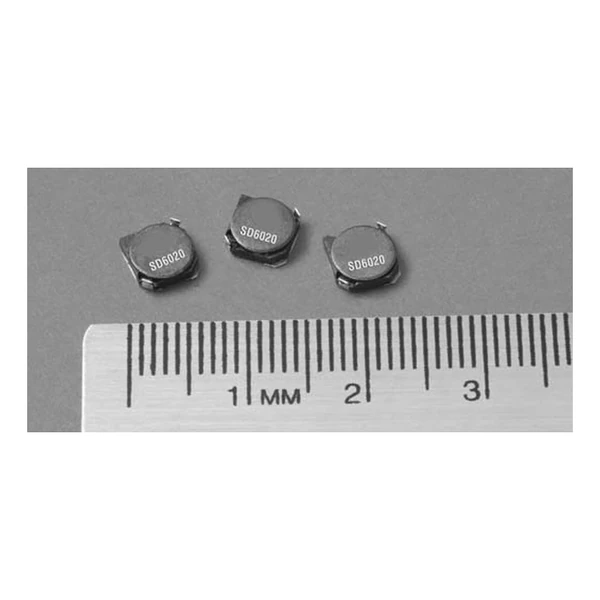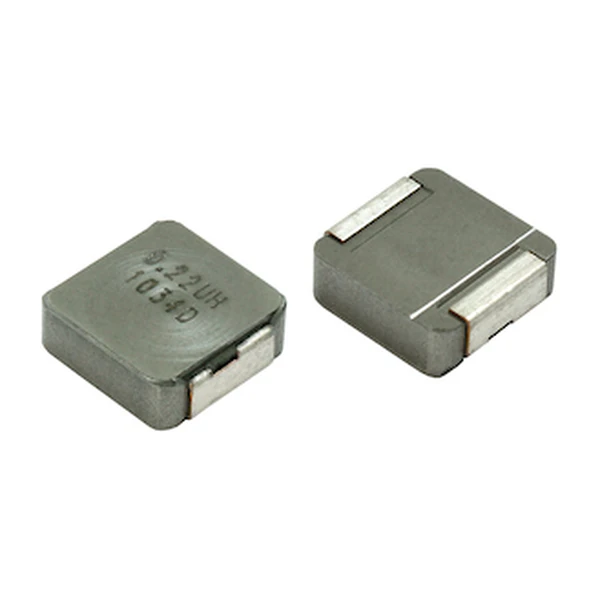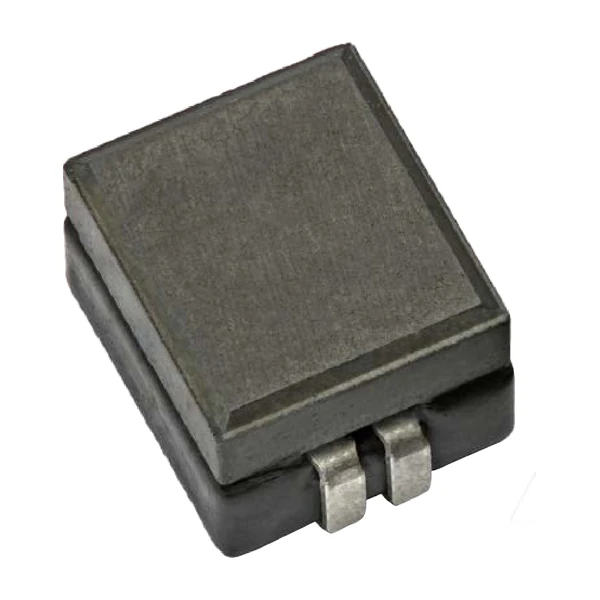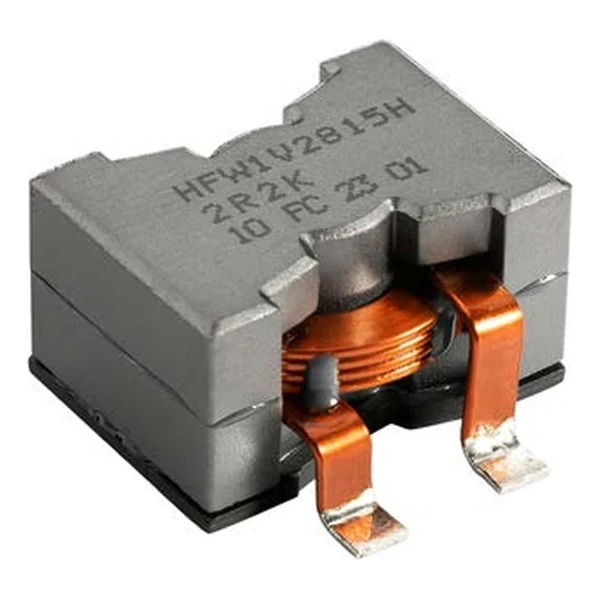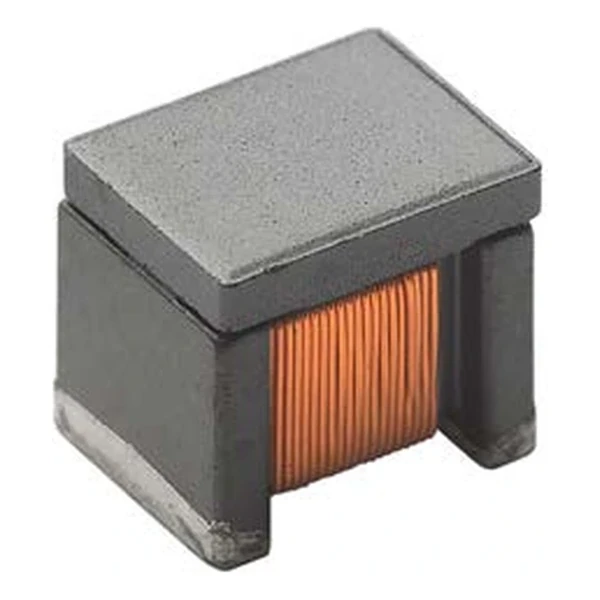
Eaton PCA1V3230-100-R 10 uH Coax Bias Inductor 290 mOhm
- Product Details
- Download
Eaton PCA1V3230-100-R 10 uH Coax Bias Inductor 290 mOhm
Key Specifications
| Parameter | Value |
|---|---|
| Orderable part number | PCA1V3230-100-R |
| Inductance | 10 uH ±20% |
| DCR typical @ +20 °C | 290 mOhm |
| DCR maximum @ +20 °C | 340 mOhm |
| Irms (DC, 40 °C rise) | 1130 mA |
| Irms2 | 1020 mA |
| Irms3 | 570 mA |
| Isat | 1100 mA |
| Isat2 | 850 mA |
| Isat3 | 760 mA |
| Isat4 | 660 mA |
| Isat5 | 560 mA |
| SRF typical | 95 MHz |
| Mounting | Surface mount |
| Operating temperature | -55 °C to +140 °C |
| Qualification | AEC-Q200 |
| RoHS | Compliant, -R suffix |
| Data sheet | Eaton Technical Data ELX1355 |
Mechanical Drawing

Drawing reproduced from Eaton Technical Data ELX1355: outline with
rated mm dimensions, pad layout and marking.
How to Read These Ratings
In a camera or radar link the coax carries both the signal and the DC feed. The inductor is the component that separates them: it looks like a short to DC and a high impedance to the RF, so the bias network does not load the line.
At 1130 A the winding dissipates about 370301 W in copper using the typical DCR of 290 mOhm. That is the DC floor of the loss budget – ripple and core loss come on top.
The core stores about 6050 nJ at the saturation point, which is the energy available to bridge a load step.
Self-resonance is 95 MHz typical. Keep the operating band, and the harmonics that carry energy, below it.
Within the PCA1V3230 family this is value 3 of 4, in a range from 2.2 uH to 22 uH.
Where This Series Fits
The PCA family is the power-over-coax range: small chip inductors for bias-tee circuits in automotive camera and radar links, characterised at multiple temperatures.
- The bias current and the RF power share the same winding. Check the saturation margin against the sum, not just the DC component.
- Typical applications: adas camera; srr (short range radar); lidar (light detection and ranging); vehicle communications; autonomous driving (3d mapping).
- Design note: the impedance at the link frequency matters more than the inductance value on the label.
Frequently Asked Questions
Is the part AEC-Q200 qualified?
Yes, the PCA family is qualified for automotive use, which is what a camera or radar module requires.
What does a PoC inductor do in a camera link?
It separates DC bias from the RF signal on a shared coax: it passes the DC with low loss and presents a high impedance to the RF band.
Is the part AEC-Q200 qualified?
Yes, the PCA family is qualified for automotive use, which is what a camera or radar module requires.
Shenzhen Gaorunxin Technology Co., Ltd
Online message
Shenzhen Gaorunxin Technology Co., Ltd