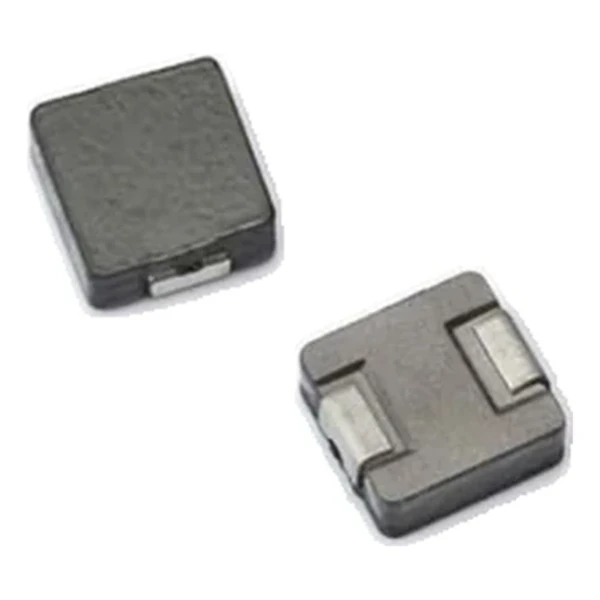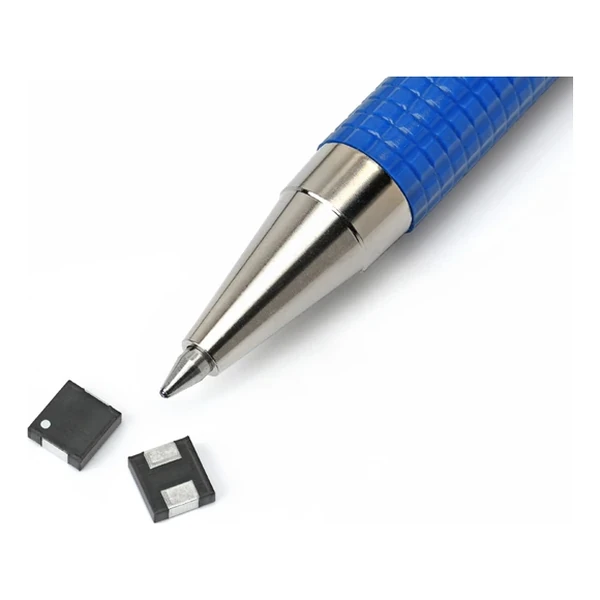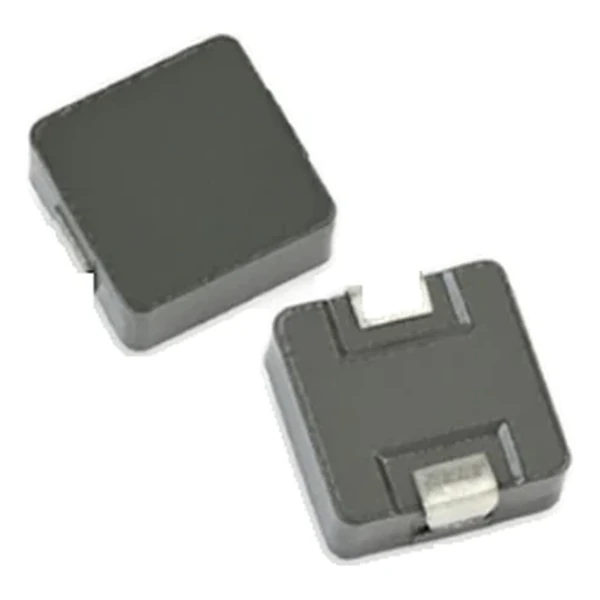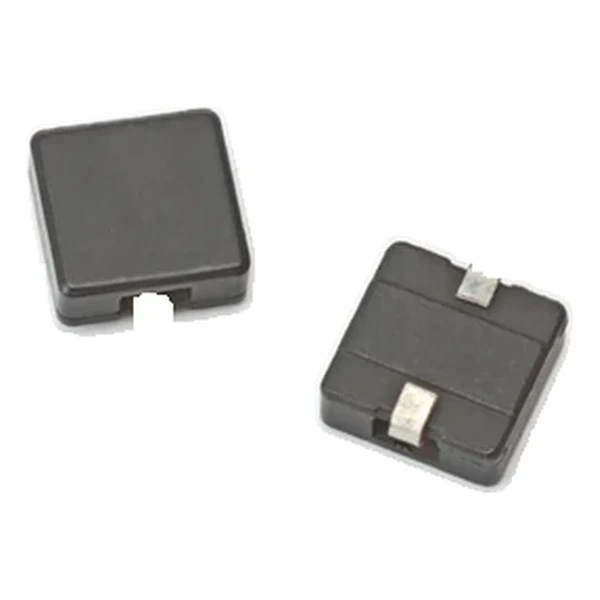


Eaton SD3114-151-R 149 uH Shielded Inductor, Isat 0.207 A
- Product Details
- Download
Eaton SD3114-151-R 149 uH Shielded Inductor, Isat 0.207 A
Key Specifications
| Parameter | Value |
|---|---|
| Orderable part number | SD3114-151-R |
| Rated inductance | 150 uH ±20% |
| OCL (open circuit inductance) | 149 uH ±20% |
| DCR typical @ +20 °C | 5070 mOhm |
| Irms (DC, 40 °C rise) | 0.172 A |
| Isat | 0.207 A |
| K-factor | 8 |
| Package | 3.1 x 3.1 x 1.4 mm |
| Mounting | Surface mount |
| Operating temperature | -40 °C to +125 °C |
| Qualification | Commercial grade |
| RoHS | Compliant, -R suffix |
| Data sheet | Eaton Technical Data 4128 |
Outline Drawing

Drawing reproduced from Eaton Technical Data 4128: outline with
rated mm dimensions, pad layout and marking.
The Figures Explained
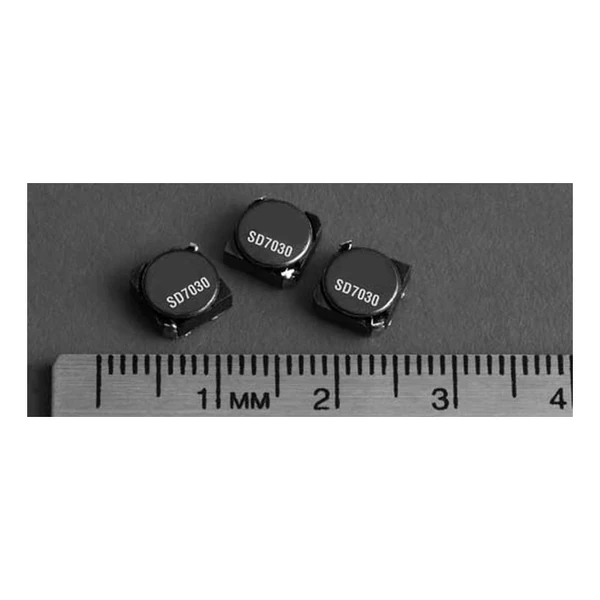
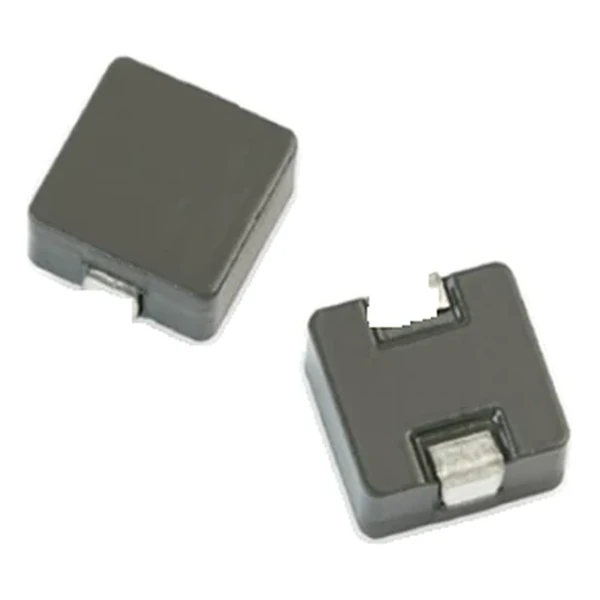
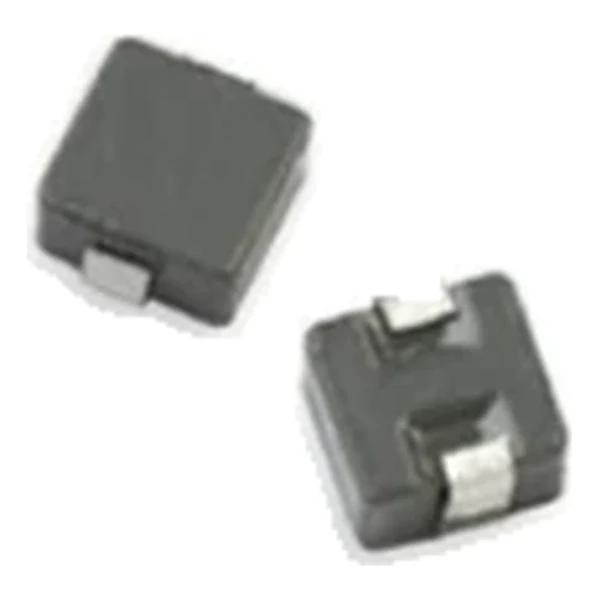
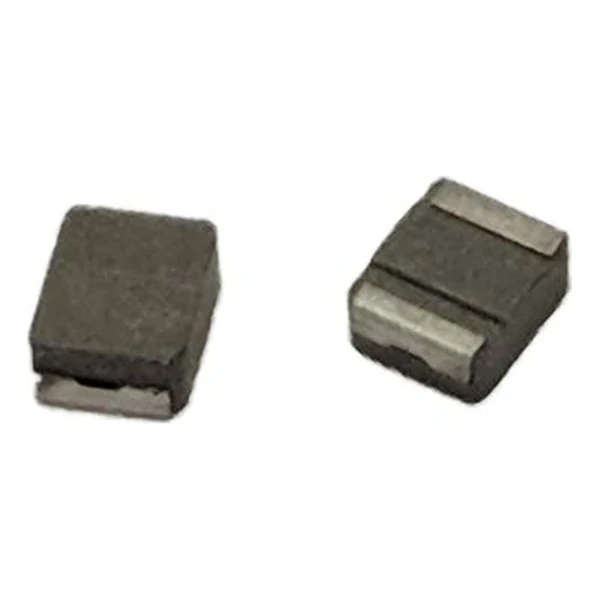
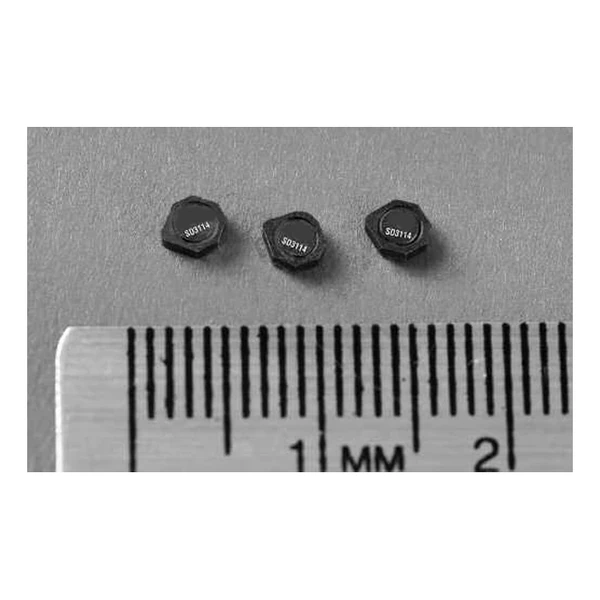
This is the classic shielded SMD drum inductor: ferrite drum, wound coil, shield sleeve, tinned terminations. It is the workhorse part for DC-DC converters that need a few microhenry at a few amps.
At 0.172 A the winding dissipates about 0.15 W in copper using the typical DCR of 5070 mOhm. That is the DC floor of the loss budget – ripple and core loss come on top.
The core stores about 3.19 uJ at the saturation point, which is the energy available to bridge a load step.
The K-factor of 8 converts inductance and ripple into flux swing; read the core-loss curve at that amplitude.
Within the SD3114 family this is value 16 of 18, in a range from 1.16 uH to 330 uH.
Where This Series Fits
The SD family is the shielded drum core range: SMD parts from about 3 mm to 8 mm, covering sub-microhenry to hundreds of microhenry at currents from a few hundred milliamps to several amps.
- The shield reduces but does not eliminate the external field. Check the layout against the EMC plan before placing sensitive traces close.
- Typical applications: mobile phones,; digital cameras; media players; small lcd displays; led driver and led flash circuits.
- Design note: on a shielded drum the Isat and Irms limits can differ a lot. Size against whichever is lower for the application.
Frequently Asked Questions
What does the shield actually do?
It closes the magnetic return path around the drum, which reduces the fringing field that would otherwise couple into nearby traces.
What does the shield actually do?
It closes the magnetic return path around the drum, which reduces the fringing field that would otherwise couple into nearby traces.
What is the Volt-us column?
The applied volt-time product that produces a defined core loss. It is the figure to compare against the converter waveform at the switching frequency.
Shenzhen Gaorunxin Technology Co., Ltd
Online message
Shenzhen Gaorunxin Technology Co., Ltd