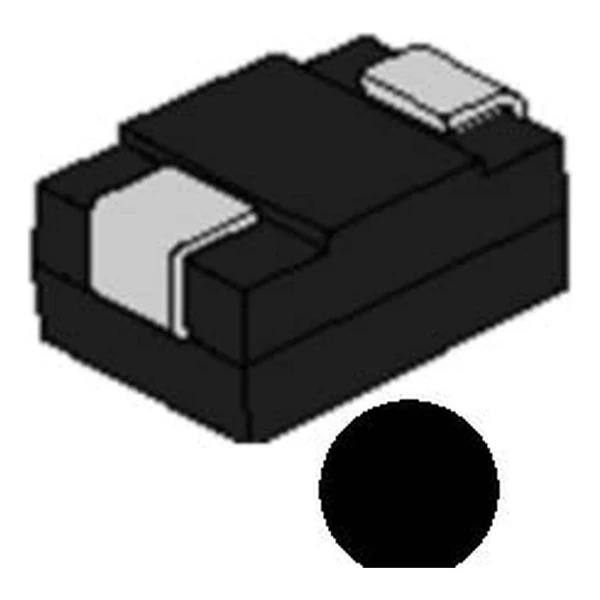
Eaton SMCJ78CA 78 V 1500 W TVS Diode
- Product Details
- Download
Eaton SMCJ78CA 78 V 1500 W TVS Diode
Key Specifications
| Parameter | Value |
|---|---|
| Orderable part number | SMCJ78CA |
| Standoff voltage (VR) | 78 V |
| Leakage current at VR | 1 uA |
| Breakdown voltage at IT | 86.7 V to 95.8 V |
| Test current (IT) | 1 mA |
| Clamping voltage at IPP | 126 V |
| Peak pulse current | 11.9 A |
| Polarity | Bidirectional |
| Peak pulse power, 10/1000 us | 1500 W |
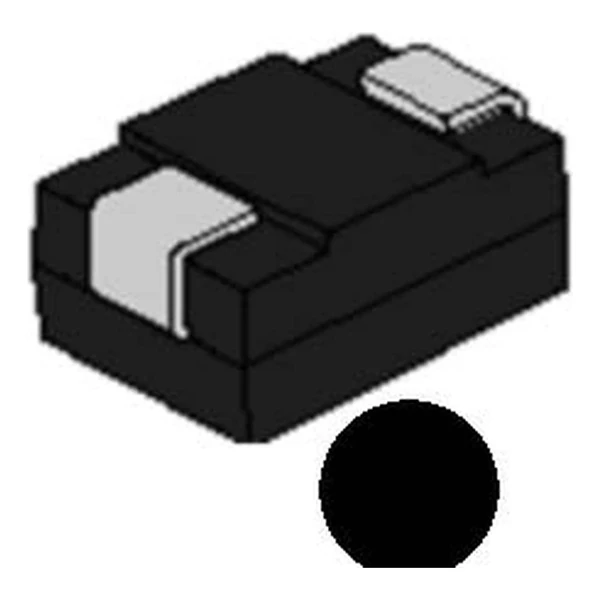
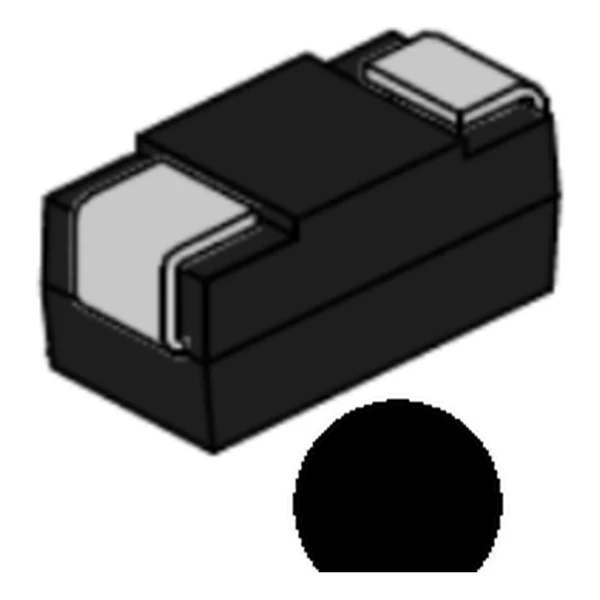
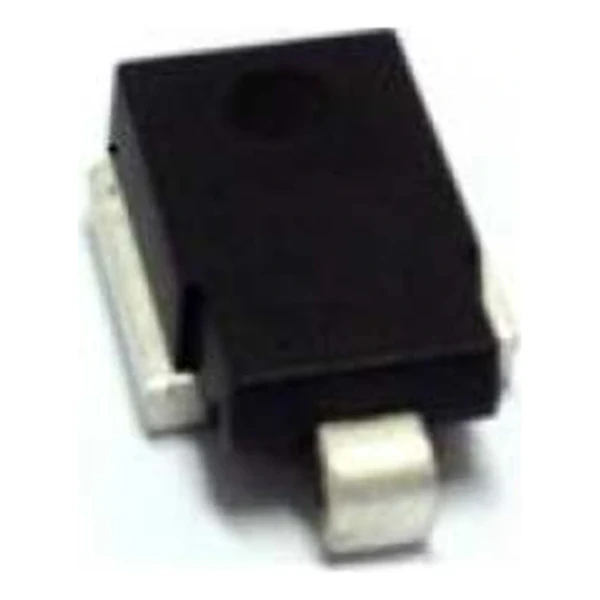
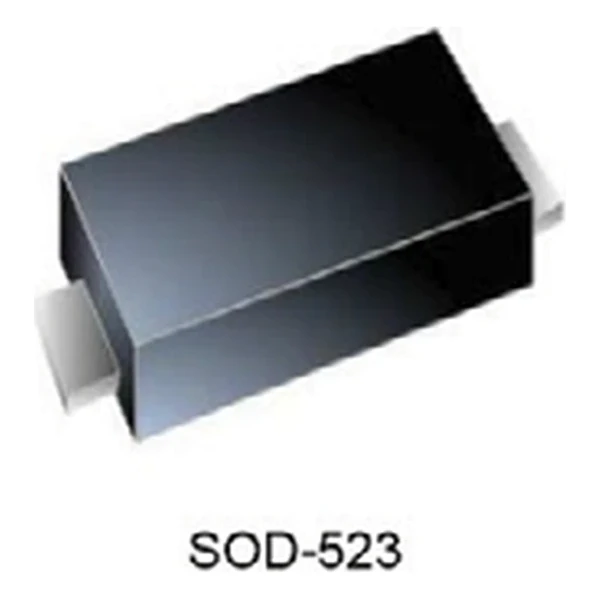
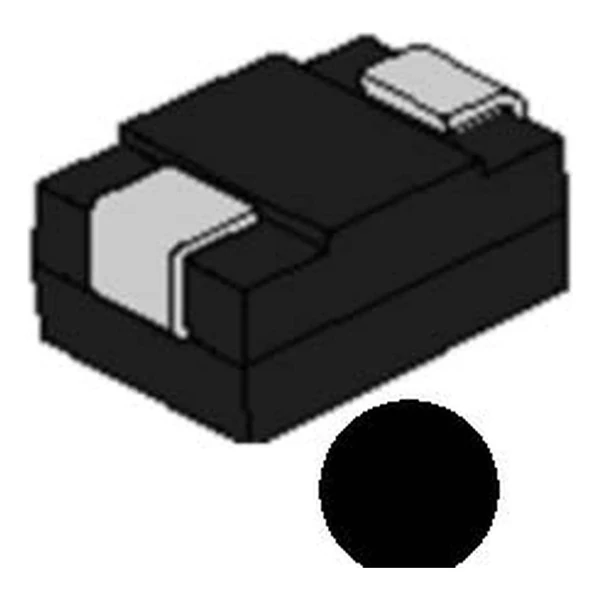
| Package | SMC (DO-214AB) |
| Mounting | Surface mount |
| Operating temperature | -55 °C to +150 °C |
| Qualification | Commercial grade |
| RoHS | Compliant, halogen free |
| Data sheet | Eaton Technical Data ELX1563 |
Outline drawing, pad or lead geometry and the pulse derating curves are
on the pages of Eaton Technical Data ELX1563; the package line above is the
body the part is built in.
Reading the Data Sheet
These parts are avalanching junctions, so they clamp harder than a varistor and recover without the voltage drift a metal oxide part shows after a surge. The trade is capacitance and a sharper failure mode.
The breakdown window spans 10.5 percent, from 86.7 V to 95.8 V. Design against the minimum, because a part at the bottom of the window starts conducting first.
At 78 V standing the leakage is at most 1 uA, so the part draws 0.078 mW on the rail. Small, but it is the number that matters on a battery input.
Within the SMCJ family this is item 96 of 155 in the Eaton catalogue.
Series Positioning
Keep the ground connection on the same layer as the diode. A clamp that has to travel through a via to reach the return plane loses most of its advantage at the edge speeds an ESD event produces.
- The standoff voltage is a DC limit. On an AC line the peak of the sine has to stay below it, which for a 120 V RMS line means a part rated well above 170 V.
- The clamp column is measured at the rated pulse current. At a lower current the residual voltage is lower, which is why a part chosen for a small surge clamps better than its headline number suggests.
Frequently Asked Questions
What happens if the surge exceeds the rating?
The junction overheats and fails short, which then puts the full fault current through the board. That is why a fuse ahead of the suppressor is part of the protection, not an optional extra.
Why is the clamp voltage higher than the breakdown voltage?
The breakdown is measured at 1 mA; the clamp is measured at the full pulse current, which can be hundreds of amps. The dynamic resistance of the junction adds the difference, and that is why the two columns are never the same number.
How do I pick the standoff voltage?
Above the highest steady-state voltage the line can reach, including regulation, ripple and any temporary overvoltage the standard requires. Then check that the minimum breakdown voltage is still above that level, because production spread moves it down.
Shenzhen Gaorunxin Technology Co., Ltd
Online message
Shenzhen Gaorunxin Technology Co., Ltd