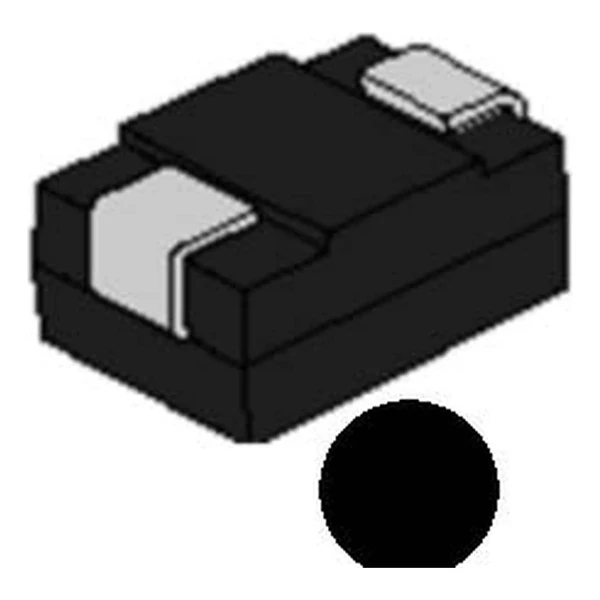
Eaton SMDJ13AH TVS Diode, 21.5 V Clamp
- Product Details
- Download
Eaton SMDJ13AH TVS Diode, 21.5 V Clamp
Specification Table
| Parameter | Value |
|---|---|
| Orderable part number | SMDJ13AH |
| Standoff voltage (VR) | 13 V |
| Leakage current at VR | 5 uA |
| Breakdown voltage at IT | 14.4 V to 15.9 V |
| Test current (IT) | 5 mA |
| Clamping voltage at IPP | 21.5 V |
| Peak pulse current | 139.5 A |
| Polarity | Unidirectional |
| Peak pulse power, 10/1000 us | 3000 W |
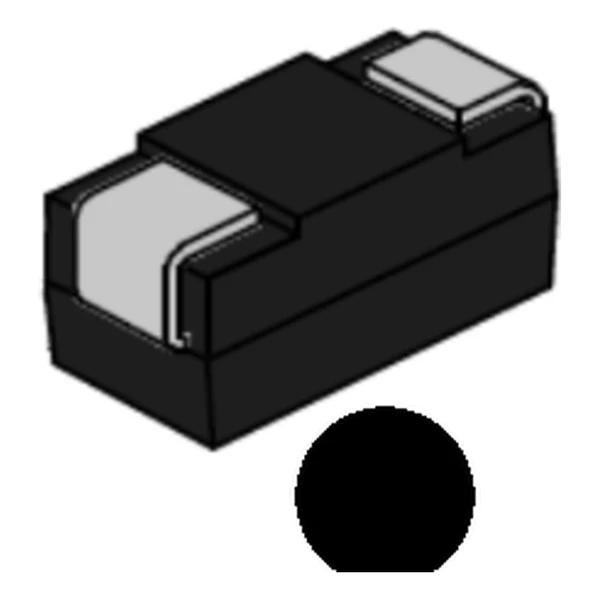
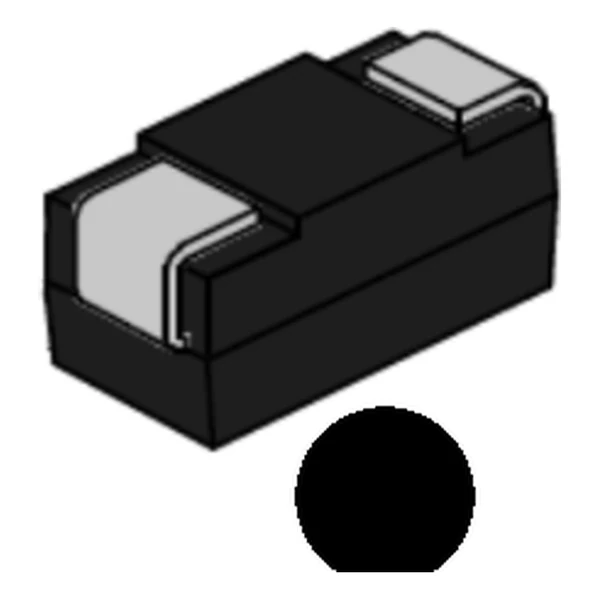
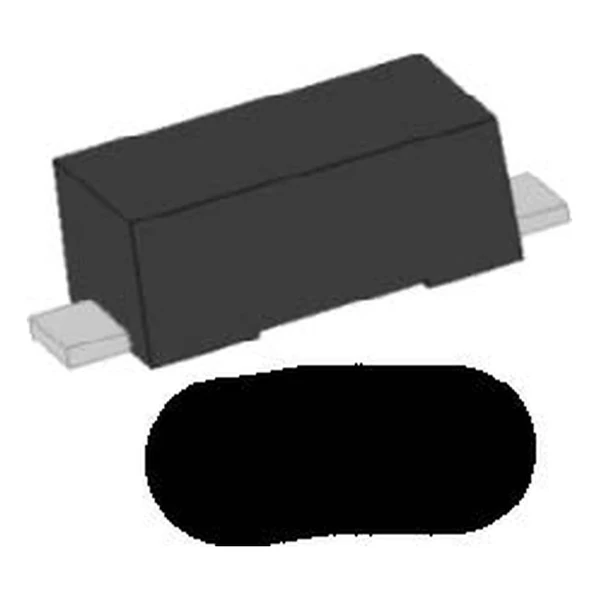
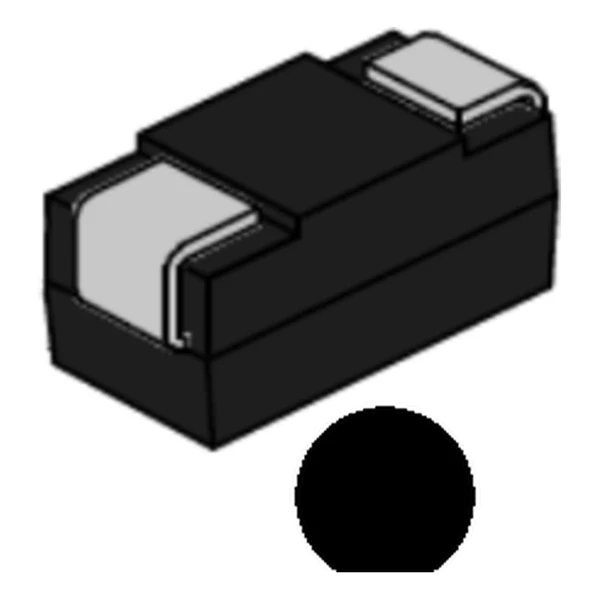
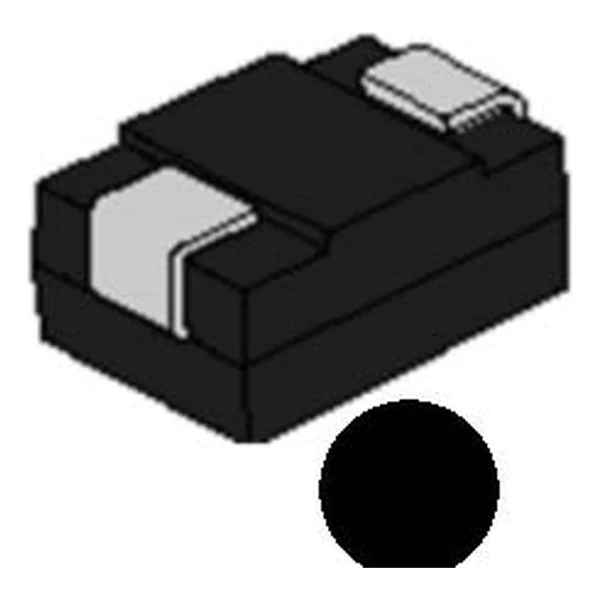
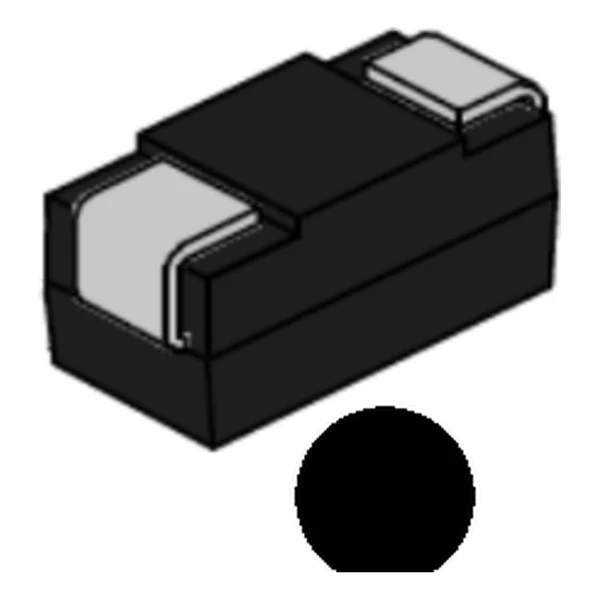
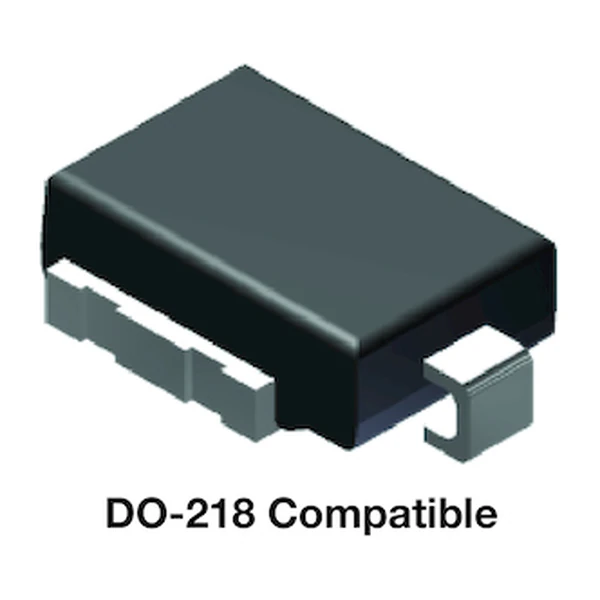
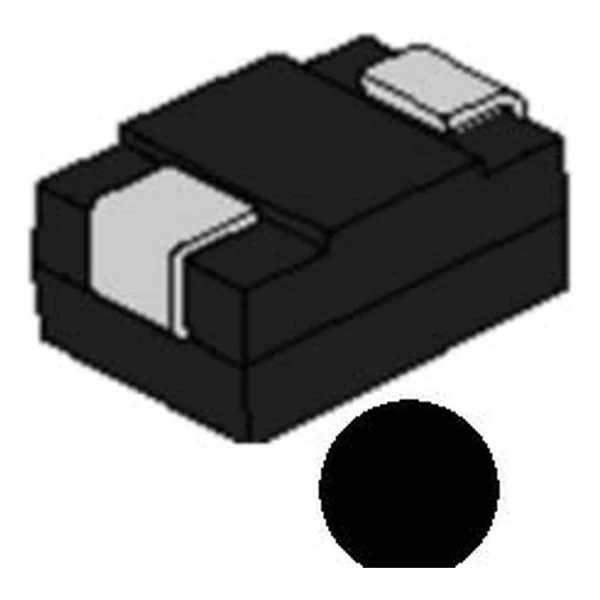
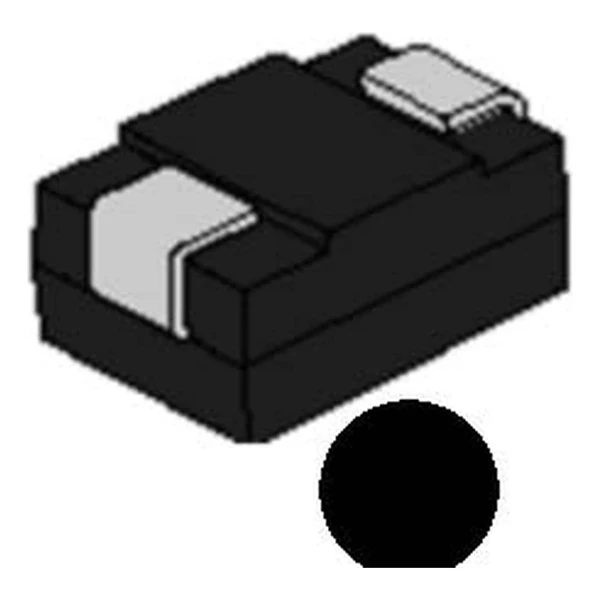
| Package | SMC (DO-214AB) |
| Mounting | Surface mount |
| Operating temperature | -55 °C to +150 °C |
| Qualification | AEC-Q200 |
| RoHS | Compliant, halogen free |
| Data sheet | Eaton Technical Data ELX1065 |
Outline drawing, pad or lead geometry and the pulse derating curves are
on the pages of Eaton Technical Data ELX1065; the package line above is the
body the part is built in.
What the Numbers Mean
The peak pulse power rating is a 10/1000 microsecond figure: a 400 W part takes 400 W for one millisecond, not continuously. Shorter pulses allow more current, longer ones less, which is what the derating curves in the data sheet show.
The breakdown window spans 10.42 percent, from 14.4 V to 15.9 V. Design against the minimum, because a part at the bottom of the window starts conducting first.
At 13 V standing the leakage is at most 5 uA, so the part draws 0.065 mW on the rail. Small, but it is the number that matters on a battery input.
Within the SMDJ family this is item 25 of 123 in the Eaton catalogue.
Positioning in the Range
Keep the ground connection on the same layer as the diode. A clamp that has to travel through a via to reach the return plane loses most of its advantage at the edge speeds an ESD event produces.
- The standoff voltage is a DC limit. On an AC line the peak of the sine has to stay below it, which for a 120 V RMS line means a part rated well above 170 V.
- The breakdown window is deliberately wide so that production spread does not leave parts conducting at the standoff voltage. Design to the minimum breakdown, not the typical.
Frequently Asked Questions
How much capacitance does it add?
Enough to matter on a fast line. A 1500 W part can be several thousand picofarads, which is fine on a supply rail and not fine on a USB or Ethernet pair.
Why is the clamp voltage higher than the breakdown voltage?
The breakdown is measured at 1 mA; the clamp is measured at the full pulse current, which can be hundreds of amps. The dynamic resistance of the junction adds the difference, and that is why the two columns are never the same number.
Does the peak pulse power rating apply to any surge?
No. It is quoted for a 10/1000 microsecond waveform. A shorter pulse allows more current and a longer one less; the derating curve converts between them.
Shenzhen Gaorunxin Technology Co., Ltd
Online message
Shenzhen Gaorunxin Technology Co., Ltd