Eaton STN161120U372 370 pF ESD Protection Diode
- Product Details
- Download
Eaton STN161120U372 370 pF ESD Protection Diode
Key Specifications
| Parameter | Value |
|---|---|
| Orderable part number | STN161120U372 |
| Reverse working voltage | 12 V |
| Breakdown voltage (min / typ / max) | 13.3 V / 14.4 V / 17 V |
| Leakage current at VR | 1 uA |
| Peak pulse current | 70 A |
| Clamping voltage | 19 V |
| Junction capacitance, typ | 370 pF |
| Junction capacitance, max | 450 pF |
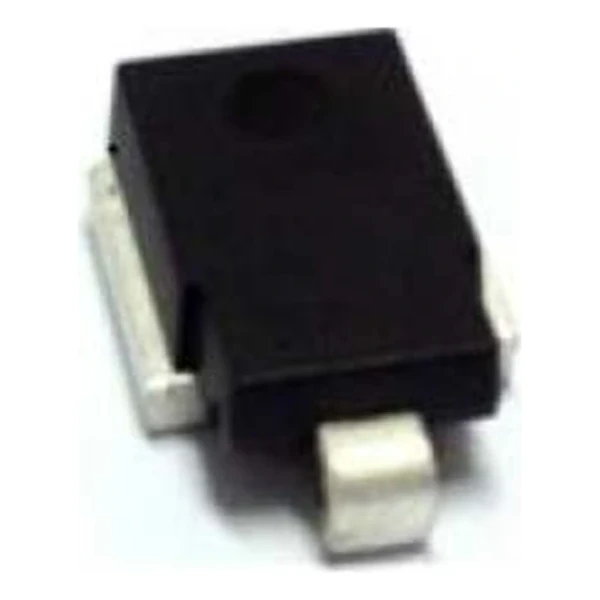
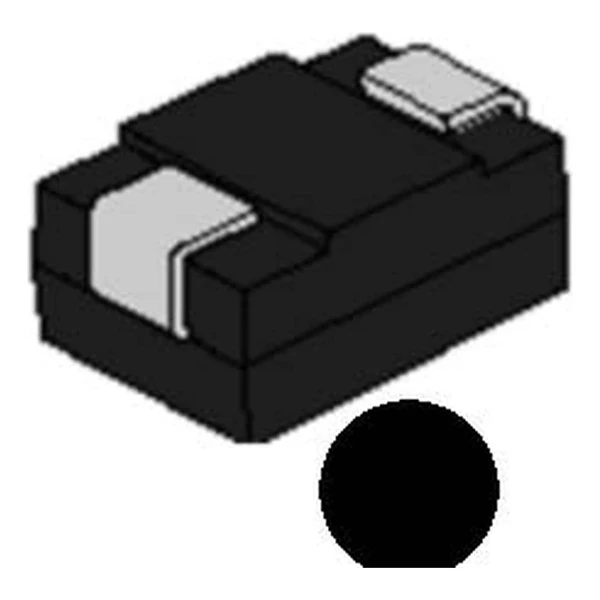
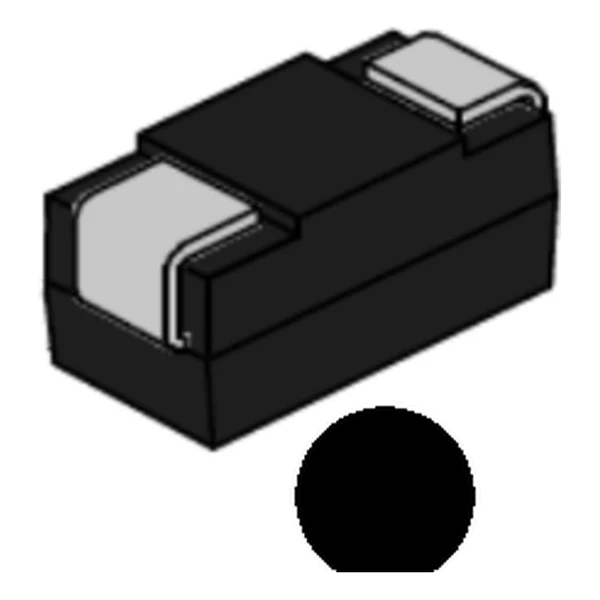
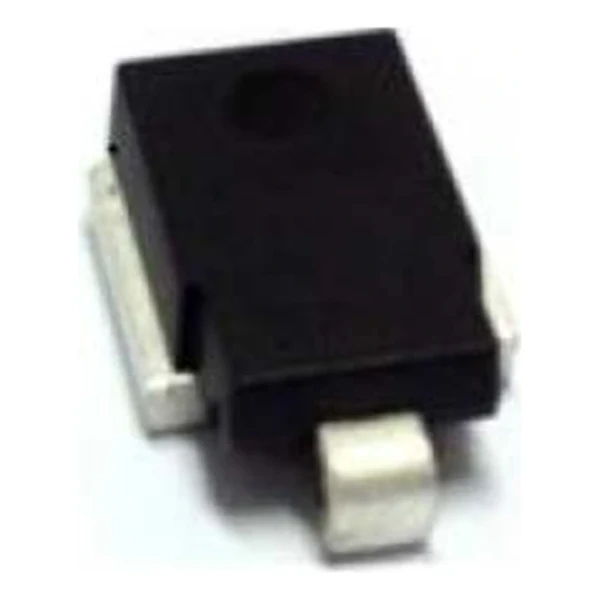
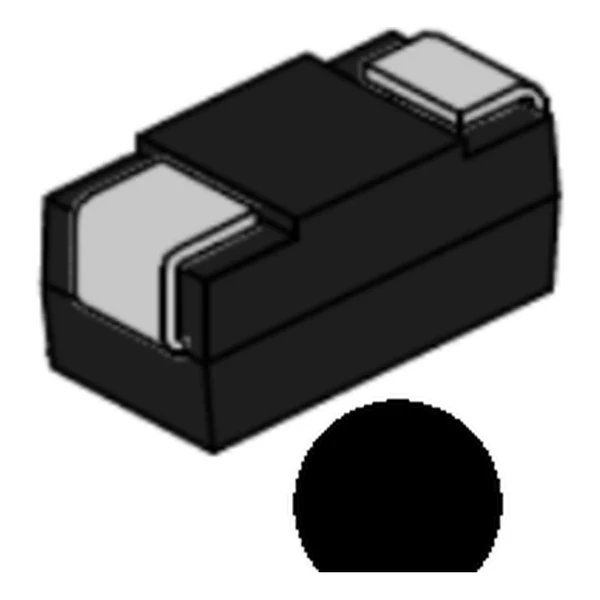
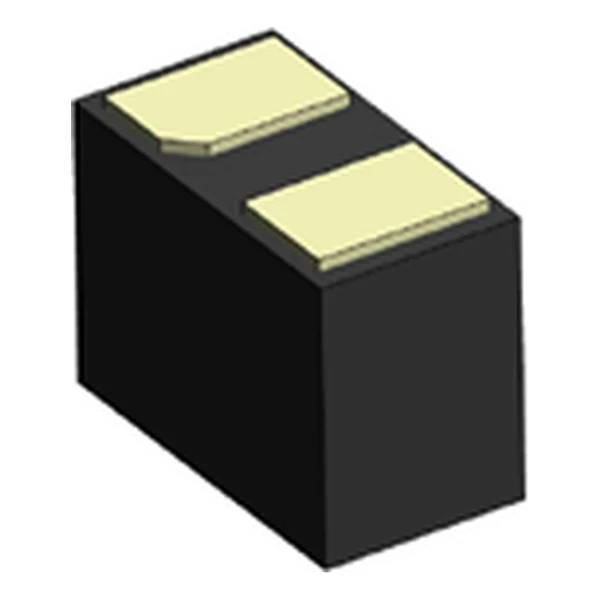
| Package | DFN 1.6 x 1.0 |
| Mounting | Surface mount |
| Operating temperature | -55 °C to +125 °C |
| Qualification | Commercial grade |
| RoHS | Compliant, halogen free |
| Data sheet | Eaton Technical Data 11134 |
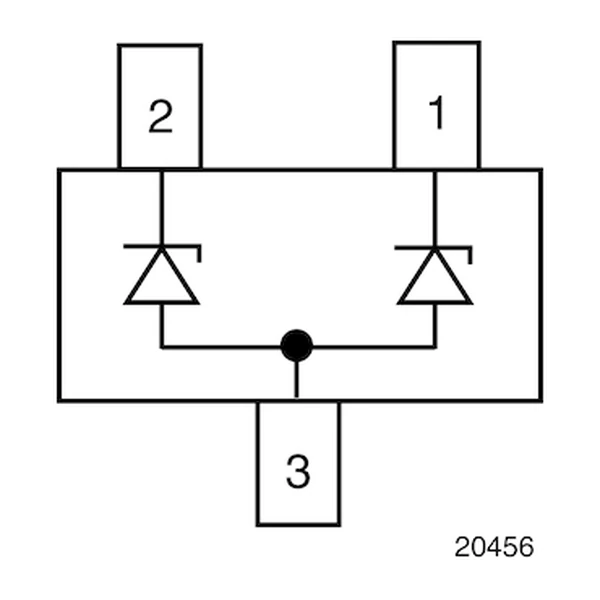
Outline drawing, pad or lead geometry and the pulse derating curves are
on the pages of Eaton Technical Data 11134; the package line above is the
body the part is built in.
Reading the Data Sheet
An ESD suppressor is a small clamp that sits on a connector pin and does nothing until a discharge arrives. Because the discharge is nanoseconds long, the part is chosen on capacitance and trigger voltage rather than on energy.
The 370 pF typical capacitance sets the highest data rate the part can sit on without distorting the eye.
Within the STN161 family this is item 5 of 6 in the Eaton catalogue.
What This Family Is For
Place the suppressor directly at the connector, before any series component. Its job is to take the discharge before it enters the board, and a few millimetres of trace is enough to let the pulse past it.
- The ESD rating assumes the part is the first thing the discharge meets. If the connector shell or a mounting screw provides an easier path, the suppressor never conducts and the protected chip takes the hit.
- The pulse withstand count is a qualification figure at a defined level. Repeated discharges at a higher level reduce it, so a port that sees frequent events needs margin.
Frequently Asked Questions
What does bidirectional mean in practice?
The part clamps either polarity with the same characteristic, so it can be placed either way round and protects a line that swings below ground.
Is the suppressor fast enough for a cable discharge?
The response is in the sub-nanosecond range because the structure is a junction, not a spark gap. What limits the protection is the layout, not the die.
Does it affect signal integrity?
Through its capacitance. At 0.1 pF the effect is negligible at several gigahertz; at 1 pF it is visible on a fast differential pair, so the capacitance grade is part of the selection.
Shenzhen Gaorunxin Technology Co., Ltd
Online message
Shenzhen Gaorunxin Technology Co., Ltd