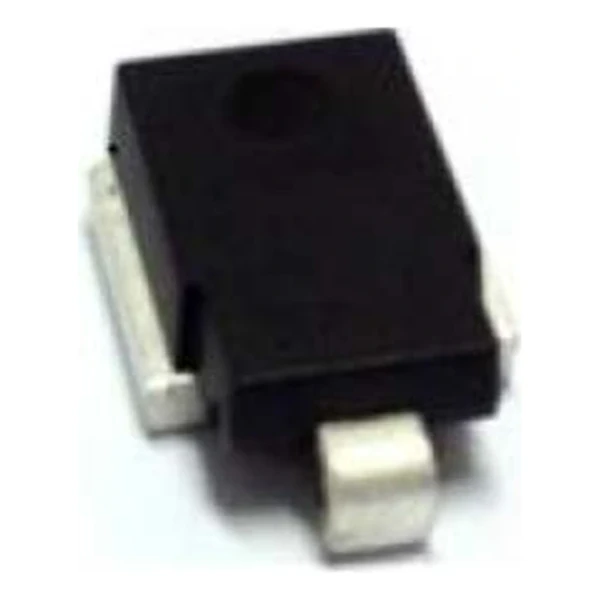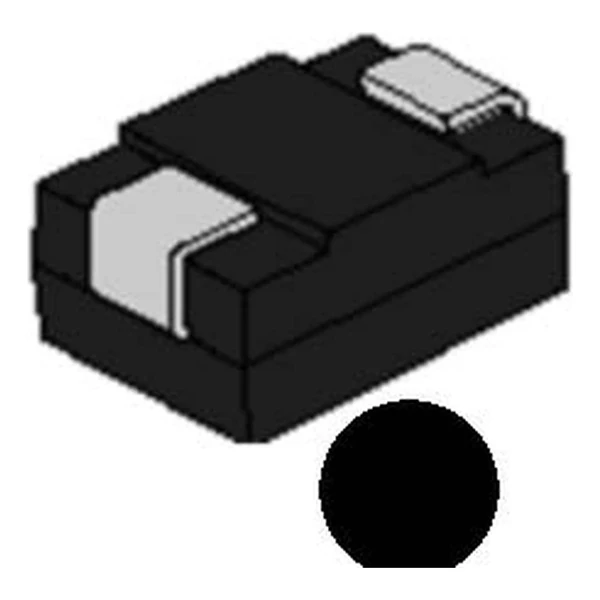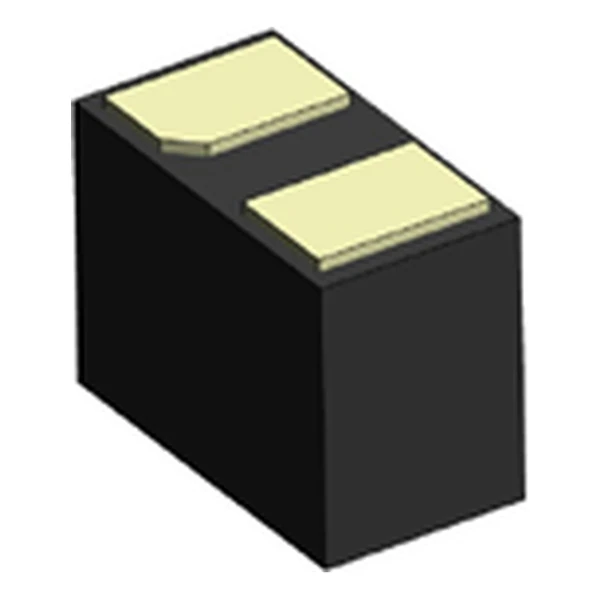
Eaton STN161XXXUXXX TVS ESD Suppressor DFN 1.6 x 1.0
- Product Details
- Download
Eaton STN161XXXUXXX TVS ESD Suppressor DFN 1.6 x 1.0
Electrical Specifications
| Parameter | Value |
|---|---|
| Orderable part number | STN161XXXUXXX |
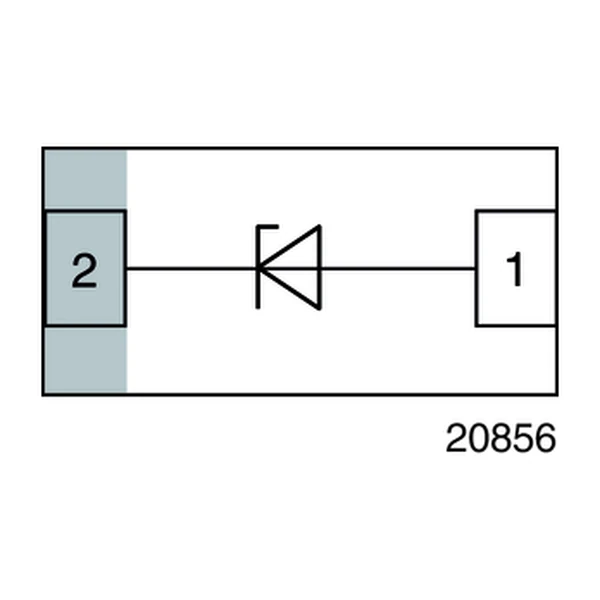
| Package | DFN 1.6 x 1.0 |
| Mounting | Surface mount |
| Operating temperature | -55 °C to +125 °C |
| Qualification | Commercial grade |
| RoHS | Compliant, halogen free |
| Data sheet | Eaton Technical Data 11134 |
Outline drawing, pad or lead geometry and the pulse derating curves are
on the pages of Eaton Technical Data 11134; the package line above is the
body the part is built in.
How to Read These Ratings
These devices are bidirectional and symmetric, so they can be placed either way round on the board. That removes the orientation error that a diode pair invites on a differential pair.
Within the STN161 family this is item 1 of 6 in the Eaton catalogue.
What This Family Is For
The ground pin goes to the connector ground, not to a distant plane. The discharge returns through that connection, and a long path turns the clamp into a radiator.
- Capacitance is not a small effect on a data line. Read the capacitance at the frequency the line actually carries, not the 1 MHz test figure alone.
- Leakage is quoted at the rated voltage and at room temperature. It rises with temperature, which matters on an automotive rail that sits at 85 °C.
Frequently Asked Questions
Is the suppressor fast enough for a cable discharge?
The response is in the sub-nanosecond range because the structure is a junction, not a spark gap. What limits the protection is the layout, not the die.
Does it affect signal integrity?
Through its capacitance. At 0.1 pF the effect is negligible at several gigahertz; at 1 pF it is visible on a fast differential pair, so the capacitance grade is part of the selection.
Will it survive repeated strikes?
The datasheet quotes a pulse count at the qualification level, typically over a thousand at 8 kV contact. That is the number to compare against the events the port is expected to see.
Shenzhen Gaorunxin Technology Co., Ltd
Online message
Shenzhen Gaorunxin Technology Co., Ltd