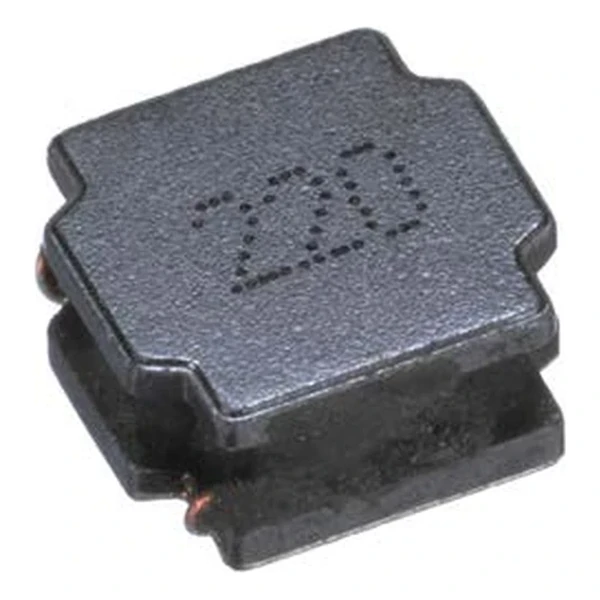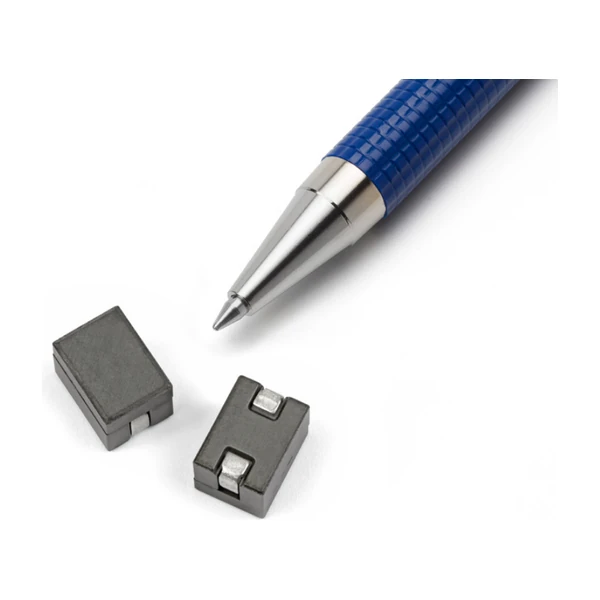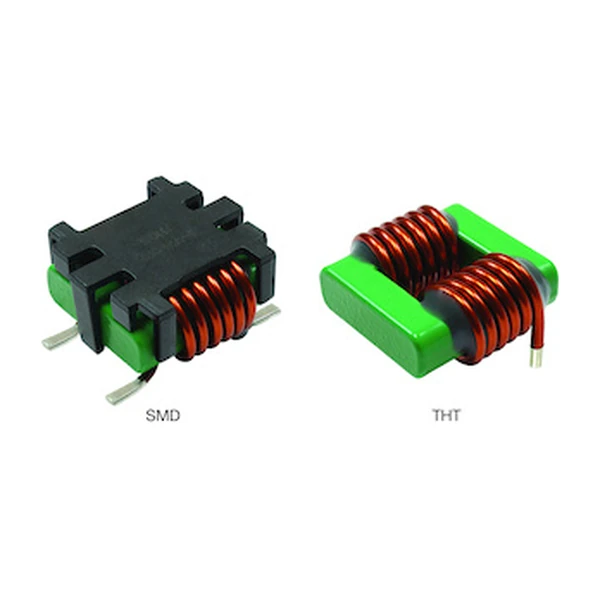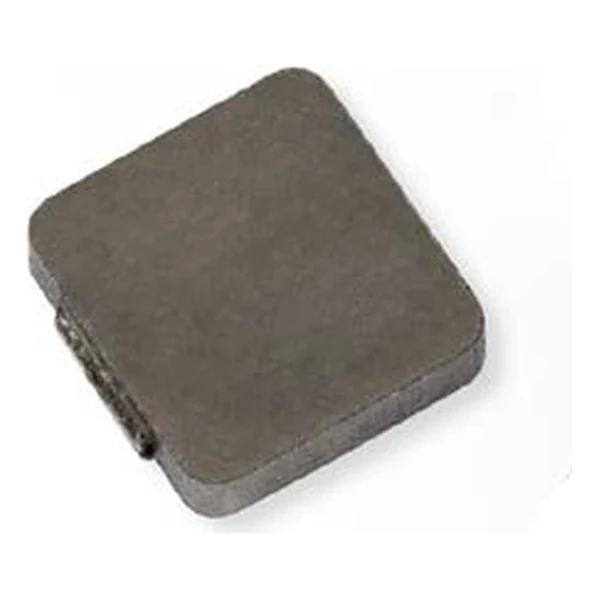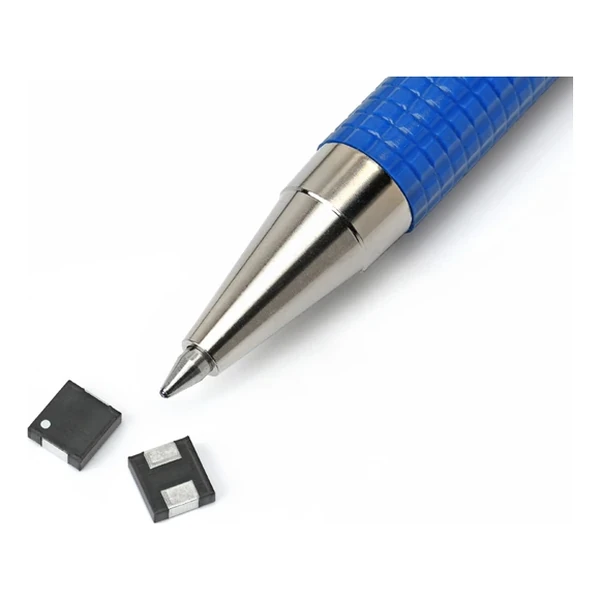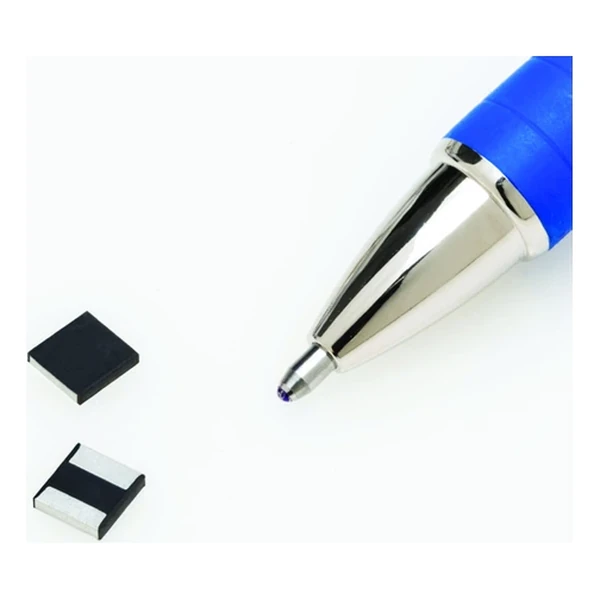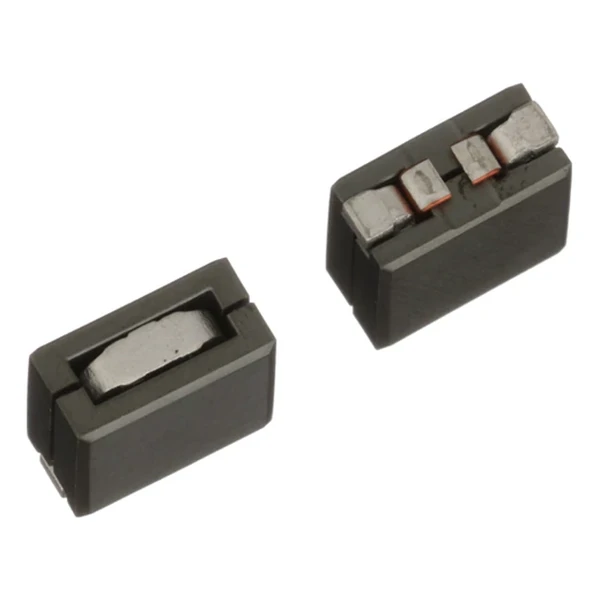
Eaton TL1212V2-R100-R 100 nH Coupled Inductor, 75 A
- Product Details
- Download
Eaton TL1212V2-R100-R 100 nH Coupled Inductor, 75 A
Key Specifications
| Parameter | Value |
|---|---|
| Orderable part number | TL1212V2-R100-R |
| Primary inductance Lpri (terminals 3-4) | 100 nH ±10% |
| Secondary inductance Lsec (terminals 1-2) | 100 nH ±10% |
| FLL minimum at Isat1 | 72 nH |
| DCR primary @ +20 °C | 0.37 mOhm |
| DCR secondary @ +20 °C | 0.125 mOhm |
| Irms secondary (40 °C rise) | 75 A |
| Isat1 (20 % rolloff @ +25 °C) | 130 A |
| Isat2 (20 % rolloff @ +100 °C) | 112 A |
| Isat3 (20 % rolloff @ +125 °C) | 103 A |
| K-factor (Bp-p = K x L x dI x 10^-3) | 308 |
| Coupling coefficient Kps | 0.93 |
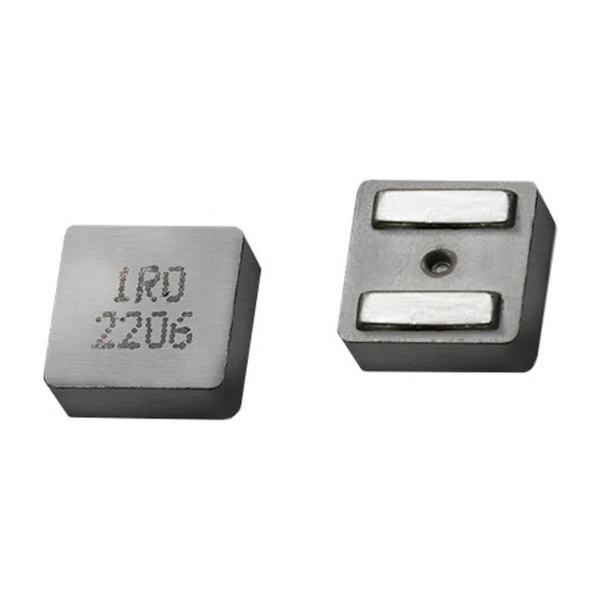
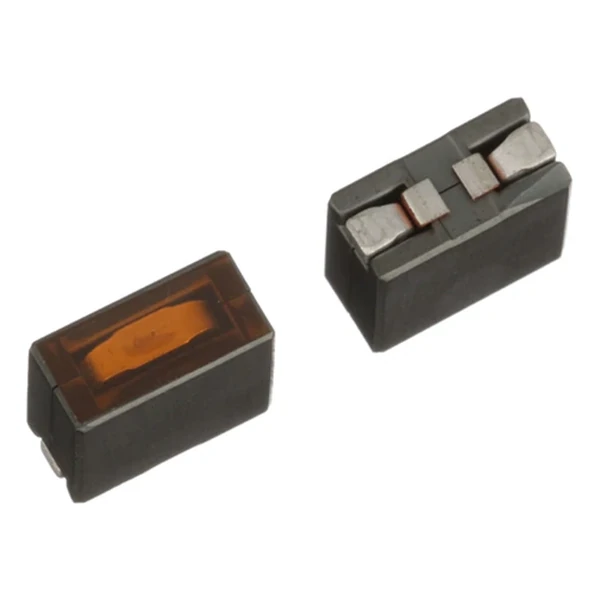
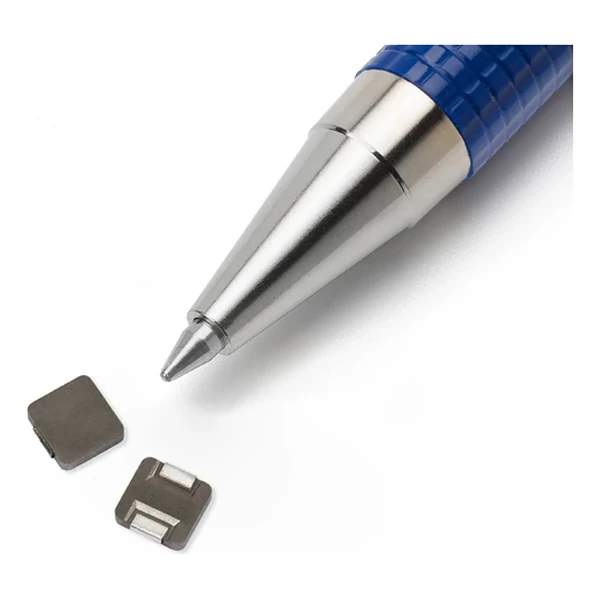
| Package | 12.0 x 6.0 mm, 12.1 mm high |
| Mounting | Surface mount |
| Operating temperature | -40 °C to +125 °C |
| Qualification | Commercial grade |
| RoHS | Compliant, -R suffix |
| Data sheet | Eaton Technical Data ELX1159 |
Mechanical Dimensions & Pad Layout

Drawing reproduced from Eaton Technical Data ELX1159: outline views
with rated mm dimensions, pad layout and marking.
How to Read These Ratings
Three numbers describe this part and they are not interchangeable. Lpri is what the phase sees; Lsec is the winding that forms the shared loop; FLL is the inductance left when the phase reaches Isat1. Sizing a TLVR on the wrong one is the usual way these designs go wrong.
The secondary winding drops about 9.38 mV at its 75 A rating and dissipates roughly 0.703 W there. That is the loss the loop carries on top of the phase windings.
The K-factor turns the applied ripple into a flux swing through Bp-p = K x L x delta-I, with L taken at the operating point. That amplitude, not the DC current, is what the core-loss curve is read against.
With Kps at 0.93 the two windings share the flux almost completely; the fraction that does not link is what shows up as leakage inductance in the phase.
Within the TL1212V2 family this is value 3 of 6, in a range from 70 to 170 nH.
What This Family Is For
The TL and TLP families cover 70 nH to 200 nH of primary inductance in 9.6 x 6.4 mm, 10 x 6 mm and 12 x 6 mm bodies, with the secondary winding equal to the primary and a coupling coefficient between 0.91 and 0.95.
- The secondary loop is part of the power stage. Layout inductance in that loop shows up directly as a slower transient, so keep the return path short and symmetric between phases.
- Typical applications: multi-phase and vcore regulators; voltage regulator modules (vrms) and high power density vrms; server and desktop; central processing unit (cpu); graphics processing unit (gpu).
- Design note: ripple from FLL, transient from Kps, loss from the primary DCR at the phase current. The secondary DCR only carries the difference current.
Frequently Asked Questions
Why is the primary DCR larger than the secondary?
The primary carries the phase current through the full winding; the secondary is usually a single turn or a short winding because it only has to carry the difference current. The two are measured between different terminal pairs and are not interchangeable.
What does a trans-inductor actually do that a normal inductor does not?
It couples the phases. The secondary windings form a closed loop, so a current step in one phase induces a voltage that drives current out of the other phases immediately. The converter responds faster than the control loop alone could manage, and the output capacitor sees a smaller excursion.
Why is the primary DCR larger than the secondary?
The primary carries the phase current through the full winding; the secondary is usually a single turn or a short winding because it only has to carry the difference current. The two are measured between different terminal pairs and are not interchangeable.
Shenzhen Gaorunxin Technology Co., Ltd
Online message
Shenzhen Gaorunxin Technology Co., Ltd