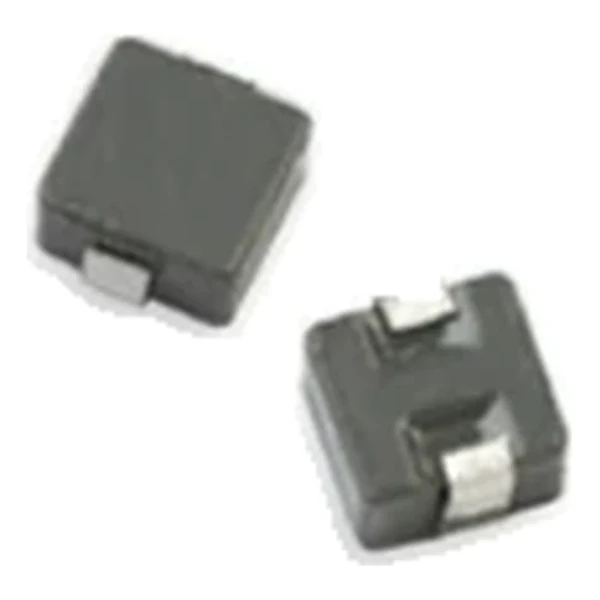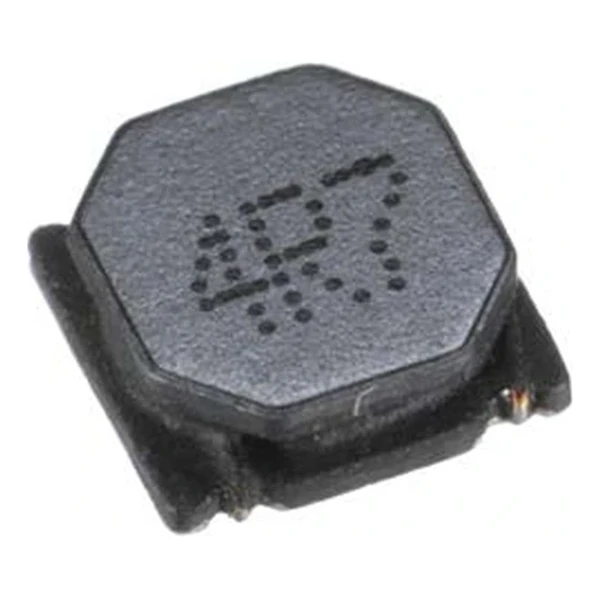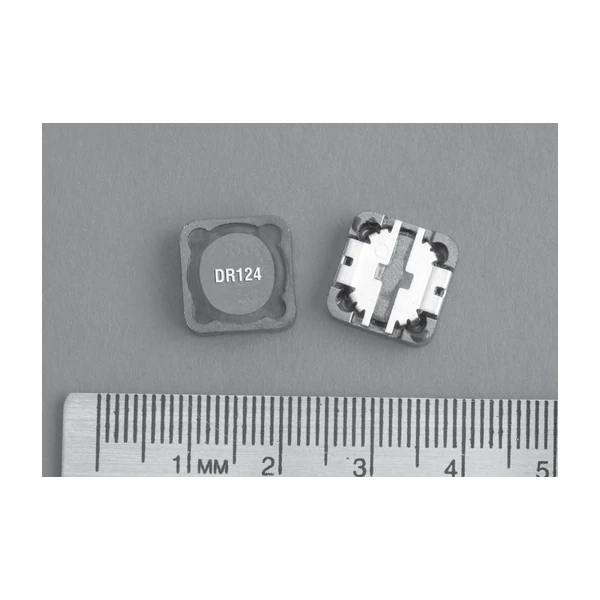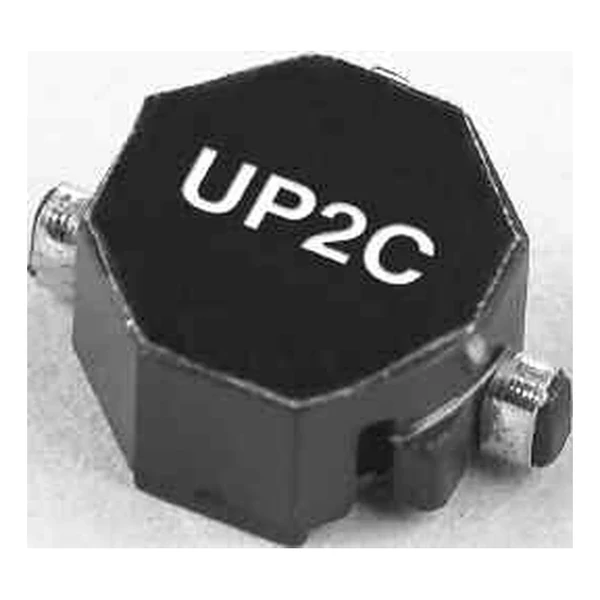
Eaton UP2C-330-R 33 uH Drum Core Inductor, 2.16 A
- Product Details
- Download
Eaton UP2C-330-R 33 uH Drum Core Inductor, 2.16 A
End of life: Eaton marks the UP2C series discontinued effective 30 November 2017 with no direct replacement; the data sheet points to UP2UC as the alternate. Not for new designs.
Ratings at a Glance
| Parameter | Value |
|---|---|
| Orderable part number | UP2C-330-R |
| Rated inductance | 33 uH ±20% |
| OCL (open circuit inductance) | 32.1 uH ±20% |
| Irms (40 °C rise, no core loss) | 2.16 A |
| Isat (peak, rolloff per data sheet) | 2.2 A |
| DCR typical @ +20 °C | 79.7 mOhm |
| Volt-time rating | 37.7 V-us |
| Package | 12.9 x 9.4 mm, 5.2 mm high |
| Mounting | Surface mount |
| Operating temperature | -40 °C to +125 °C |
| Qualification | Commercial grade |
| RoHS | Compliant, -R suffix |
| Data sheet | Eaton Technical Data 4111 |
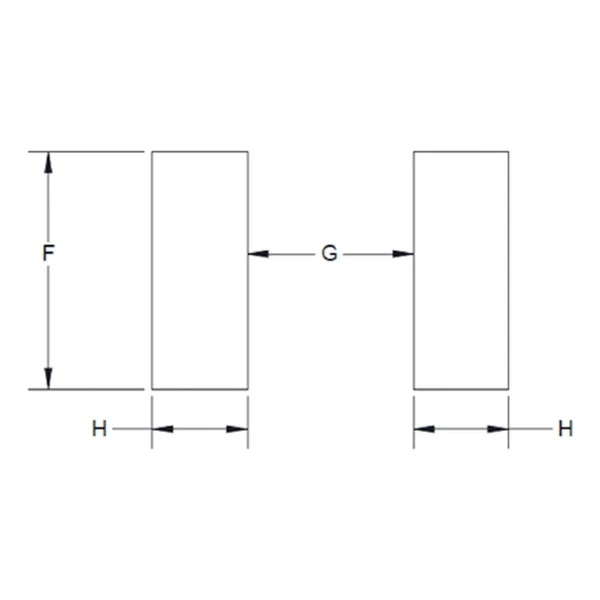
Mechanical Dimensions & Pad Layout

Drawing reproduced from Eaton Technical Data 4111: outline views
with rated mm dimensions, pad layout and marking.
How to Read These Ratings
A UNI-PAC drum core inductor is a wound coil on a ferrite drum with the winding brought out to two solder pads. There is no shield, so the field leaves the part along the drum axis. That is the trade: the most inductance per millimetre and per cent, paid for with a radiated field.
Copper loss at the 2.16 A rating is about 0.372 W with the typical DCR of 79.7 mOhm. Ripple current adds to that through the AC resistance.
The core holds about 79.9 uJ at the saturation point, which is the energy available to bridge a load step before the inductance collapses.
The 37.7 V-us volt-time rating sets the maximum flux excursion per switching cycle; at 100 kHz that is 3770 V of applied voltage for a full period.
Within the UP2C family this is value 11 of 20, in a range from 0.47 to 1000 uH.
Where This Series Fits
The UP family runs from 0.47 uH to 1000 uH in bodies from 6.6 x 4.45 mm up to 18.54 x 15.24 mm, all unshielded drum core, all with the saturation and thermal ratings quoted separately.
- Unshielded. Do not route traces or vias underneath the body, and keep the drum axis away from sensitive nodes and from any magnetic sensor.
- Typical applications: desktop computer; workstations/servers; dvd players; portable power devices; base stations.
- Design note: on the high-value rows the core saturates well before the winding reaches its thermal limit. Size against Isat for those values.
Frequently Asked Questions
Is the saturation current defined at 20 % or 30 % rolloff?
It varies by data sheet. The rolloff point is stated in the note under the table of each document; the number on this page is the one printed for this part, not a normalised figure.
Can the part be used in a buck converter?
Yes, within its current and frequency range. Check the core-loss curve at the switching frequency and the ripple before treating the DC rating as the limit.
Why does the inductance fall so gradually with current?
The drum has a distributed air gap along its length, so the core saturates progressively instead of all at once. That soft knee is why drum core parts stay usable slightly beyond the quoted saturation point.
Shenzhen Gaorunxin Technology Co., Ltd
Online message
Shenzhen Gaorunxin Technology Co., Ltd