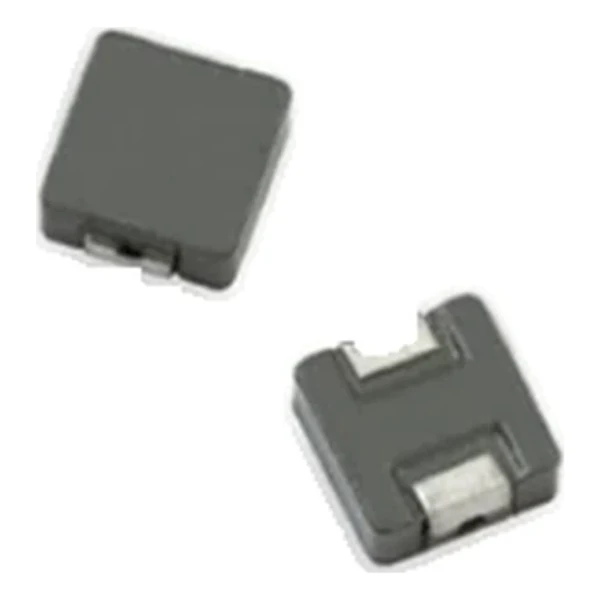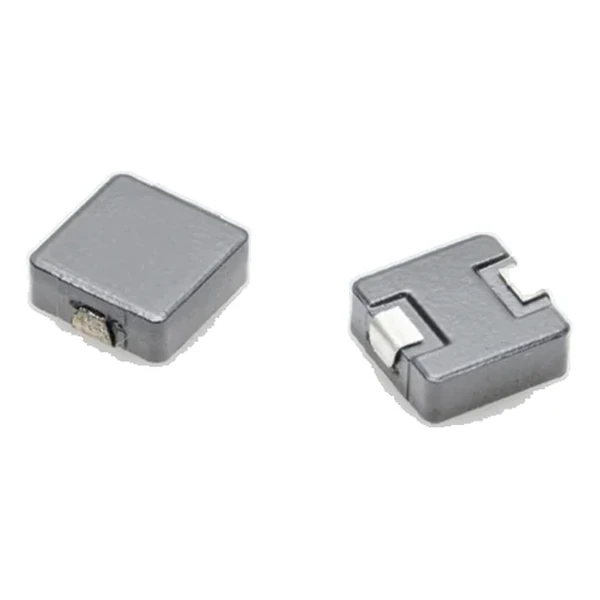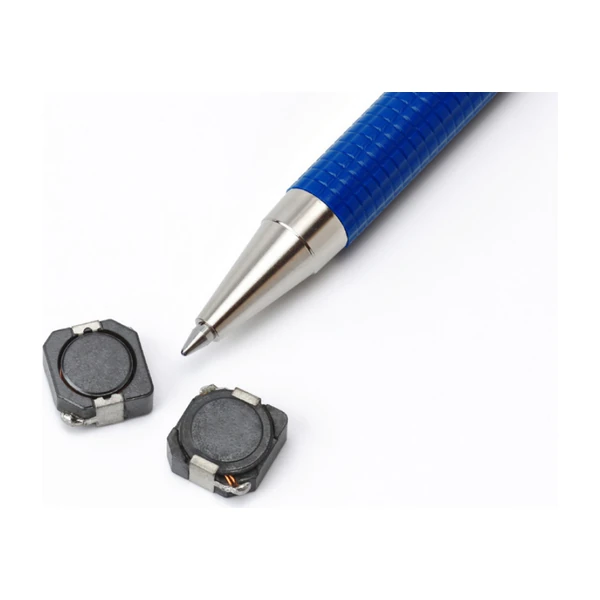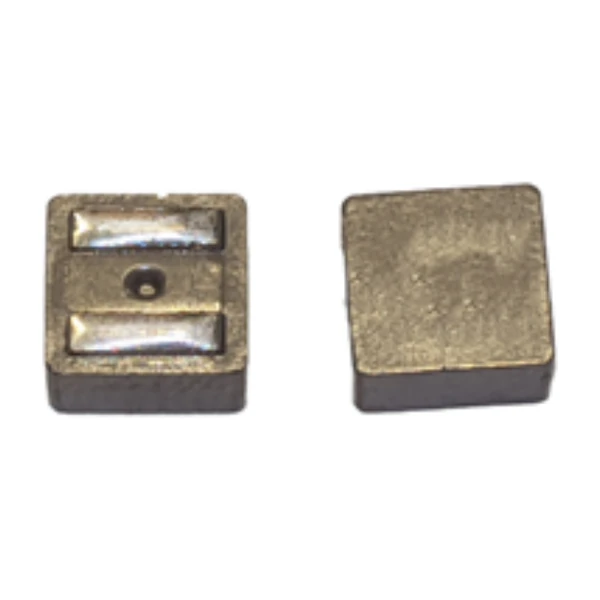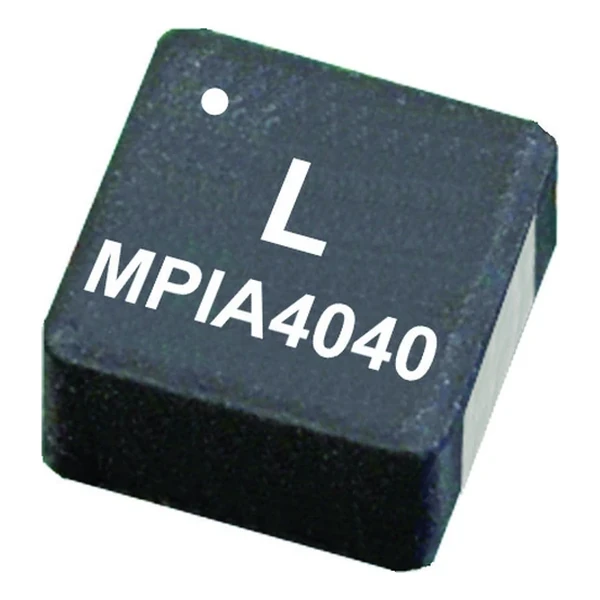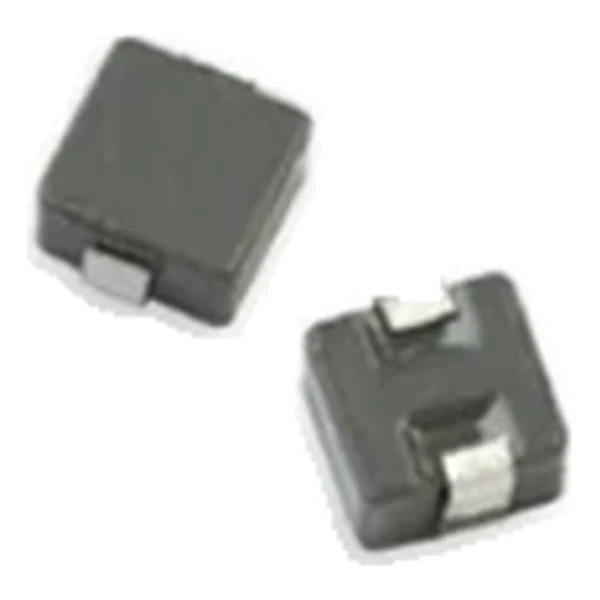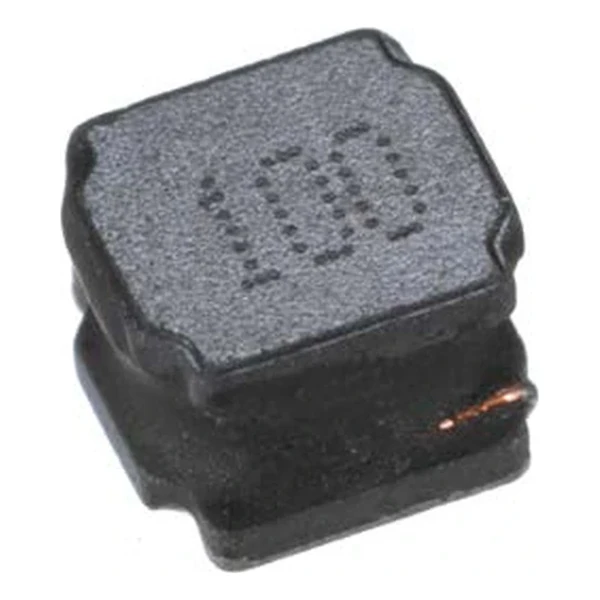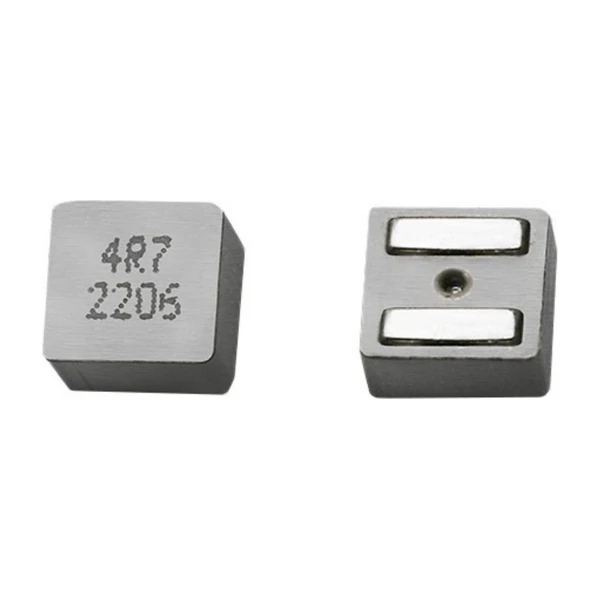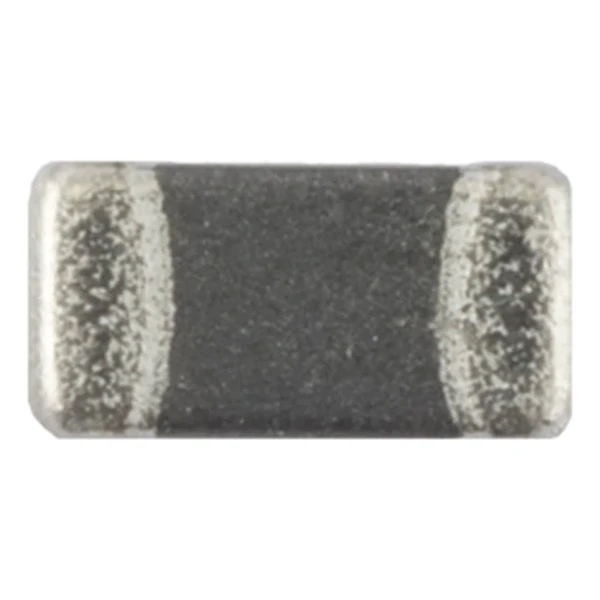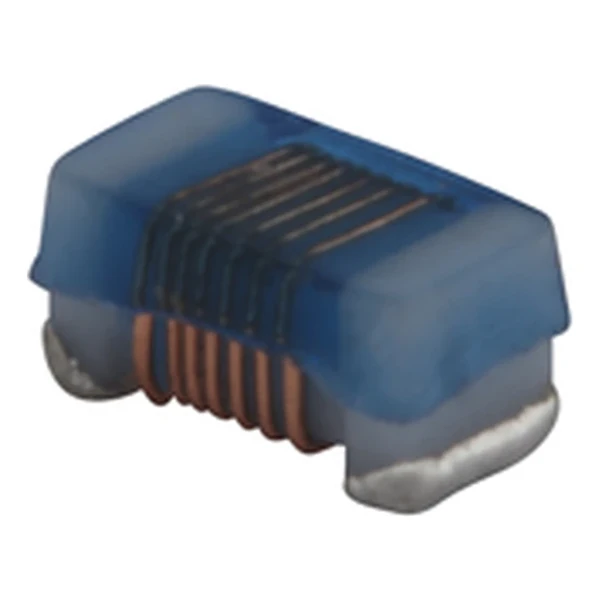
Eaton WCLA1005V1-2R4-R 2.4 nH Chip Inductor, Q 16
- Product Details
- Download
Eaton WCLA1005V1-2R4-R 2.4 nH Chip Inductor, Q 16
Electrical Specifications
| Parameter | Value |
|---|---|
| Orderable part number | WCLA1005V1-2R4-R |
| OCL | 2.4 nH ±10% |
| Q minimum @ test frequency | 16 @ 250 MHz |
| SRF minimum | 6000 MHz |
| DCR maximum @ +25 °C | 80 mOhm |
| Rated current (20 °C rise) | 790 mA |
| OCL test frequency | 250 MHz |
| OCL test voltage | 500 mV |
| Package | 1.19 x 0.66 mm, 0.60 mm high |
| Mounting | Surface mount |
| Operating temperature | -40 °C to +125 °C |
| Qualification | AEC-Q200 |
| RoHS | Compliant, -R suffix |
| Data sheet | Eaton Technical Data 10981 |
Dimensions and Pad Layout

Drawing reproduced from Eaton Technical Data 10981: outline views
with rated mm dimensions, pad layout and marking.
How to Read These Ratings
A wire wound chip inductor is a coil wound on a ceramic or ferrite core with metal end terminals, in a body the size of a resistor. Compared with a multilayer chip of the same size it gives a higher Q and a tighter tolerance, which is why it appears in filters and matching networks rather than only in supply decoupling.
At the 790 mA rating the winding drops about 63.2 mV and dissipates 49.9 mW. Both are small enough to ignore in a bias network but not in a high-Q filter.
Q of 16 at 250 MHz with self-resonance at 6000 MHz puts the useful band comfortably below the point where the winding capacitance takes over.
Within the WCLA1005V1 family this is value 7 of 52, in a range from 1 to 120 nH.
What This Family Is For
The WCL and WCLA families run from 1.0 nH in a 1.19 x 0.66 mm body to 560 uH in 3.5 x 2.9 mm, with Q quoted at a stated test frequency for every row.
- The rated current is a 20 °C rise figure, not a saturation limit. In a DC bias application check the inductance at the actual bias before sizing the filter.
- Typical applications: adas; infotainment; wireless communications; wifi, bluetooth, satellite; antenna tuning.
- Design note: read Q and SRF at the frequency the part works at, not at the test frequency printed in the table.
Frequently Asked Questions
Why choose wire wound over multilayer?
Q. A wound coil has lower resistance for the same inductance, so Q is higher and the loss in a filter or matching network is lower. The price is size and cost, which is why multilayer parts dominate pure decoupling.
Is the automotive version electrically different?
The construction is the same; the qualification and the temperature range are not. The WCLA parts are AEC-Q200 qualified and rated to +125 °C, the commercial WCL parts to +85 °C.
Can I place it with a standard chip shooter?
Yes, the body and terminals are dimensioned for tape and reel and standard nozzle placement. Check the terminal width against the pad geometry in the drawing.
Shenzhen Gaorunxin Technology Co., Ltd
Online message
Shenzhen Gaorunxin Technology Co., Ltd